Aug. 31, 2025

Hurricane Ian Revealed the Dangers of Pre-Code Construction in Southwest Florida

Vulnerability of Older Homes and Hurricane Codes

Hurricane Ian Revealed the Dangers of Pre-Code Construction in Southwest Florida

By Scott Meadows, Florida Custom Homes

When Hurricane Ian made landfall on September 28, 2022, it wasn’t just one of the costliest storms in U.S. history—it was a stark reminder of how vulnerable older homes in Southwest Florida remain in the face of powerful hurricanes. With wind gusts exceeding 155 mph and catastrophic storm surge battering coastal communities like Fort Myers Beach, Sanibel Island, and Cape Coral, the destruction was widespread. But not all homes were affected equally.

As post-storm assessments rolled in, one fact became crystal clear: homes built before Florida's modern building codes were disproportionately destroyed.


Understanding the Evolution of Florida's Hurricane Building Codes

Florida's commitment to wind- and flood-resistant construction began in earnest after Hurricane Andrew in 1992. That Category 5 storm devastated South Florida and exposed the shortcomings of existing building practices. In response, Florida lawmakers implemented a series of reforms, culminating in the Florida Building Code (FBC) in 2002. This code established stringent wind-resistance standards, elevation requirements, and stricter enforcement.

Key highlights of the FBC and FEMA requirements include:

  • Wind-load design: Reinforced roofing systems, hurricane straps, and impact-rated windows
  • Elevation standards: Homes in flood zones must be built above base flood elevation (BFE)
  • HVHZ compliance: High-Velocity Hurricane Zone standards for coastal counties

Despite these improvements, many homes along Florida's southwest coast—including large portions of Fort Myers Beach, Pine Island, and Naples—were built long before these protections became mandatory.


How Hurricane Ian Targeted Older Construction

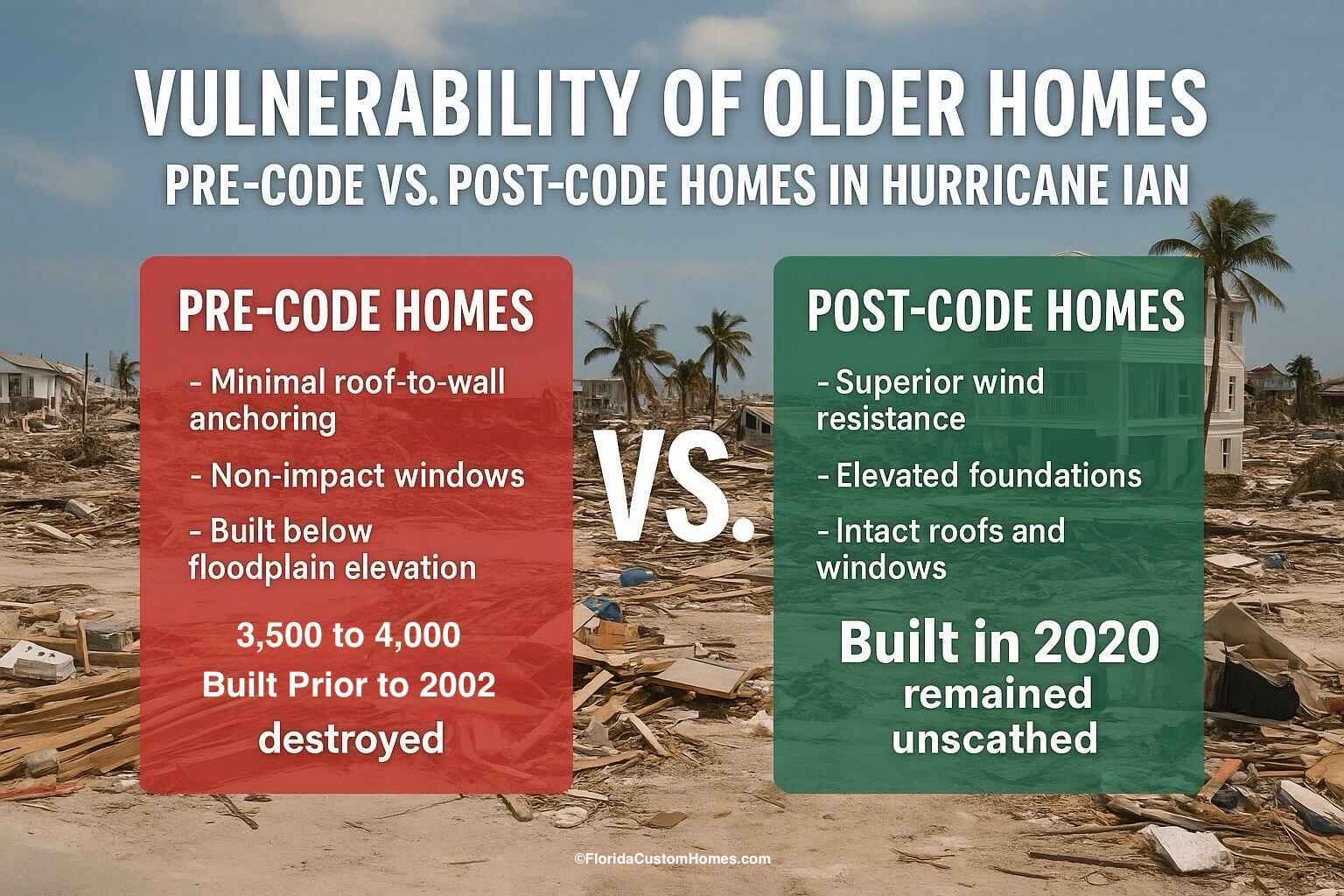
According to a FEMA Mitigation Assessment Team report, Ian caused widespread destruction in counties where older housing stock is common. In fact, roughly 70% of homes in the hardest-hit counties were built before 2002. That means they were constructed under weaker pre-FBC standards or no formal statewide code at all.

Let’s break down the performance of these older homes versus newer code-compliant construction:

📉 Pre-2002 Homes

  • Commonly built with standard shingles, non-impact windows, and minimal roof-to-wall anchoring
  • Many were slab-on-grade or built below floodplain elevation
  • Widespread roof loss, structural collapse, and storm surge inundation

📈 Post-2002 Code-Built Homes

  • Demonstrated superior wind resistance with minor cosmetic damage
  • Elevated foundations reduced flood impact
  • Survived with roofs intact, windows unbroken, and interiors dry

As an example, in Fort Myers Beach—a community with thousands of older homes—entire blocks were flattened. But a recently built elevated home withstood the storm almost untouched while 18 neighboring pre-1980 homes were swept away.


Statistical Evidence: Code Compliance Saves Homes

Here are some staggering statistics that show how devastating Hurricane Ian was for older homes:

Construction Era Average Insured Damage Primary Cause
Pre-1980 $164,891 Roof loss, structural failure
1980–2001 $112,740 Flooding, moderate wind damage
Post-2002 (FBC era) $48,091 Minor wind and water intrusion

Additionally, FEMA found that no post-FBC homes experienced wind-related structural failure in their field assessments—proof that these modern building standards work when enforced and followed.


Real-World Case Study: Fort Myers Beach

Fort Myers Beach was ground zero for some of Ian’s worst destruction. The town’s charming beach cottages, many built in the 1960s and ’70s, simply couldn’t stand up to the combination of 12+ feet of storm surge and 150+ mph winds.

In contrast, modern homes built with elevated foundations, concrete block construction, and impact-rated glass not only survived—but in some cases remained habitable. One builder reported that a luxury home built in 2021 using ICF (Insulated Concrete Forms) had zero structural damage after the storm.

This isn’t coincidence—it’s the code doing its job.


Why Code Enforcement and Retrofitting Matter

It’s not just about when a home was built—it’s also about what updates have been made since. Unfortunately, many homeowners in coastal areas never retrofit their older properties. Without hurricane clips, roof upgrades, or impact windows, these homes become liabilities in major storms.

Homeowners can improve survivability by:

  • Installing impact-rated doors and windows
  • Using secondary water barriers on roofs
  • Elevating HVAC and electric systems above BFE
  • Reinforcing roof-to-wall connections

In many cases, these upgrades also result in lower insurance premiums and may be eligible for grant funding under Florida’s My Safe Florida Home program.


Implications for Buyers and Investors

If you're planning to buy a home in Southwest Florida, age and code compliance should be top of mind.

Whether it's Cape Coral, Naples, Estero, or Bonita Springs, ask these questions during the buying process:

  • Was the home built after 2002? If not, has it been retrofitted?
  • What wind speed zone was the home designed for?
  • Is it elevated above base flood elevation (BFE)?
  • Has it passed a wind mitigation inspection?

Homes with these resilient features tend to retain value better after storms and recover faster. Plus, your insurance premiums could be significantly lower than a non-compliant home just down the street.


Building Forward: A Resilient Future for Florida

In the aftermath of Ian, Florida lawmakers and municipalities are taking steps to harden coastal infrastructure and incentivize resilient construction. Expect increased pressure on building departments to enforce codes strictly and a growing demand for hurricane-resistant home features.

Buyers, builders, and policymakers now face a critical choice: rebuild the way we’ve always done it—or use storms like Ian as a turning point toward long-term safety and sustainability.

It’s clear that building to code isn’t just smart—it’s life-saving.


Looking to Buy a Hurricane-Resilient Home in Florida?

Whether you're relocating, investing, or upgrading to a newer construction, I specialize in identifying properties that meet or exceed Florida’s latest hurricane safety standards. From storm-rated windows and concrete block construction to ICF homes and elevated foundations—I’ll help you find a home that’s built to withstand what Florida weather brings.

🔍 Ready to Find a Hurricane-Resilient Home?

Contact Scott Meadows & Team today for expert guidance on buying smart and safe in Florida.

📞 Phone: 239.220.1157
📧 Email: ScottMeadows3@gmail.com
🌐 Website: FloridaCustomHomes.com
Aug. 31, 2025

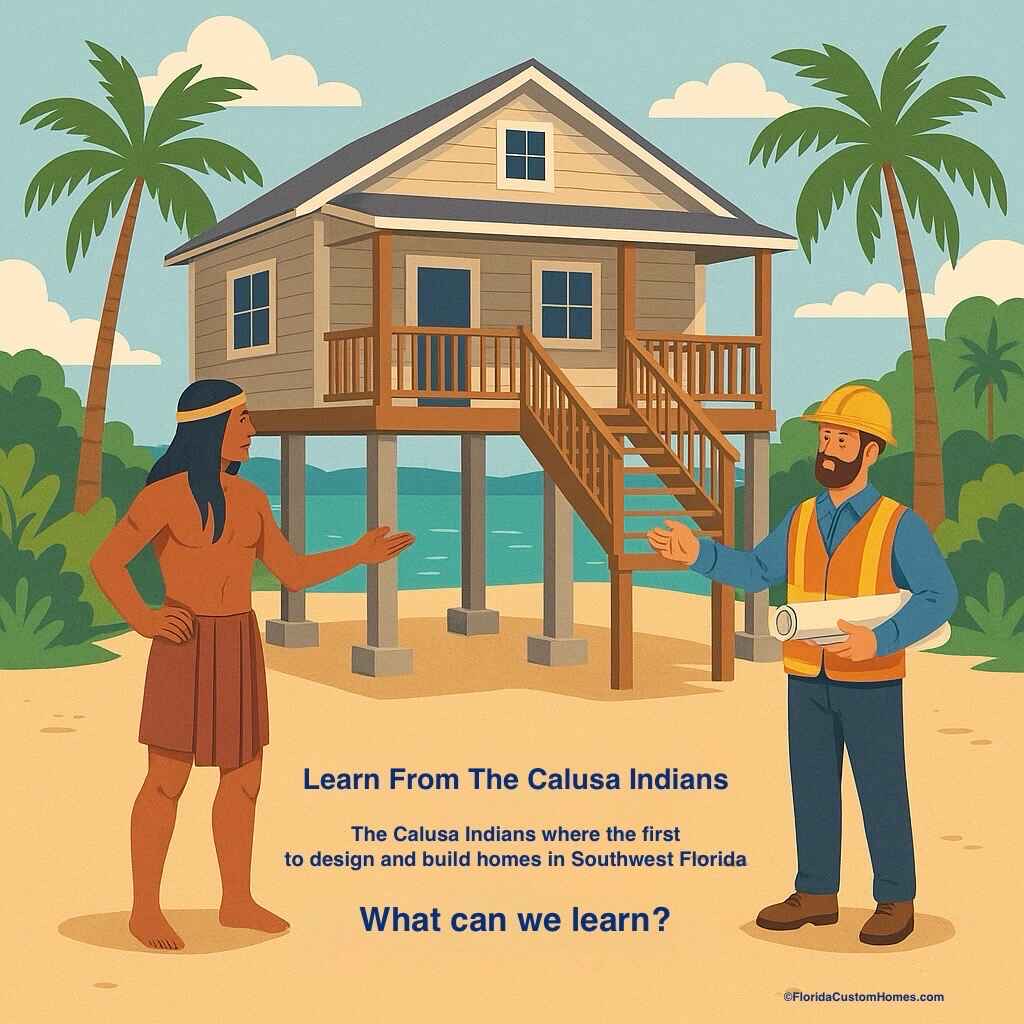
What We Can Learn from the Calusa Indians About Designing Homes in Southwest Florida

Stilt Homes in Southwest Florida

What We Can Learn from the Calusa Indians About Designing Homes in Southwest Florida

By Scott Meadows | FloridaCustomHomes.com
📞 239.220.1157 | 📧 ScottMeadows3@gmail.com

🏝️ Introduction: Lessons From the Original Coastal Engineers

In the modern world of flood maps, hurricane codes, and FEMA zones, we like to think of ourselves as pioneers in resilient coastal construction. But the truth is, we’re not the first to confront the challenges of building homes on Florida’s low-lying Gulf Coast. Long before the first concrete slab was poured in Fort Myers or Sanibel, the Calusa Indians were building elevated, storm-ready, sustainable homes—and they did it all without blueprints, building inspectors, or modern machinery.

The Calusa, known as the “Shell Indians,” dominated the Southwest Florida coastline for over 1,500 years. They built their homes on stilts, their cities on shell mounds, and their society around the rhythms of the sea. Their design principles—born of keen environmental observation—can still teach us a great deal about how to build smarter, safer, and more sustainably in places like Fort Myers Beach, Cape Coral, Estero, Naples, Pine Island, and beyond.

Let’s explore what today’s architects, builders, and homeowners can learn from the Calusa’s approach to living with the land—not against it.

🌴 1. Build for the Environment, Not Against It

What the Calusa Did:

  • Settled near water on barrier islands, bays, and estuaries.
  • Built homes on stilts or mounds to avoid flooding.
  • Used open structures for airflow and cooling.

Modern Takeaway: Design for Florida’s environment with thoughtful home orientation, passive cooling, and respect for natural water movement.

💧 2. Elevation Is Everything

What the Calusa Did:

  • Used elevation as a defense against flooding and storm surge.
  • Built entire communities atop shell mounds or raised wooden pilings.

Modern Takeaway: In FEMA flood zones, elevation is critical for safety, insurance, and longevity—just like it was for the Calusa.

🌬️ 3. Use Nature’s Air Conditioning

What the Calusa Did:

  • Built open-air dwellings that maximized airflow.
  • Oriented structures to catch prevailing breezes.

Modern Takeaway: Design homes for cross-ventilation, use overhangs, and install screened porches or lanais to reduce reliance on air conditioning.

🌱 4. Use Local and Sustainable Materials

What the Calusa Did:

  • Constructed homes with wood, palm fronds, and oyster shells.
  • Chose renewable, biodegradable, and abundant materials.

Modern Takeaway: Use locally sourced materials like Florida cypress, lime rock, or recycled elements to reduce carbon footprint and increase regional suitability.

📐 5. Plan Communities with Purpose

What the Calusa Did:

  • Organized homes around central plazas and communal zones.
  • Engineered canals and pathways for transportation and drainage.

Modern Takeaway: Apply master planning to today’s developments with intentional community design, walkability, shared green space, and natural stormwater flow.

🌀 6. Expect the Storm

What the Calusa Did:

  • Built flexible, wind-resistant homes that could be quickly repaired or rebuilt.
  • Used natural, storm-absorbing materials and elevated architecture.

Modern Takeaway: Use hurricane-rated materials, fortified roof shapes, and flood-proofing techniques to create homes that endure Florida’s weather.

📍 7. Know the Land Before You Build

What the Calusa Did:

  • Built only after understanding tide patterns, flood zones, and soil behavior.
  • Adapted villages to water and climate over centuries.

Modern Takeaway: Always study elevation maps, wetland data, and geotechnical reports. Building in harmony with the land protects both your investment and the environment.

🧠 8. Historical Knowledge = Smarter Development

What the Calusa Did:

  • Created coastal settlements that lasted for more than 1,000 years.
  • Built wisely and sustainably without polluting or degrading the ecosystem.

Modern Takeaway: Today’s real estate and construction industry should draw from ancient wisdom. The Calusa knew how to build for Florida—and so should we.

🏡 Florida Real Estate That Honors the Land

At Florida Custom Homes, we specialize in properties that are:

  • Resilient in hurricane and flood zones
  • Designed for airflow, elevation, and regional efficiency
  • Located in communities with thoughtful layout and environmental balance

The Calusa taught us that the key to lasting success on Florida’s coast is not fighting nature—it’s embracing it.

📣 Let’s Build the Future—Inspired by the Past

If you’re thinking about building or buying in Southwest Florida, let’s make sure your next move reflects both modern safety and timeless design.

Contact Scott Meadows & Team Today

📞 239.220.1157
📧 ScottMeadows3@gmail.com
🌐 FloridaCustomHomes.com

Aug. 31, 2025

Calusa Stilt Dwellings: The Elevated Engineering of Florida’s First Coastal Civilization

Calusa Indian Stilt Dwellings

Calusa Stilt Dwellings: The Elevated Engineering of Florida’s First Coastal Civilization

By Scott Meadows | FloridaCustomHomes.com
📞 239.220.1157 | 📧 ScottMeadows3@gmail.com

🏝️ Introduction: Long Before Waterfront Homes Had Elevation Codes…

In today’s Southwest Florida, elevated homes are common in flood-prone zones, especially in places like Fort Myers Beach, Sanibel, and Pine Island. But what most people don’t realize is that Florida’s earliest coastal engineers—the Calusa Indians—were building elevated dwellings more than 1,000 years ago.

These Indigenous people thrived along the Gulf Coast, long before modern flood maps and hurricane codes. Their solution? Stilt homes built atop mounds, marshes, and estuaries, offering protection, ventilation, and resilience in the tropical environment.

🧬 Who Were the Calusa?

The Calusa were the dominant Native American civilization in Southwest Florida from around 1000 BCE until the 1700s. Their territory stretched from modern-day Charlotte Harbor and Estero Bay to the Ten Thousand Islands.

  • Fisher-gatherers, not farmers
  • Highly skilled maritime people
  • Builders of artificial shell islands, fish corrals, and canals
  • Organizers of a hierarchical society with strong leadership

🛖 Calusa Dwellings: Elevated by Design

🌊 Why Build on Stilts?

They built wooden homes on stilts, often near or over water. Their reasons were practical and sophisticated:

  • Flood protection from tides, rains, and hurricanes
  • Ventilation under the home in hot climates
  • Pest control to deter snakes and insects
  • Strategic access to waterways and trade

🪵 What Materials Did They Use?

  • Wooden poles (pine, cypress, or mangrove)
  • Thatch roofs made of palm fronds
  • Open-sided structures for airflow

Large communal halls and temples were reserved for elites or ceremonies, while commoners had simpler family huts.

📜 Spanish Descriptions of Calusa Architecture

Spanish explorer Pedro Menéndez de Avilés described his 1560s visit to Mound Key:

  • Massive shell mounds with elevated dwellings
  • A central house or temple that could hold hundreds
  • Ritual and ceremonial structures at the highest points

🧱 Archaeological Evidence of Stilted Structures

Even though wood rots in Florida’s climate, archaeologists have found:

  • Posthole patterns in shell middens
  • Canals and watercraft landing zones
  • Stratified layers of shell and sediment supporting buildings

Key sites include Mound Key, Pineland, Useppa Island, and Historic Spanish Point.

🏞️ Village Design and Layout

  • Central mound or plaza for elite structures
  • Outer rings of dwellings and work areas
  • Fish corrals, canal access, and ceremonial zones nearby

🗺️ Mound Key: The Epicenter of Elevated Living

Mound Key in Estero Bay is considered the Calusa capital. Features include:

  • Artificial islands built from millions of shells
  • 20-foot-high shell ridges
  • Postholes and evidence of temples and elite residences

🪶 Elite Housing vs. Commoner Dwellings

Hierarchy was reflected in architecture:

  • Commoners: modest huts with open walls
  • Elites: elevated, ceremonial halls atop large mounds

🌀 What Happened to the Calusa Homes?

  • Spanish disease epidemics (smallpox, influenza)
  • Conflicts with other tribes and slave raids
  • Collapse by mid-1700s

The homes themselves disappeared, but the shell mounds remain.

🌇 Influence on Modern Florida Design

Modern stilt homes—required in flood zones—mirror Calusa logic:

  • Elevation above floodplain
  • Wind and water resilience
  • Climate-appropriate airflow design

Builders today use ICFs, pilings, and hurricane-rated windows, but the Calusa mastered elevation centuries ago—without blueprints.

🧠 Educational and Preservation Opportunities

  • Mound Key State Park – Boat access only; interpretive trails
  • Randell Research Center – Pine Island; Calusa Heritage Trail
  • Historic Spanish Point – Sarasota; shell ridge tours
  • Calusa Nature Center – Fort Myers; family learning center

🏡 Why This History Matters in Real Estate

As a REALTOR®, I’m deeply aware of how elevation, building materials, and climate-resilience matter to Florida homebuyers. The Calusa figured this out long ago—and their wisdom can still guide us today.

If you're searching for:

  • Elevated Gulf-front homes
  • Flood-resistant new construction
  • Homes near archaeological zones or historic waterways

I can help you find properties that blend ancient resilience with modern luxury.

📣 Let’s Find a Florida Home That Respects the Land

Whether you’re a historian at heart or just want a safe, well-built home near the water—let’s make your Florida story one that’s rooted in the wisdom of those who came before.

Contact Scott Meadows & Team today:

📞 239.220.1157
📧 ScottMeadows3@gmail.com
🌐 FloridaCustomHomes.com

Posted in Florida History
Aug. 31, 2025

Before Fort Myers: The Untold History of the Calusa and the First Floridians of the Gulf Coast

Calusa Indians in Southwest Florida

Before Fort Myers: The Untold History of the Calusa and the First Floridians of the Gulf Coast

By Scott Meadows | FloridaCustomHomes.com
📞 239.220.1157 | 📧 ScottMeadows3@gmail.com

🌴 Introduction: Long Before the Beaches and Condos…

When most people think of Southwest Florida—Fort Myers, Fort Myers Beach, Punta Gorda, Sarasota—they picture sunsets over the Gulf, pastel homes on stilts, and white-sand beaches. But what if we told you this paradise was once home to a thriving civilization that mastered the sea, engineered their own islands, and ruled the coastline centuries before Europeans set sail?

Before the first condo went up on Fort Myers Beach or the first shrimp net touched Pine Island Sound, the Calusa, known as the "Shell Indians," ruled this region for over 1,500 years—and Indigenous peoples had been here for thousands of years before that.

🕰️ 1. The First Footprints in the Sand: 10,000+ Years Ago

Archaeologists have found evidence of Indigenous habitation in this area dating back more than 10,000 years, during what’s known as the Archaic Period.

  • Nomadic hunter-gatherers
  • Living in seasonal camps
  • Following game, harvesting shellfish, and adapting to sea level rise

🐚 2. Enter the Calusa: Shell Kings of the Gulf

By around 1000 BCE, a powerful civilization began to rise—the Calusa. They built giant shell mounds, canals, artificial islands, and entire cities from the sea’s bounty.

🌊 Where Did the Calusa Live?

  • Fort Myers & Fort Myers Beach
  • Sanibel & Captiva Islands
  • Estero Bay & Pine Island
  • Punta Gorda & Charlotte Harbor
  • Even up to Sarasota

Their capital was likely Mound Key in Estero Bay.

🛶 3. Life on the Water: The Original Coastal Engineers

The Calusa were maritime specialists who built their entire economy around the sea:

  • Fishing with nets and fish corrals
  • Shellfish harvesting
  • Trade networks reaching the Caribbean and Southeastern US
  • Travel via massive dugout canoes

🏰 4. A Civilization Built from Shells

They engineered massive mounds and islands using clam and oyster shells. These included:

  • 20–30 ft tall ceremonial mounds
  • Platforms for temples and homes
  • Canals that acted as water highways

You can still visit these marvels at:

  • Mound Key Archaeological State Park
  • Randell Research Center on Pine Island
  • Historic Spanish Point near Sarasota

👑 5. The Calusa Society: Chiefs, Priests, and Power

Calusa society was hierarchical. At the top sat the Cacique, a chief who held both political and religious power. Their beliefs involved:

  • Ancestor worship
  • Spiritual rituals with wooden masks
  • Burial mounds and shell symbolism

🏴‍☠️ 6. First Contact: Spanish Invaders and a Fight for Survival

Spanish explorers like Juan Ponce de León arrived in the early 1500s—but the Calusa weren’t interested in friendship.

  • They resisted conversion and colonization
  • Fought back fiercely
  • Held off Spanish occupation for decades

☠️ 7. Decline of the Calusa: Disease, Slavery, and Displacement

The Calusa eventually fell victim to European diseases like smallpox and measles. They also suffered from:

  • Slave raids by Muscogee (Creek) warriors
  • Spanish mission failures
  • Disrupted trade and internal decline

By the mid-1700s, most Calusa were gone—some fled to Cuba, others merged with other Native groups.

🪶 8. The Seminole and Miccosukee Era: A New Chapter

In the 1700s–1800s, new groups entered Florida:

  • Seminole and Miccosukee tribes (Creek descendants)
  • Took refuge in the Everglades
  • Fought U.S. troops in the Seminole Wars

Today, both are federally recognized and operate cultural, governmental, and economic institutions across Florida.

🧭 9. Preserving the Past: Archaeological Treasures and Local Sites

Explore Southwest Florida’s Indigenous heritage at these sites:

  • Mound Key – Estero Bay’s hidden Calusa capital
  • Randell Research Center – Pine Island learning center
  • Historic Spanish Point – Ancient shell middens in Sarasota
  • Calusa Nature Center – Family-friendly museum in Fort Myers

🧠 10. Why It Matters Today

Florida’s history didn’t start with highways and high-rises. The Calusa remind us of a time when people lived in rhythm with the tides and turned seashells into cities.

Understanding their story helps us:

  • Respect archaeological sites
  • Support Indigenous preservation
  • Appreciate the land beneath our homes

🏡 A Real Estate Advisor Who Honors the Land

As a local REALTOR®, I help people find their Florida dream home—but also believe in honoring the land’s cultural and environmental heritage.

If you're searching for waterfront property, a hurricane-resistant new build, or just want to live near history—I'll help you find the perfect fit.

📣 Let’s Talk About Your Place in Florida’s Story

Whether you're a buyer, investor, or history lover, let’s make sure your next move is informed, strategic, and inspired by the spirit of the land.

Contact Scott Meadows & Team today:

📞 239.220.1157
📧 ScottMeadows3@gmail.com
🌐 FloridaCustomHomes.com

Posted in Florida History
Aug. 29, 2025

Florida Homeowners, Hurricane, and Flood Insurance in 2025: What Buyers Need to Know

Florida Homeowners, Hurricane and Flood Insurance

Florida Homeowners, Hurricane, and Flood Insurance in 2025: What Buyers Need to Know

Florida’s real estate market is unlike any other in the United States. While the Sunshine State offers stunning beaches, luxury waterfront homes, and thriving communities, it also comes with unique insurance challenges. Hurricanes, severe storms, and flood risks make homeowners insurance one of the most critical considerations for anyone buying or owning a home in Florida. In 2025, the insurance landscape is shifting as new insurers enter the market and innovative coverage options emerge. Understanding these trends can help Florida homeowners secure the right protection for their property while navigating premiums, coverage limits, and risk factors.

The Challenges of Florida’s Homeowners Insurance Market

Florida has long been one of the most complex insurance markets in the country due to several key factors:

  • Hurricane Risk: Florida is highly vulnerable to hurricanes, tropical storms, and high winds. Catastrophic storms can cause significant property damage, forcing insurers to raise premiums and carefully select the homes they cover.
  • Rising Construction Costs: Following hurricanes and natural disasters, the cost of rebuilding homes has surged. Higher labor costs, supply chain issues, and stricter building codes all contribute to increased insurance premiums.
  • Litigation and Claims: Florida has one of the highest rates of insurance claims litigation in the country. Disputes over roof claims, water damage, and hurricane coverage contribute to rising costs for insurers.
  • Regulatory Environment: The Florida Office of Insurance Regulation (FLOIR) closely monitors insurance companies, setting strict requirements for new market entrants and ensuring financial stability for existing insurers.

New Insurers Entering Florida in 2025

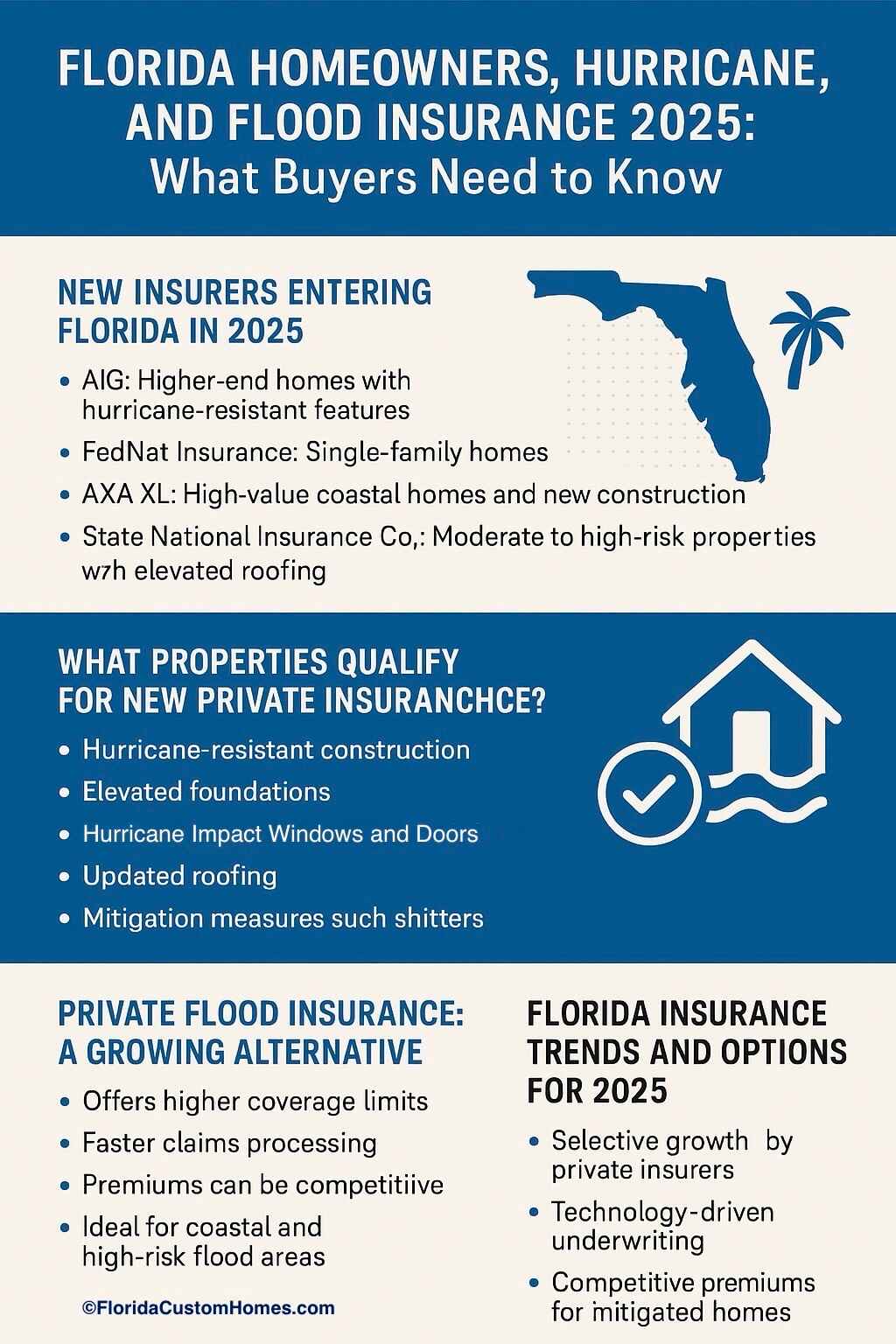
Despite the challenges, several new and expanding insurance companies are entering Florida in 2025, offering homeowners more options than ever before. Many of these carriers are focused on properties with hurricane-resistant construction and advanced mitigation measures.

Key Private Homeowners and Hurricane Insurers

  • AIG (American International Group): Offers homeowners, wind, and hurricane insurance for higher-end homes with hurricane-resistant features and newer construction. Selective about coastal exposures.
  • FedNat Insurance: Provides homeowners and hurricane coverage for single-family homes in elevated areas. Actively underwrites policies for properties meeting wind mitigation standards.
  • AXA XL / Specialty Insurance Units: Focused on high-value coastal homes and new construction, often working through managing general agents (MGAs).
  • State National Insurance Co.: Covers moderate to high-risk properties with hurricane-resistant features and elevated roofing. Uses proprietary risk modeling for underwriting.
  • MGA-backed Startups (Attune, Kin Insurance): Provide homeowners and windstorm insurance for mitigation-compliant single-family homes. Tech-driven underwriting allows selective coverage in Florida.
  • Lemonade: A tech-based digital insurer targeting smaller, inland homes. Limited acceptance in high-risk hurricane zones and flood coverage not included.
  • Private Flood Insurers (Neptune Flood, State Farm Private Flood, Hippo): Offer coverage beyond NFIP limits for homes in flood-prone areas. Faster claims processing and higher limits make these policies attractive.

What Properties Qualify for New Private Insurance?

Many new entrants into the Florida market are selective. Homeowners looking for coverage in 2025 should consider the following requirements to qualify for private insurance:

  • **Hurricane-resistant construction:** Concrete block, Insulated Concrete Forms (ICF), or reinforced masonry.
  • **Elevated foundations:** Particularly for homes in FEMA flood zones AE or VE.
  • **Hurricane impact windows and doors:** Reduces wind damage risk and often lowers premiums.
  • **Updated roofing:** Roofs less than 10 years old or built to Florida Building Code standards.
  • **Mitigation measures:** Storm shutters, reinforced garage doors, and other protective measures.

Private Flood Insurance: A Growing Alternative

Flood risk is another critical factor for Florida homeowners. While the National Flood Insurance Program (NFIP) remains widely used, private flood insurance is becoming increasingly popular:

  • Offers higher coverage limits than NFIP policies.
  • Faster claims processing and more personalized service.
  • Premiums can be competitive for homes with mitigation measures or elevated construction.
  • Some private flood insurers offer bundled policies with homeowners insurance, simplifying coverage.

Private flood insurance is ideal for coastal properties or homes in high-risk flood zones, especially for buyers looking for enhanced coverage beyond NFIP limits.

Southwest Florida Home Owners and Hurricane Insurance Expansion 2025

Florida Insurance Trends in 2025

Several key trends are shaping the Florida homeowners insurance market in 2025:

  • Selective Growth by Private Insurers: Insurers are expanding cautiously, prioritizing homes with hurricane-resistant features and mitigation measures.
  • Technology-driven Underwriting: Startups and MGA-backed carriers use AI and predictive modeling to manage risk more efficiently and streamline claims.
  • Competitive Premiums for Mitigated Homes: Homes with impact windows, reinforced roofs, and elevated foundations can qualify for lower premiums with private insurers.
  • Shift Away from Citizens Property Insurance: As new private carriers enter, Citizens’ role as Florida’s “insurer of last resort” is slowly decreasing for properties that meet mitigation standards.
  • Expanded Flood Coverage: Private flood insurance is increasingly appealing for Gulf Coast and Southwest Florida homes, offering higher limits and faster payouts than NFIP policies.

Tips for Homeowners Navigating the Florida Insurance Market

Whether you’re buying a new home, upgrading an existing property, or seeking hurricane and flood insurance, it’s important to work with professionals who understand Florida’s market:

  • **Evaluate your property’s mitigation features:** Ensure your roof, windows, doors, and foundation meet current Florida Building Code and hurricane standards.
  • **Compare multiple insurers:** Private insurers, MGAs, and specialty carriers have different risk appetites, coverage limits, and pricing strategies.
  • **Consider private flood insurance:** Particularly if you live in a coastal or high-risk flood zone.
  • **Keep up-to-date with regulatory changes:** FLOIR regulations and new market entrants can impact availability and premiums.
  • **Consult with a local real estate expert:** An agent experienced in hurricane-resistant homes and insurance trends can help identify properties eligible for private coverage.

Why Working with Scott Meadows Makes a Difference

Understanding the Florida homeowners and hurricane insurance market can be overwhelming. That’s where Scott Meadows and his team at Florida Custom Homes come in. With over 30 years of experience in Southwest Florida real estate, Scott knows which communities, builders, and homes are best positioned for private insurance and hurricane resilience. He helps buyers:

  • Locate homes that meet modern hurricane code requirements or have been retrofitted to comply.
  • Identify properties eligible for private homeowners, hurricane, and flood insurance.
  • Navigate high-risk areas, flood zones, and elevated home options.
  • Work with reputable insurance providers and agents to secure competitive premiums.

Conclusion

The Florida homeowners insurance market is evolving rapidly in 2025. Private insurers are entering the market, offering homeowners and hurricane insurance for well-prepared properties. Flood insurance options are also expanding, giving buyers higher coverage limits and faster claims service. By staying informed, evaluating your property’s mitigation features, and working with an experienced real estate professional like Scott Meadows, Florida homebuyers can confidently navigate the insurance landscape and protect their investment for years to come.

Scott Meadows - FloridaCustomHomes.com

If you are searching for a Florida home with hurricane-resistant features, eligible for private insurance, or want expert guidance on homeowners, hurricane, and flood coverage, contact Scott Meadows today. With decades of experience in Southwest Florida real estate and new-construction homes, Scott and his team can help you find the right property and ensure your investment is protected.

Scott Meadows – Florida Custom Homes
Phone: 239-220-1157
Email: ScottMeadows3@gmail.com
Website: www.FloridaCustomHomes.com

Aug. 29, 2025

Hurricane-Resistant Homes in Florida

How to Locate Hurricane Resistant Homes in Florida

Hurricane-Resistant Homes in Florida: How Scott Meadows Helps Buyers Find Safe, Storm-Ready Properties

Florida is no stranger to hurricanes. From the Gulf Coast to the Atlantic side, severe weather is a reality that homeowners must account for when buying property. Whether you’re looking for a new construction home built to withstand hurricanes or an existing property that has been retrofitted to comply with today’s hurricane codes, finding the right home requires experience, local knowledge, and a keen understanding of construction standards.

This is where Scott Meadows and his team at FloridaCustomHomes.com excel. With over 30 years of experience helping buyers across Southwest Florida, Scott provides expert guidance for locating homes designed to endure Florida’s storm season.


What Makes a Home Hurricane-Resistant?

Before diving into the market, it’s essential to understand what constitutes a hurricane-resistant home. These features protect both property and residents:

  • Impact-Resistant Windows and Doors – Laminated or tempered glass windows and reinforced doors prevent wind-driven debris from breaching the home.

  • Reinforced Roofing Systems – Standing seam metal roofs, concrete tiles, or other reinforced roofing withstand high winds and minimize uplift damage.

  • Insulated Concrete Form (ICF) or Concrete Walls – These walls resist high-velocity winds and flying debris, providing superior structural integrity.

  • Elevated Foundations – Homes built on pilings or raised slabs reduce flood risk, especially in FEMA-designated flood zones.

  • Storm Shutters or Panels – Shutters provide additional protection during storms and can be custom-fitted to openings.

  • Reinforced Garage Doors and Structural Connections – Properly anchored doors and secure roof-to-wall connections prevent catastrophic failures during storms.

Homes with these features often comply with current Florida Building Codes, including standards for High-Velocity Hurricane Zones (HVHZ) along the coast.


Why Working With Scott Meadows is Critical

Not all homes marketed as “hurricane-resistant” meet modern standards. This is where Scott’s expertise is invaluable:

1. Locating Compliant Existing Homes

Scott and his team have deep knowledge of homes that:

  • Were built to modern hurricane codes post-2002, when Florida updated standards following Hurricane Andrew.

  • Have been retrofitted to meet current hurricane-resistant requirements, including impact windows, reinforced roofs, and upgraded structural connections.

  • Feature elevated foundations or other flood-prevention measures to minimize water damage.

By leveraging MLS data, building permit records, and community-specific insights, Scott identifies homes that not only meet today’s standards but provide peace of mind during hurricane season.

2. Familiarity With Communities and Builders

Scott Meadows and his team maintain an intimate knowledge of Southwest Florida communities, including:

  • Coastal neighborhoods prone to storm surge or wind damage.

  • Inland communities with homes constructed to withstand high winds.

  • Builders and custom builders who specialize in hurricane-resistant construction, ensuring buyers can find homes built with resilience in mind.

This knowledge allows Scott to recommend specific communities or neighborhoods that align with both lifestyle and storm-readiness priorities.

3. Expert Guidance on Retrofitting Homes

Not all hurricane-resistant homes are new construction. Many older homes can be upgraded to meet modern hurricane codes. Scott and his team:

  • Advise on retrofit options for windows, doors, and roofs.

  • Provide insight on structural reinforcements like additional tie-downs and wall bracing.

  • Help buyers verify permit history to ensure previous retrofits were completed correctly.

This ensures that even existing homes can offer the safety features typically associated with new construction.


Evaluating Flood Zones and Elevation

Flood risk is one of the most critical factors when assessing hurricane-resistant homes. Scott’s team helps buyers understand:

  • FEMA Flood Zones – Zones AE/VE indicate higher risk, while Zone X is considered lower risk.

  • Elevation – Homes built on higher ground reduce the chance of water damage.

  • Storm Surge Vulnerability – Coastal areas are at risk for surge during hurricanes, so choosing homes with proper elevation and protective features is essential.

By evaluating these factors, Scott ensures buyers select homes with both structural resilience and strategic location.


Understanding Florida Building Codes and Compliance

Florida has some of the strictest building codes in the nation for hurricane safety. Scott Meadows keeps up-to-date with these codes and helps buyers understand:

  • High-Velocity Hurricane Zone (HVHZ) requirements for Miami-Dade and Broward counties, which often influence coastal building standards across Florida.

  • Wind-load requirements for homes based on location.

  • Insurance implications of compliant homes, including potential reductions in windstorm premiums.

By knowing which homes meet or exceed these standards, buyers avoid properties that may be vulnerable to storm damage or costly insurance claims.


The Role of Inspections in Hurricane-Resistant Home Purchases

Even when a home is marketed as hurricane-resistant, a specialized inspection is critical. Scott Meadows works with buyers to:

  • Verify impact windows and doors are certified and installed correctly.

  • Inspect roof and structural connections, including trusses and reinforcements.

  • Assess foundation and flood protection systems.

A proper inspection ensures that your investment truly aligns with the hurricane-resistant features advertised.


Education Through FloridaCustomHomes.com

Scott Meadows’ website, FloridaCustomHomes.com, is an invaluable resource for prospective buyers. Through blog articles, guides, and FAQs, buyers can learn about:

  • Different types of hurricane-resistant construction, from ICF walls to metal roofs.

  • How to evaluate flood zones and storm surge risk.

  • Steps to retrofit older homes for improved safety.

  • Maintenance tips to keep homes storm-ready year-round.

This educational content empowers buyers to make informed decisions while navigating the Florida real estate market.


Maintenance and Hurricane Readiness Tips

Buying a hurricane-resistant home is only part of the equation. Scott Meadows emphasizes:

  • Routine roof inspections and upkeep.

  • Checking window and door seals before storm season.

  • Trimming landscaping to reduce debris risk.

  • Maintaining emergency supplies and generators.

By following these steps, buyers maximize the safety and longevity of their investment.


Why Southwest Florida is a Strategic Choice for Storm-Resistant Homes

Southwest Florida offers unique advantages for hurricane-resistant buyers:

  • Many communities are proactively constructed with flood mitigation in mind.

  • The market includes modern new builds and retrofitted older homes.

  • Buyers can select from a variety of coastal and inland locations, depending on risk tolerance.

Scott Meadows’ knowledge of these communities ensures buyers select homes that balance lifestyle, investment value, and storm preparedness.


Summary: How Scott Meadows Helps You Find Hurricane-Resistant Homes

Buying a hurricane-resistant home in Florida is not just about construction—it’s about knowledge, experience, and guidance. Scott Meadows and his team provide:

  1. Access to homes built or retrofitted to meet modern hurricane codes.

  2. Expertise in communities and neighborhoods with storm-resilient properties.

  3. Guidance on evaluating flood zones, elevation, and storm surge risk.

  4. Inspections and verification of impact-rated windows, reinforced roofs, and structural safety.

  5. Education through FloridaCustomHomes.com to help buyers understand hurricane-resistant features and maintenance best practices.


With Scott Meadows, buyers gain a trusted partner who ensures every home is safe, resilient, and prepared for Florida’s hurricane season.

Work with Scott Meadows – Trusted Hurricane Resistant Home Location Buyer’s Agent with 35+ Years of Experience

When it comes to navigating the Fort Myers market, Scott Meadows is a name buyers trust.

As a seasoned Broker Associate with over 35 years of experience in Florida real estate, Scott has helped countless buyers:

  • Achieve their dream of homeownership
  • Secure the best deal possible
  • Build long-term value in every purchase

Scott’s extensive background in new construction, resale homes, waterfront properties, and investment real estate makes him a powerful advocate in any market.

📞 Ready to Get Started?

Contact Scott Meadows Today
Broker Associate – Premiere Plus Realty
📍 Serving Fort Myers, Naples, Estero, Cape Coral, and all of Southwest Florida
📞 Phone: (239) 220-1157
📧 Email: ScottMeadows3@gmail.com
🌐 Website: FloridaCustomHomes.com

Aug. 28, 2025

Building Hurricane-Resistant Homes in Southwest Florida: A Complete Guide

Building Hurricane Resistant Homes in Southwest Florida

Building Hurricane-Resistant Homes in Southwest Florida: A Complete Guide

Southwest Florida’s stunning coastline and warm climate attract thousands of homebuyers each year. But living near the Gulf comes with a unique challenge: hurricanes. With storms like Ian, Elsa, and others making landfall in recent years, homeowners increasingly prioritize hurricane-resistant construction. Whether you’re planning to build a new home in Cape Coral, Fort Myers, Naples, or Punta Gorda, understanding how to construct a safe, storm-proof residence is essential.

This guide will cover the most effective strategies, materials, and design approaches to ensure your Southwest Florida home is built to withstand severe weather while maintaining comfort, style, and long-term value.


1. Understanding Hurricane Risk in Southwest Florida

Before building, it’s essential to recognize the risk factors in the region:

  • Wind Speeds: Coastal Southwest Florida homes must be designed to endure wind speeds exceeding 140 mph in high-velocity hurricane zones (HVHZ), such as Fort Myers Beach, Cape Coral, and Naples.

  • Storm Surge & Flooding: Waterfront homes or properties near canals face the threat of flooding. Elevation and proper drainage are critical.

  • Debris Impact: Flying debris during hurricanes can penetrate conventional windows and doors, causing significant damage.

Pro Tip: Always check FEMA flood maps and local building codes when selecting a lot for your new construction home.


2. Choosing the Right Foundation and Structure

The foundation is the first line of defense against hurricanes:

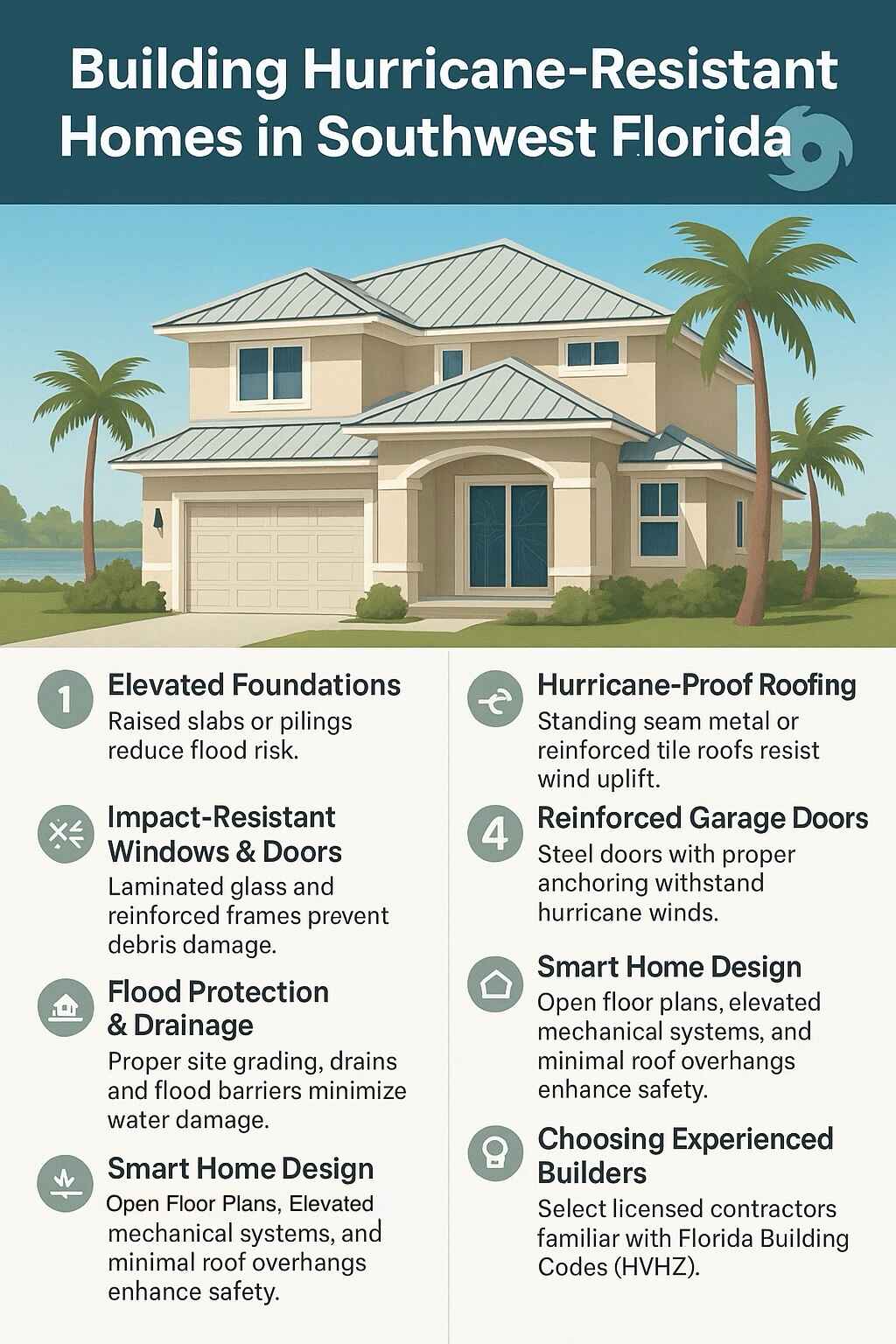
  • Elevated Foundations: Homes built on raised slabs or pilings reduce flood damage. In VE or AE flood zones, elevating the home above base flood elevation (BFE) is often required.

  • Concrete & ICF Walls: Insulated Concrete Form (ICF) or reinforced concrete walls are highly resistant to wind, water, and debris impact. They provide superior durability compared to traditional wood framing.

  • Steel Framing Options: Some modern builders use steel-frame construction for additional strength, especially in coastal areas. Steel resists warping and termites while offering excellent load-bearing capacity.

SEO Tip: Keywords like “Southwest Florida hurricane-proof homes” and “strong new construction homes in Florida” should be sprinkled throughout content discussing foundations.


3. Roofing Systems Designed for Storms

The roof is often the most vulnerable part of a home during a hurricane:

  • Standing Seam Metal Roofs: Durable and aerodynamic, they can withstand wind uplift and prevent water intrusion.

  • Concrete or Clay Tile Roofing: Heavyweight tiles are wind-resistant but require reinforced framing to support weight.

  • Proper Roof-to-Wall Connections: Using hurricane straps or clips ensures the roof remains secured to walls during extreme wind events.

Pro Tip: Avoid overhanging eaves and unsecured gutters, which can become airborne during storms.


4. Impact-Resistant Windows and Doors

Windows and doors are critical points of vulnerability:

  • Laminated Glass Impact Windows: Rated to withstand 130+ mph winds, these windows prevent shattering from debris.

  • Hurricane-Impact Doors: Steel or reinforced fiberglass doors with multi-point locks increase both security and storm resistance.

  • Window Frames: Aluminum or vinyl frames designed for impact resistance provide additional strength and minimize water intrusion.

Consumer Insight: Some manufacturers still use annealed glass in products marketed as “impact-resistant.” Always verify certification to ensure your windows meet HVHZ standards.


5. Hurricane-Proof Garage Doors

Garage doors are often overlooked but can fail during storms, causing structural damage:

  • Reinforced Steel Panels: Garage doors with steel reinforcement withstand high wind pressures.

  • Wind-Rated Doors: Look for doors tested for specific wind speeds and rated for hurricane zones.

  • Professional Installation: Proper anchoring and reinforcement are critical. Even the strongest door can fail if installed incorrectly.


6. Smart Home Design for Storm Safety

Modern hurricane-resistant homes incorporate thoughtful design elements:

  • Open Floor Plans with Fewer Partitions: Reduces internal wind pressure and structural stress.

  • Minimal Roof Overhangs: Prevents wind uplift during storms.

  • Elevated Mechanical Systems: HVAC units, electrical panels, and water heaters should be installed above flood levels.

  • Landscaping Considerations: Keep trees and shrubs trimmed; avoid planting debris-prone species near the home.

SEO Tip: Phrases like “hurricane-resistant home design in Southwest Florida” can improve organic search for buyers looking for new construction homes.


7. Flood Protection and Drainage

Water damage can be as devastating as wind damage. Effective flood management strategies include:

  • Site Grading: Proper slope away from the home prevents water accumulation near the foundation.

  • French Drains & Retention Ponds: Mitigate flood risk for low-lying lots.

  • Sealed Entry Points: Flood-resistant doors and backflow preventers on plumbing reduce internal water damage.


8. Insurance and Compliance

Building a hurricane-resistant home doesn’t just protect property—it affects insurance:

  • Insurance Premiums: Properly constructed homes in compliance with Florida Building Codes often qualify for lower windstorm premiums.

  • Code Compliance: Florida has some of the strictest building codes in the U.S., especially in HVHZ. Work only with licensed builders experienced with local requirements.

  • Post-Storm Inspections: Insurance may require certification that windows, doors, and roofs meet code standards.


9. Choosing a Builder Experienced in Hurricane-Resistant Homes

Selecting the right builder is crucial:

  • Track Record: Look for completed projects in high-velocity hurricane zones.

  • Customizable Options: Builders should offer ICF walls, impact windows, reinforced roofing, and elevated foundations.

  • References & Reviews: Speak with past clients about their homes’ durability during storms.

Popular Southwest Florida builders with strong hurricane-resistant expertise include DR Horton, Lennar, Stock Development, and GL Homes.


10. Final Considerations for Southwest Florida Buyers

When planning a new construction home:

  1. Invest in Resilient Materials: Concrete, ICF, metal, and impact-resistant glass provide long-term protection.

  2. Prioritize Location & Elevation: Avoid flood-prone areas if possible and check FEMA maps.

  3. Maintain Storm Readiness: Have hurricane shutters, generator backup, and emergency plans in place.

  4. Understand Costs: Hurricane-resistant features may increase initial costs but significantly reduce potential storm damage and insurance premiums.

  5. Work With Experts: Architects, engineers, and builders experienced in Southwest Florida’s coastal environment are invaluable.


Conclusion

Building a hurricane-resistant home in Southwest Florida is a strategic investment in safety, comfort, and long-term property value. By using the right materials, designing with storms in mind, and selecting experienced professionals, homeowners can enjoy peace of mind in one of the nation’s most beautiful—and storm-prone—regions.

Whether you’re considering a waterfront estate in Cape Coral or a luxury home in Naples, integrating hurricane-proof design, strong foundations, impact-resistant features, and smart site planning ensures your Southwest Florida home is prepared for any storm.


Contact Scott Meadows for guidance on building your hurricane-resistant home in Southwest Florida. With over 30 years of experience, Scott specializes in helping buyers find the perfect lot, select the right builder, and design homes that stand up to nature while delivering modern luxury.


📞 Phone: 239-464-7700
✉️ Email: Scott@FloridaCustomHomes.com
🌐 Website: www.FloridaCustomHomes.com

Aug. 26, 2025

How Fort Myers Beach Has Transformed: Infrastructure and Housing Development After Hurricanes Ian, Helene, and Milton

Fort Myers Beach

How Fort Myers Beach Has Transformed: Infrastructure and Housing Development After Hurricanes Ian, Helene, and Milton

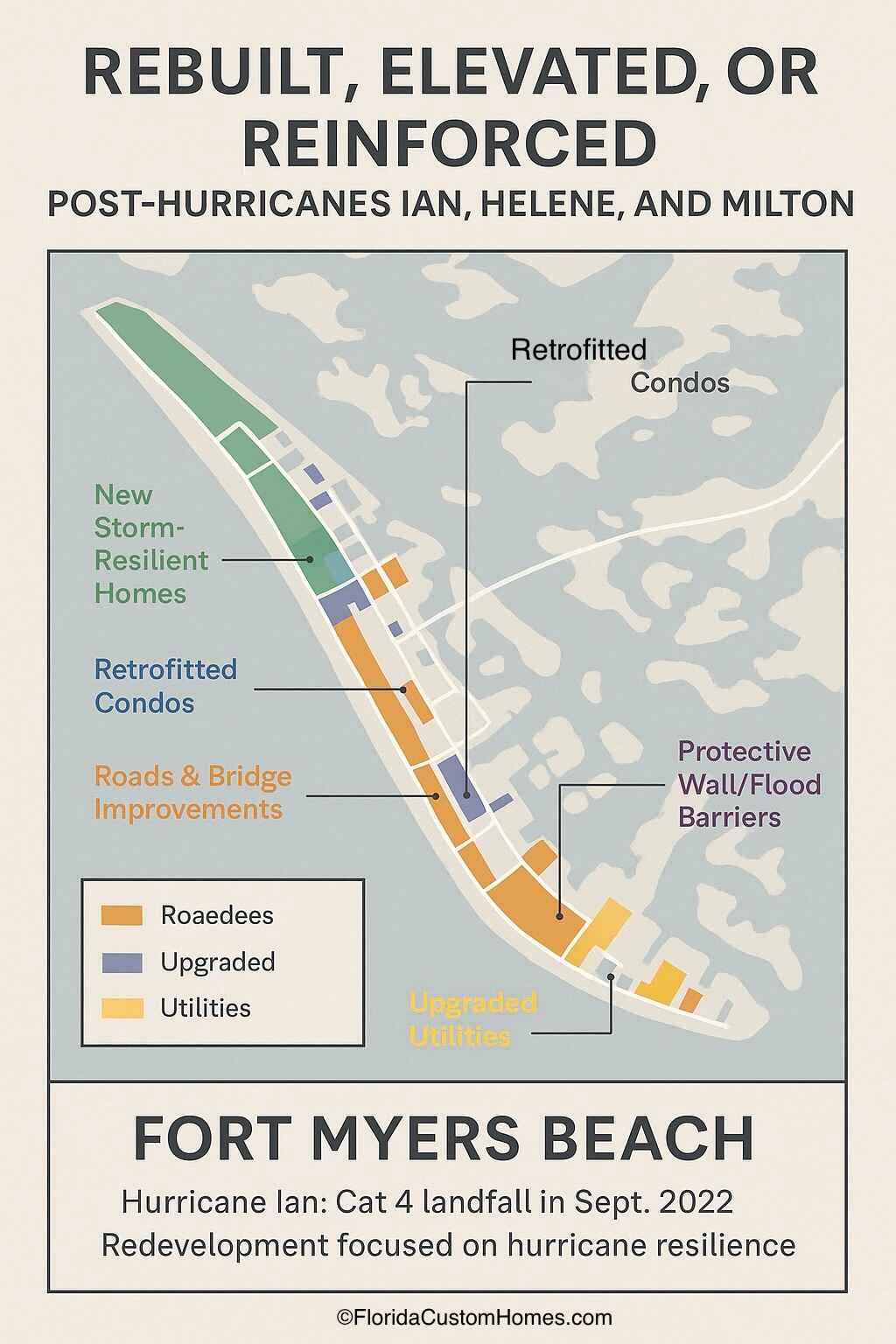
Fort Myers Beach, one of Southwest Florida’s most iconic coastal communities, has long attracted homeowners and investors with its sandy beaches, vibrant lifestyle, and waterfront access. However, the area has faced significant challenges due to hurricanes, most recently Hurricanes Ian, Helene, and Milton. These storms have prompted both public and private sectors to rethink how infrastructure, homes, and condominiums are designed, built, and maintained.

In this article, we explore the profound changes Fort Myers Beach has undergone in the wake of these hurricanes, focusing on infrastructure improvements, home and condo redevelopment, and the future of resilient coastal living.

1. Strengthening Fort Myers Beach’s Infrastructure

Hurricanes have historically exposed vulnerabilities in Fort Myers Beach’s infrastructure. From stormwater management to roads and utilities, the storms highlighted areas that needed immediate attention.

a. Enhanced Stormwater and Flood Management Systems

One of the first priorities post-hurricanes has been improving stormwater and drainage systems. Hurricane Ian, in particular, demonstrated how low-lying areas of the island were susceptible to severe flooding. In response:

  • Stormwater upgrades: Larger culverts, retention areas, and upgraded pump stations were installed to handle extreme rainfall events.
  • Green infrastructure: New projects include permeable pavements and vegetated swales, which help reduce surface runoff while filtering pollutants before they reach local waterways.
  • Beach and dune restoration: The shoreline has been rebuilt multiple times, reinforcing natural barriers that protect inland areas from storm surge. These efforts often rely on FEMA grants and state funding.

b. Roadway and Bridge Improvements

The island’s transportation network has been enhanced to improve safety and resilience during storms:

  • San Carlos Boulevard upgrades: The main thoroughfare has been elevated in vulnerable sections, repaved, and retrofitted with improved drainage systems.
  • Bridge reinforcement: Bridges connecting Fort Myers Beach to the mainland have been structurally reinforced to withstand hurricane-force winds and storm surge, reducing the risk of isolation during emergencies.

c. Utility Hardening and Energy Resilience

Utility systems have also been strengthened to ensure continuity during disasters:

  • Electrical infrastructure: Critical lines have been moved underground in key areas to prevent extended outages caused by wind damage.
  • Water and wastewater systems: Treatment plants and sewage networks have been fortified against flooding, preventing contamination and service interruptions.
  • Backup systems: Emergency generators and redundant systems are now standard for essential services, ensuring functionality during hurricanes.

2. The Evolution of Residential Homes

Hurricanes Ian, Helene, and Milton have fundamentally reshaped how new homes are built and older homes are retrofitted on Fort Myers Beach.

a. New Construction: Storm-Resilient Homes

New homes are now designed with storm-resilience at the forefront:

  • Building codes: Homes adhere to the latest Florida Building Code standards, capable of withstanding Category 5 wind speeds.
  • Impact-resistant windows and doors: Modern materials and construction methods prevent glass breakage during hurricanes.
  • Elevated foundations: New homes are typically raised above the Base Flood Elevation (BFE) to reduce flood risk.
  • ICF construction: Insulated Concrete Form (ICF) homes are becoming increasingly popular due to their durability, energy efficiency, and wind resistance.

b. Retrofitting Older Homes

Many homeowners are upgrading existing structures to meet modern resilience standards:

  • Roofing: Older roofs have been replaced with standing seam metal roofs or other high-wind-rated materials.
  • Shutters and barriers: Storm shutters, flood barriers, and reinforced doors are commonly installed to protect windows and entries.
  • Elevation projects: Some properties are being elevated or reconstructed entirely to meet floodplain requirements.

c. Architectural and Lifestyle Shifts

Beyond structural improvements, homeowners are prioritizing features that enhance both safety and lifestyle:

  • Open layouts with reinforced interior walls: Homes now blend modern design with structural safety.
  • Elevated outdoor living spaces: Patios, pools, and lanais are designed to withstand flooding and heavy winds, allowing residents to enjoy the coastal lifestyle safely.
  • Energy-efficient and sustainable design: Solar panels, energy-efficient windows, and hurricane-resistant materials are increasingly incorporated.

3. Condominium Redevelopment

Condominiums on Fort Myers Beach, many of which suffered damage during recent hurricanes, have undergone significant redevelopment to improve safety and marketability.

a. Post-Hurricane Reconstruction

  • Demolition and rebuilding: Several older beachfront towers were demolished and replaced with modern structures that comply with enhanced codes.
  • Structural retrofitting: Existing condos were reinforced with wind-resistant materials, improved foundations, and hurricane-proof glass.
  • Elevated parking and amenities: Ground-level garages and recreational areas have been raised to reduce flood exposure.

b. Insurance and Market Implications

  • Insurance requirements: New condo developments must comply with stricter wind and flood insurance rules, influencing design and materials.
  • Marketing resilience: Developers now highlight hurricane-resistant features as a key selling point, appealing to buyers who prioritize safety and long-term property value.

c. Size and Amenity Trends

  • Smaller, more efficient footprints: Reducing vulnerability and allowing better evacuation routes.
  • Resilient amenities: Pools, gyms, and communal areas are elevated or reinforced to withstand storms.
  • Sustainable landscaping: Native vegetation and stormwater-friendly designs protect both the property and the environment.

4. Community Planning and Zoning Changes

  • Zoning updates: Local ordinances encourage construction that reduces storm surge risk and prioritizes flood-resistant design.
  • Seawall and flood barrier studies: Feasibility studies are underway for protective infrastructure along key sections of the island.
  • Preparedness initiatives: Evacuation routes, storm shelters, and HOA-led emergency plans are becoming standard.
  • Long-term sustainability: Green infrastructure, mangrove buffers, and floodplain management strategies are integrated into municipal planning.

5. The Future of Fort Myers Beach Real Estate

The cumulative effect of Hurricanes Ian, Helene, and Milton has been transformative:

  • Homes and condos are safer, more resilient, and insurance-friendly.
  • Infrastructure investments have reduced flooding risks and improved evacuation capabilities.
  • Community planning is increasingly forward-thinking, addressing both climate change and storm surge mitigation.
  • Fort Myers Beach is positioned as a model for coastal resilience, attracting buyers and investors who value safety, aesthetics, and long-term property value.

Investing in Fort Myers Beach now means accessing properties built to withstand the future while enjoying the vibrant lifestyle that has made this area a premier coastal destination.

Conclusion

Fort Myers Beach has undergone a profound transformation in response to Hurricanes Ian, Helene, and Milton. From reinforced roads and bridges to elevated, storm-resistant homes and retrofitted condos, the town has demonstrated a commitment to resilience and forward-thinking planning.

Whether you are a prospective homebuyer, investor, or current resident, these improvements ensure that Fort Myers Beach remains not only a beautiful place to live but also a safe and sustainable one. With modern homes, resilient condos, and upgraded infrastructure, the community is well-positioned to withstand future storms while preserving its charm and appeal.

Contact Scott Meadows for Expert Real Estate Guidance in Fort Myers Beach

Scott Meadows is a seasoned Southwest Florida real estate professional specializing in luxury waterfront homes, new construction, and hurricane-resilient properties. With years of experience helping buyers navigate the unique challenges of coastal real estate, Scott ensures clients make informed decisions to protect both lifestyle and investment.

Phone: 239‑220‑1157
Email: ScottMeadows3@gmail.com
Website: FloridaCustomHomes.com

Aug. 25, 2025

Discover The Grove: Cape Coral’s Premier New Home Community in 2025

The Grove Cape Coral Florida

Discover The Grove: Cape Coral’s Premier New Home Community in 2025

Cape Coral, Florida, continues to be one of Southwest Florida’s fastest-growing real estate markets, offering buyers a mix of waterfront living, modern amenities, and strong investment potential. Among the city’s most sought-after residential developments is The Grove, a community designed to combine luxury living, modern design, and a family-friendly atmosphere. For homebuyers searching for Cape Coral new homes, The Grove provides an exciting option that blends convenience, lifestyle, and long-term value.

What is The Grove, Cape Coral?

The Grove Cape Coral is a new construction residential community that offers a variety of single-family homes, modern floor plans, and resort-style amenities. Strategically located in Cape Coral, this community provides easy access to the city’s major thoroughfares, shopping, dining, and recreational areas. Whether you are a first-time homebuyer, a retiree, or an investor looking for Southwest Florida real estate, The Grove is built to accommodate a wide range of lifestyles.

The Grove is notable for its combination of modern architecture, hurricane-resistant construction, and community-centered amenities. Buyers in 2025 are increasingly looking for resilient homes in Florida, and The Grove delivers homes designed to withstand tropical storms, backed by impact-resistant windows, elevated foundations, and quality builder craftsmanship.

Prime Location in Cape Coral

One of the biggest draws of The Grove is its strategic location. Situated in Cape Coral, the community is close to:

  • Cape Coral Parkway and Del Prado Boulevard – major roads that make commuting and local travel convenient.
  • Nearby shopping and dining – popular destinations like Cape Coral Town Center and Midpoint Shopping Center.
  • Top-rated schools – ideal for families looking for quality education options.
  • Proximity to the Gulf Coast – providing residents with easy access to boating, fishing, and beach activities.

Home Styles and Floor Plans

The Grove offers a range of modern single-family homes and luxury villa options, designed to meet the needs of today’s buyers. Key features include:

  • Open-concept layouts: Large living spaces seamlessly connect the kitchen, dining, and family rooms.
  • Luxury kitchens: Designer cabinets, quartz countertops, high-end appliances, and oversized islands.
  • Spacious primary suites: Walk-in closets, spa-style bathrooms, and private balconies in select homes.
  • Outdoor living areas: Covered patios, lanais, and optional pools perfect for entertaining or relaxing.
  • Hurricane-resilient construction: Impact-resistant windows, reinforced roofing systems, and elevated foundations.

Home sizes generally range from 1,800 to 3,500+ square feet, with 3-5 bedrooms and 2-4 bathrooms, providing flexibility for a variety of household sizes.

Builders and Construction Quality

Quality construction is a key selling point for The Grove. Several reputable Florida builders are involved in the community, known for their expertise in new construction and hurricane-resistant homes. Buyers can expect:

  • Durable materials: Concrete block construction, reinforced roofing, and impact-rated glass windows.
  • Modern energy efficiency: Energy Star-rated appliances, LED lighting, and efficient HVAC systems.
  • Attention to detail: Thoughtfully designed interiors, upscale finishes, and functional layouts.

Community Amenities

The Grove is not just about homes—it’s about creating a resort-style lifestyle. Residents enjoy a variety of amenities, including:

  • Community pool and spa – perfect for cooling off in Florida’s sunny climate.
  • Fitness center – equipped with modern machines and space for group classes.
  • Walking trails and green spaces – encouraging an active and outdoor lifestyle.
  • Playground and family areas – ideal for children and community gatherings.
  • Clubhouse – a social hub for residents, with spaces for events, meetings, and recreational activities.

Waterfront Living Opportunities

While The Grove primarily features inland homes, Cape Coral is known as the “Waterfront Wonderland”, and nearby communities offer Gulf-access canals and boating opportunities. Residents of The Grove have easy access to the Cape Coral canal system, allowing for:

  • Boating and fishing: Quick trips to the Gulf of Mexico for leisure or sport.
  • Kayaking and paddleboarding: Calm canals ideal for outdoor water activities.
  • Scenic views: Even homes not directly on the water often enjoy nearby green or canal views.

Price Range and Market Position

As of 2025, homes in The Grove generally range from $500,000 to over $1.2 million, depending on the size, lot, and finishes. This positions the community as mid- to upper-market Cape Coral real estate, appealing to buyers seeking a balance of luxury, location, and lifestyle.

Why Buyers are Choosing The Grove

Several factors make The Grove a standout choice in the Cape Coral real estate market:

  • Modern, hurricane-resilient homes: Peace of mind for Florida weather.
  • Resort-style amenities: Pool, clubhouse, and fitness options enhance everyday living.
  • Prime location: Access to shopping, dining, schools, and the Gulf Coast.
  • Variety of floor plans: Homes for families, retirees, and investors alike.
  • Strong builder reputation: Known for quality construction and attention to detail.

Investment Potential

For investors or second-home buyers, The Grove presents strong long-term value:

  • Rising Cape Coral home values: Cape Coral’s real estate market has steadily appreciated.
  • Rental opportunities: Homes in The Grove can attract seasonal renters seeking resort-style living in Southwest Florida.
  • Hurricane-resilient construction: Reduces potential maintenance costs and enhances insurance eligibility.

Conclusion

The Grove, Cape Coral, represents a perfect combination of luxury living, modern design, and Southwest Florida lifestyle. Whether you’re a first-time buyer, growing family, or investor, The Grove offers quality homes, resort-style amenities, and a location that makes everyday life convenient and enjoyable. With new construction homes designed to meet modern standards and withstand Florida weather, The Grove remains a top choice for those looking to invest in Cape Coral real estate.

Ready to Explore The Grove in Cape Coral?

Scott Meadows is your trusted Southwest Florida real estate expert, helping buyers find their dream homes and maximize their investment potential. Contact Scott today to schedule a private tour of The Grove or learn more about available new construction homes.

Phone: 239‑220‑1157
Email: ScottMeadows3@gmail.com
Website: FloridaCustomHomes.com

Aug. 24, 2025

What Jerome Powell’s August 2025 Jackson Hole Speech Means for Interest Rates, Inflation, and the Housing Market

What Jerome Powell’s August 2025 Jackson Hole Speech Means for Interest Rates, Inflation, and the Housing Market

What Jerome Powell’s August 2025 Jackson Hole Speech Means for Interest Rates, Inflation, and the Housing Market

Introduction: The World Watches Jackson Hole

Every summer, global investors, economists, and policymakers tune in to the Federal Reserve’s Jackson Hole Economic Symposium, eager to hear from the most powerful central banker in the world—Fed Chair Jerome Powell. His August 22, 2025 speech did not disappoint.

With markets on edge and the economy sending mixed signals, Powell’s remarks offered both reassurance and caution. For homebuyers, sellers, real estate investors, and builders, understanding Powell’s message is essential to making informed financial decisions for the rest of 2025 and beyond. Read more, Will The Federal Reserve Lower Interest Rates September 2025...

Key Takeaways from Jerome Powell’s August 2025 Jackson Hole Speech

1. Inflation Risks Remain

Powell acknowledged that inflation has moderated from the 2022–2023 peaks, but risks remain—particularly due to recent tariff-related price pressures. While the Fed expects these to be transitory, Powell made clear they are watching for signs of long-term inflation dynamics.

“We are alert to the risk that recent trade-related price increases could ignite broader inflation expectations,” Powell stated.

2. Labor Market Weakness Is Emerging

Job growth has been slowing, and Powell said the labor market is now showing signs of “broadening weakness.” This contrasts with the strong employment picture of 2024.

3. Interest Rate Policy May Shift

While Powell didn’t announce a rate cut, he said the Fed is prepared to “adjust our policy stance as needed.” That’s central bank code for “a cut is on the table.”

Markets responded swiftly. Futures now show an 85–90% probability of a rate cut at the September 2025 Fed meeting.

4. Policy Framework Updated

  • The Fed will no longer pursue a “make-up” strategy for inflation shortfalls.
  • It is re-committing to a flexible inflation targeting approach.
  • References to the Effective Lower Bound (ELB) were removed.

Why Powell’s Speech Matters for the Housing Market

A. Mortgage Rates May Begin to Fall

Powell’s dovish tone has already impacted mortgage markets. After the speech, the average 30-year fixed mortgage rate dropped from 7.15% to 6.89%—its lowest level in two months.

B. Builder Confidence Could Rebound

Major homebuilders like Lennar, DR Horton, and Pulte have faced high financing costs. A shift in Fed policy could rejuvenate builder sentiment and demand.

C. Home Prices May Stabilize

Markets across the Sunbelt saw home price growth cool in early 2025. Easing borrowing costs may help stabilize pricing as buyers reenter the market.

What This Means for Buyers, Sellers, and Real Estate Investors

For Buyers:

  • Lock in rates before increased competition returns.
  • Take advantage of builder incentives before they taper.

For Sellers:

  • Expect improved buyer sentiment and activity.
  • Stabilizing home prices could benefit listings.

For Investors:

  • Cap rates may compress as rates fall.
  • Build-to-rent projects may regain momentum.

How the Markets Reacted to Powell’s August 2025 Remarks

  • S&P 500 rose over 1.8%.
  • 10-year Treasury yield dropped to 3.92%.
  • U.S. Dollar softened slightly.

Federal Reserve’s Updated Economic Forecasts (Post-Speech Sentiment)

Forecast Category Pre-Speech Outlook Post-Speech Adjustment
Fed Funds Rate (Dec 2025) 5.25% – 5.5% 4.75% – 5.0%
Core PCE Inflation (2025) 2.4% 2.6% (due to tariffs)
GDP Growth (Q4 YoY 2025) 1.9% 1.4%
Unemployment (Q4 2025) 4.1% 4.4%

Upcoming Fed Meetings to Watch

  • September 16–17, 2025
  • November 4–5, 2025
  • December 16–17, 2025

Powell’s Balancing Act: Not Too Fast, Not Too Late

Jerome Powell is facing what he called a “delicate balancing act.” Move too quickly, and the Fed risks fueling inflation again. Move too slowly, and the job market may weaken further.

“We are proceeding carefully—not because we are uncertain of our goals, but because the consequences of over- or under-shooting are significant.”

How Florida Real Estate Is Positioned

A. Florida Remains a Magnet for Migration

Florida metros like Cape Coral, Tampa, and Naples remain attractive due to favorable tax policies, warm climate, and remote work trends.

B. Insurance and Resiliency Still a Factor

Insurance premiums, ICF construction, and storm-rated features are top-of-mind for buyers post-Idalia and Ian.

C. Coastal and Gulf-Access Properties

Waterfront and Gulf-access properties in Cape Coral, Marco Island, and Sarasota may benefit from renewed luxury demand if rates ease.

Final Thoughts: What Should You Do Now?

  • Evaluate refinance opportunities.
  • Secure builder incentives while available.
  • Position your investment strategies ahead of expected policy shifts.

Conclusion: Fed Policy Will Drive Real Estate in Late 2025

Jerome Powell’s August 2025 Jackson Hole speech marked a turning point. The real estate market stands to benefit—but timing and expert guidance are key.

Work with a Trusted Advisor

If you’re navigating the Florida real estate market—whether buying, selling, or investing—work with a professional who understands both macro trends and local dynamics.

Contact Scott Meadows:
📞 Phone: 239‑220‑1157
📧 Email: ScottMeadows3@gmail.com
🌐 Website: FloridaCustomHomes.com