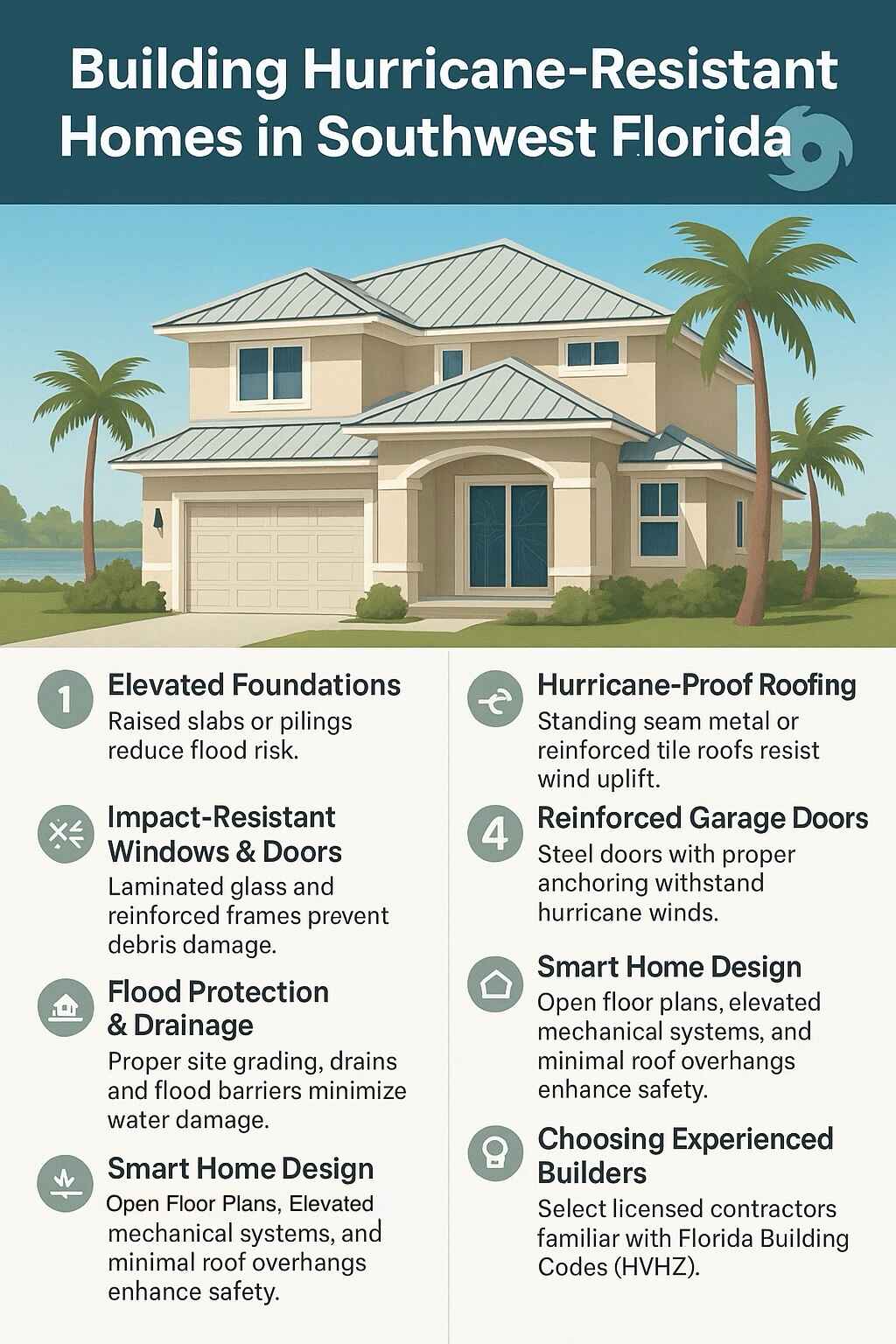
Building Hurricane-Resistant Homes in Southwest Florida: A Complete Guide
Southwest Florida’s stunning coastline and warm climate attract thousands of homebuyers each year. But living near the Gulf comes with a unique challenge: hurricanes. With storms like Ian, Elsa, and others making landfall in recent years, homeowners increasingly prioritize hurricane-resistant construction. Whether you’re planning to build a new home in Cape Coral, Fort Myers, Naples, or Punta Gorda, understanding how to construct a safe, storm-proof residence is essential.
This guide will cover the most effective strategies, materials, and design approaches to ensure your Southwest Florida home is built to withstand severe weather while maintaining comfort, style, and long-term value.
1. Understanding Hurricane Risk in Southwest Florida
Before building, it’s essential to recognize the risk factors in the region:
-
Wind Speeds: Coastal Southwest Florida homes must be designed to endure wind speeds exceeding 140 mph in high-velocity hurricane zones (HVHZ), such as Fort Myers Beach, Cape Coral, and Naples.
-
Storm Surge & Flooding: Waterfront homes or properties near canals face the threat of flooding. Elevation and proper drainage are critical.
-
Debris Impact: Flying debris during hurricanes can penetrate conventional windows and doors, causing significant damage.
Pro Tip: Always check FEMA flood maps and local building codes when selecting a lot for your new construction home.
2. Choosing the Right Foundation and Structure
The foundation is the first line of defense against hurricanes:
-
Elevated Foundations: Homes built on raised slabs or pilings reduce flood damage. In VE or AE flood zones, elevating the home above base flood elevation (BFE) is often required.
-
Concrete & ICF Walls: Insulated Concrete Form (ICF) or reinforced concrete walls are highly resistant to wind, water, and debris impact. They provide superior durability compared to traditional wood framing.
-
Steel Framing Options: Some modern builders use steel-frame construction for additional strength, especially in coastal areas. Steel resists warping and termites while offering excellent load-bearing capacity.
SEO Tip: Keywords like “Southwest Florida hurricane-proof homes” and “strong new construction homes in Florida” should be sprinkled throughout content discussing foundations.
3. Roofing Systems Designed for Storms
The roof is often the most vulnerable part of a home during a hurricane:
-
Standing Seam Metal Roofs: Durable and aerodynamic, they can withstand wind uplift and prevent water intrusion.
-
Concrete or Clay Tile Roofing: Heavyweight tiles are wind-resistant but require reinforced framing to support weight.
-
Proper Roof-to-Wall Connections: Using hurricane straps or clips ensures the roof remains secured to walls during extreme wind events.
Pro Tip: Avoid overhanging eaves and unsecured gutters, which can become airborne during storms.
4. Impact-Resistant Windows and Doors
Windows and doors are critical points of vulnerability:
-
Laminated Glass Impact Windows: Rated to withstand 130+ mph winds, these windows prevent shattering from debris.
-
Hurricane-Impact Doors: Steel or reinforced fiberglass doors with multi-point locks increase both security and storm resistance.
-
Window Frames: Aluminum or vinyl frames designed for impact resistance provide additional strength and minimize water intrusion.
Consumer Insight: Some manufacturers still use annealed glass in products marketed as “impact-resistant.” Always verify certification to ensure your windows meet HVHZ standards.
5. Hurricane-Proof Garage Doors
Garage doors are often overlooked but can fail during storms, causing structural damage:
-
Reinforced Steel Panels: Garage doors with steel reinforcement withstand high wind pressures.
-
Wind-Rated Doors: Look for doors tested for specific wind speeds and rated for hurricane zones.
-
Professional Installation: Proper anchoring and reinforcement are critical. Even the strongest door can fail if installed incorrectly.
6. Smart Home Design for Storm Safety
Modern hurricane-resistant homes incorporate thoughtful design elements:
-
Open Floor Plans with Fewer Partitions: Reduces internal wind pressure and structural stress.
-
Minimal Roof Overhangs: Prevents wind uplift during storms.
-
Elevated Mechanical Systems: HVAC units, electrical panels, and water heaters should be installed above flood levels.
-
Landscaping Considerations: Keep trees and shrubs trimmed; avoid planting debris-prone species near the home.
SEO Tip: Phrases like “hurricane-resistant home design in Southwest Florida” can improve organic search for buyers looking for new construction homes.
7. Flood Protection and Drainage
Water damage can be as devastating as wind damage. Effective flood management strategies include:
-
Site Grading: Proper slope away from the home prevents water accumulation near the foundation.
-
French Drains & Retention Ponds: Mitigate flood risk for low-lying lots.
-
Sealed Entry Points: Flood-resistant doors and backflow preventers on plumbing reduce internal water damage.
8. Insurance and Compliance
Building a hurricane-resistant home doesn’t just protect property—it affects insurance:
-
Insurance Premiums: Properly constructed homes in compliance with Florida Building Codes often qualify for lower windstorm premiums.
-
Code Compliance: Florida has some of the strictest building codes in the U.S., especially in HVHZ. Work only with licensed builders experienced with local requirements.
-
Post-Storm Inspections: Insurance may require certification that windows, doors, and roofs meet code standards.
9. Choosing a Builder Experienced in Hurricane-Resistant Homes
Selecting the right builder is crucial:
-
Track Record: Look for completed projects in high-velocity hurricane zones.
-
Customizable Options: Builders should offer ICF walls, impact windows, reinforced roofing, and elevated foundations.
-
References & Reviews: Speak with past clients about their homes’ durability during storms.
Popular Southwest Florida builders with strong hurricane-resistant expertise include DR Horton, Lennar, Stock Development, and GL Homes.
10. Final Considerations for Southwest Florida Buyers
When planning a new construction home:
-
Invest in Resilient Materials: Concrete, ICF, metal, and impact-resistant glass provide long-term protection.
-
Prioritize Location & Elevation: Avoid flood-prone areas if possible and check FEMA maps.
-
Maintain Storm Readiness: Have hurricane shutters, generator backup, and emergency plans in place.
-
Understand Costs: Hurricane-resistant features may increase initial costs but significantly reduce potential storm damage and insurance premiums.
-
Work With Experts: Architects, engineers, and builders experienced in Southwest Florida’s coastal environment are invaluable.
Conclusion
Building a hurricane-resistant home in Southwest Florida is a strategic investment in safety, comfort, and long-term property value. By using the right materials, designing with storms in mind, and selecting experienced professionals, homeowners can enjoy peace of mind in one of the nation’s most beautiful—and storm-prone—regions.
Whether you’re considering a waterfront estate in Cape Coral or a luxury home in Naples, integrating hurricane-proof design, strong foundations, impact-resistant features, and smart site planning ensures your Southwest Florida home is prepared for any storm.
Contact Scott Meadows for guidance on building your hurricane-resistant home in Southwest Florida. With over 30 years of experience, Scott specializes in helping buyers find the perfect lot, select the right builder, and design homes that stand up to nature while delivering modern luxury.
📞 Phone: 239-464-7700
✉️ Email: Scott@FloridaCustomHomes.com
🌐 Website: www.FloridaCustomHomes.com