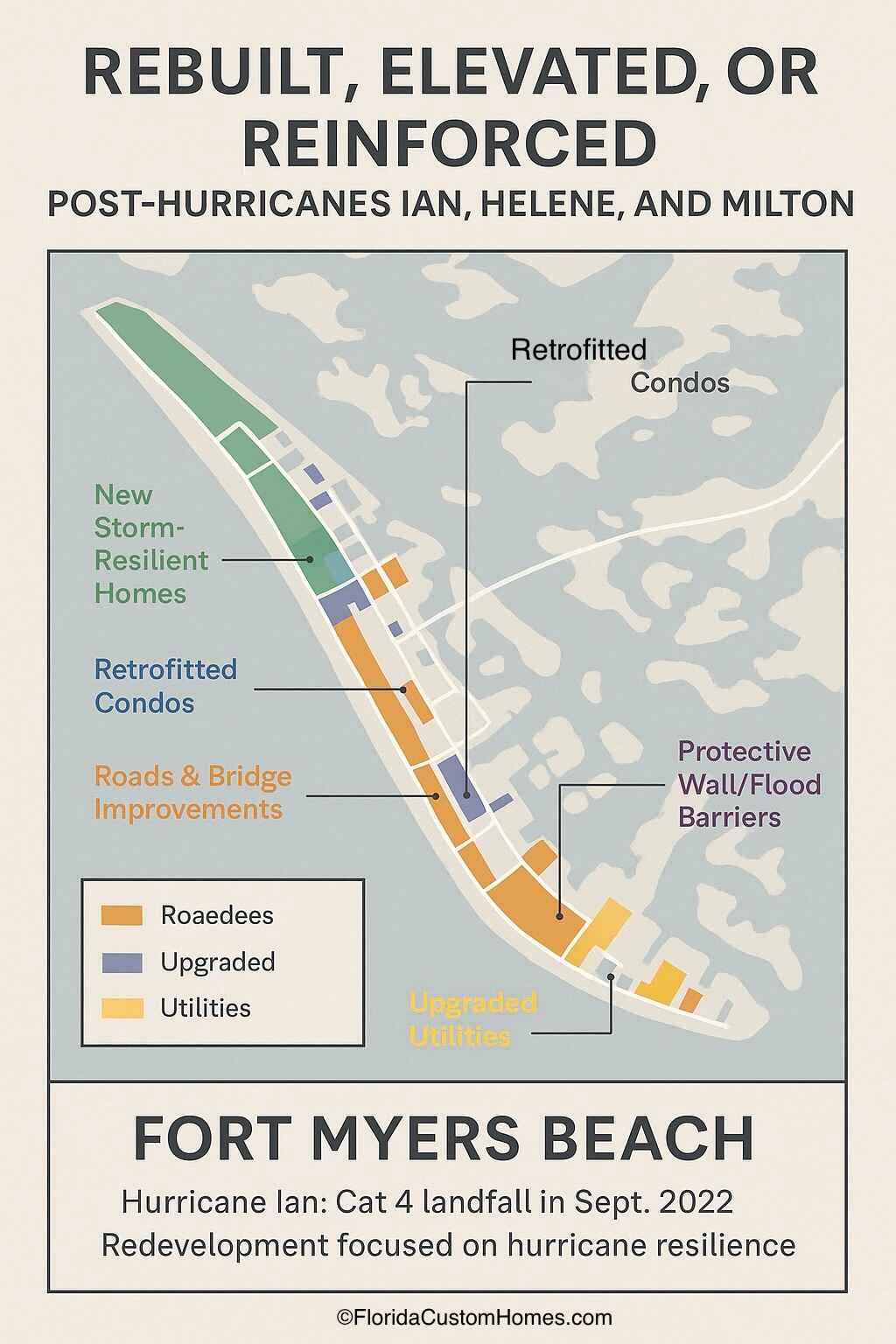
How Fort Myers Beach Has Transformed: Infrastructure and Housing Development After Hurricanes Ian, Helene, and Milton
Fort Myers Beach, one of Southwest Florida’s most iconic coastal communities, has long attracted homeowners and investors with its sandy beaches, vibrant lifestyle, and waterfront access. However, the area has faced significant challenges due to hurricanes, most recently Hurricanes Ian, Helene, and Milton. These storms have prompted both public and private sectors to rethink how infrastructure, homes, and condominiums are designed, built, and maintained.
In this article, we explore the profound changes Fort Myers Beach has undergone in the wake of these hurricanes, focusing on infrastructure improvements, home and condo redevelopment, and the future of resilient coastal living.
1. Strengthening Fort Myers Beach’s Infrastructure
Hurricanes have historically exposed vulnerabilities in Fort Myers Beach’s infrastructure. From stormwater management to roads and utilities, the storms highlighted areas that needed immediate attention.
a. Enhanced Stormwater and Flood Management Systems
One of the first priorities post-hurricanes has been improving stormwater and drainage systems. Hurricane Ian, in particular, demonstrated how low-lying areas of the island were susceptible to severe flooding. In response:
- Stormwater upgrades: Larger culverts, retention areas, and upgraded pump stations were installed to handle extreme rainfall events.
- Green infrastructure: New projects include permeable pavements and vegetated swales, which help reduce surface runoff while filtering pollutants before they reach local waterways.
- Beach and dune restoration: The shoreline has been rebuilt multiple times, reinforcing natural barriers that protect inland areas from storm surge. These efforts often rely on FEMA grants and state funding.
b. Roadway and Bridge Improvements
The island’s transportation network has been enhanced to improve safety and resilience during storms:
- San Carlos Boulevard upgrades: The main thoroughfare has been elevated in vulnerable sections, repaved, and retrofitted with improved drainage systems.
- Bridge reinforcement: Bridges connecting Fort Myers Beach to the mainland have been structurally reinforced to withstand hurricane-force winds and storm surge, reducing the risk of isolation during emergencies.
c. Utility Hardening and Energy Resilience
Utility systems have also been strengthened to ensure continuity during disasters:
- Electrical infrastructure: Critical lines have been moved underground in key areas to prevent extended outages caused by wind damage.
- Water and wastewater systems: Treatment plants and sewage networks have been fortified against flooding, preventing contamination and service interruptions.
- Backup systems: Emergency generators and redundant systems are now standard for essential services, ensuring functionality during hurricanes.
2. The Evolution of Residential Homes
Hurricanes Ian, Helene, and Milton have fundamentally reshaped how new homes are built and older homes are retrofitted on Fort Myers Beach.
a. New Construction: Storm-Resilient Homes
New homes are now designed with storm-resilience at the forefront:
- Building codes: Homes adhere to the latest Florida Building Code standards, capable of withstanding Category 5 wind speeds.
- Impact-resistant windows and doors: Modern materials and construction methods prevent glass breakage during hurricanes.
- Elevated foundations: New homes are typically raised above the Base Flood Elevation (BFE) to reduce flood risk.
- ICF construction: Insulated Concrete Form (ICF) homes are becoming increasingly popular due to their durability, energy efficiency, and wind resistance.
b. Retrofitting Older Homes
Many homeowners are upgrading existing structures to meet modern resilience standards:
- Roofing: Older roofs have been replaced with standing seam metal roofs or other high-wind-rated materials.
- Shutters and barriers: Storm shutters, flood barriers, and reinforced doors are commonly installed to protect windows and entries.
- Elevation projects: Some properties are being elevated or reconstructed entirely to meet floodplain requirements.
c. Architectural and Lifestyle Shifts
Beyond structural improvements, homeowners are prioritizing features that enhance both safety and lifestyle:
- Open layouts with reinforced interior walls: Homes now blend modern design with structural safety.
- Elevated outdoor living spaces: Patios, pools, and lanais are designed to withstand flooding and heavy winds, allowing residents to enjoy the coastal lifestyle safely.
- Energy-efficient and sustainable design: Solar panels, energy-efficient windows, and hurricane-resistant materials are increasingly incorporated.
3. Condominium Redevelopment
Condominiums on Fort Myers Beach, many of which suffered damage during recent hurricanes, have undergone significant redevelopment to improve safety and marketability.
a. Post-Hurricane Reconstruction
- Demolition and rebuilding: Several older beachfront towers were demolished and replaced with modern structures that comply with enhanced codes.
- Structural retrofitting: Existing condos were reinforced with wind-resistant materials, improved foundations, and hurricane-proof glass.
- Elevated parking and amenities: Ground-level garages and recreational areas have been raised to reduce flood exposure.
b. Insurance and Market Implications
- Insurance requirements: New condo developments must comply with stricter wind and flood insurance rules, influencing design and materials.
- Marketing resilience: Developers now highlight hurricane-resistant features as a key selling point, appealing to buyers who prioritize safety and long-term property value.
c. Size and Amenity Trends
- Smaller, more efficient footprints: Reducing vulnerability and allowing better evacuation routes.
- Resilient amenities: Pools, gyms, and communal areas are elevated or reinforced to withstand storms.
- Sustainable landscaping: Native vegetation and stormwater-friendly designs protect both the property and the environment.
4. Community Planning and Zoning Changes
- Zoning updates: Local ordinances encourage construction that reduces storm surge risk and prioritizes flood-resistant design.
- Seawall and flood barrier studies: Feasibility studies are underway for protective infrastructure along key sections of the island.
- Preparedness initiatives: Evacuation routes, storm shelters, and HOA-led emergency plans are becoming standard.
- Long-term sustainability: Green infrastructure, mangrove buffers, and floodplain management strategies are integrated into municipal planning.
5. The Future of Fort Myers Beach Real Estate
The cumulative effect of Hurricanes Ian, Helene, and Milton has been transformative:
- Homes and condos are safer, more resilient, and insurance-friendly.
- Infrastructure investments have reduced flooding risks and improved evacuation capabilities.
- Community planning is increasingly forward-thinking, addressing both climate change and storm surge mitigation.
- Fort Myers Beach is positioned as a model for coastal resilience, attracting buyers and investors who value safety, aesthetics, and long-term property value.
Investing in Fort Myers Beach now means accessing properties built to withstand the future while enjoying the vibrant lifestyle that has made this area a premier coastal destination.
Conclusion
Fort Myers Beach has undergone a profound transformation in response to Hurricanes Ian, Helene, and Milton. From reinforced roads and bridges to elevated, storm-resistant homes and retrofitted condos, the town has demonstrated a commitment to resilience and forward-thinking planning.
Whether you are a prospective homebuyer, investor, or current resident, these improvements ensure that Fort Myers Beach remains not only a beautiful place to live but also a safe and sustainable one. With modern homes, resilient condos, and upgraded infrastructure, the community is well-positioned to withstand future storms while preserving its charm and appeal.
Contact Scott Meadows for Expert Real Estate Guidance in Fort Myers Beach
Scott Meadows is a seasoned Southwest Florida real estate professional specializing in luxury waterfront homes, new construction, and hurricane-resilient properties. With years of experience helping buyers navigate the unique challenges of coastal real estate, Scott ensures clients make informed decisions to protect both lifestyle and investment.
Phone: 239‑220‑1157
Email: ScottMeadows3@gmail.com
Website: FloridaCustomHomes.com