Sept. 18, 2025
.jpeg)
How New FEMA Guidelines and Building Codes Are Lowering Flood Insurance Rates for New Construction Homes in Cape Coral, Florida
By Scott Meadows | Florida Custom Homes
Introduction
Cape Coral, Florida, often called the “Waterfront Wonderland,” is famous for its more than 400 miles of canals, sunny skies, and ideal lifestyle for boating, fishing, and waterfront living. However, with this unique environment comes a heightened risk of flooding. For years, homeowners in Cape Coral have faced high flood insurance premiums, which have made buying or building a home in flood-prone areas costly.
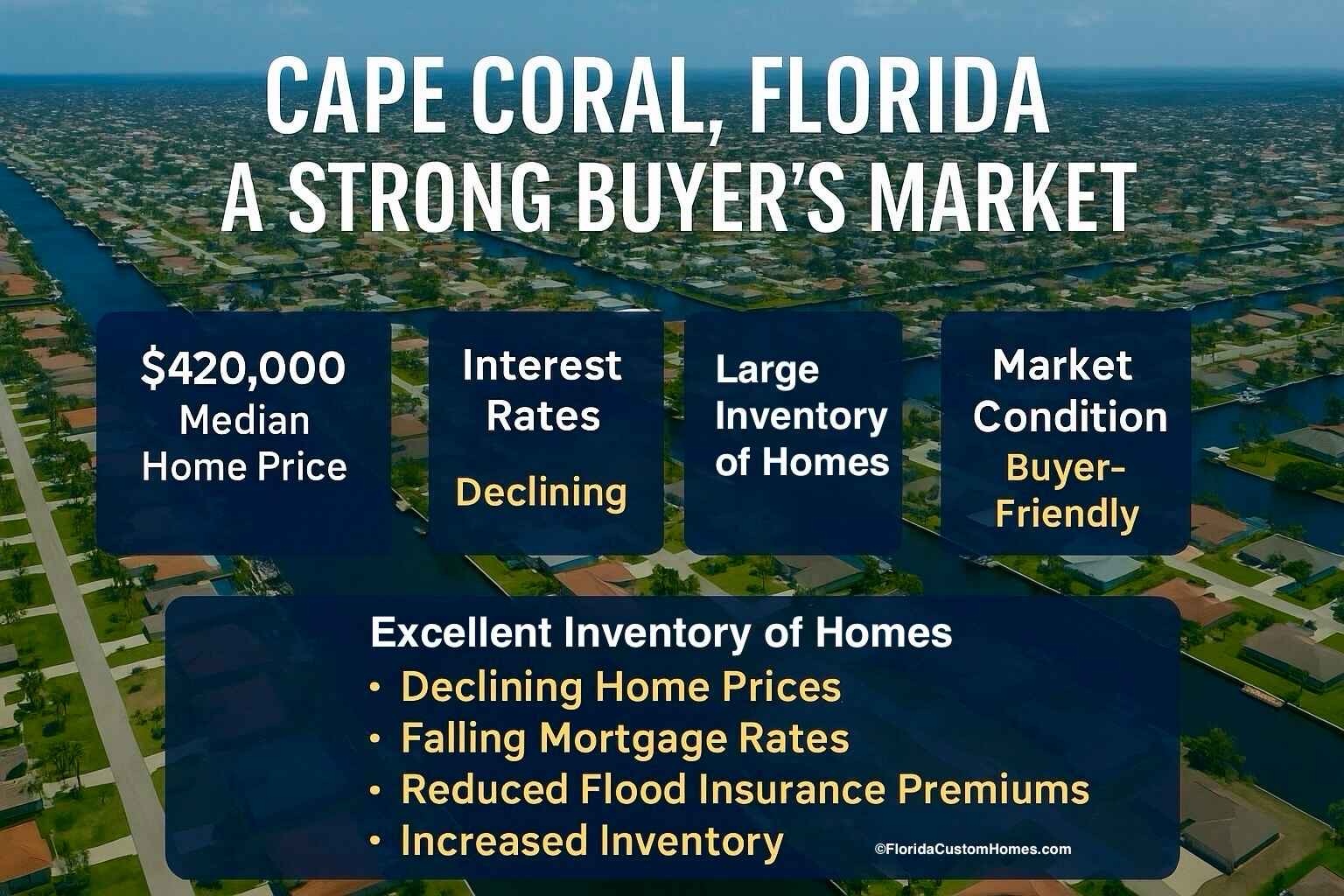
As of September 2025, the good news is that flood insurance rates for new construction homes in Cape Coral are declining. This positive trend is largely due to new FEMA guidelines, updated flood maps, and stricter building codes implemented starting in late 2022. These changes not only protect homeowners from future flood damage but also offer tangible financial benefits by lowering insurance premiums.
In this article, we’ll take a deep dive into why flood insurance rates are declining in Cape Coral, what it means for new construction homeowners, and actionable steps for navigating flood insurance in Southwest Florida.
1. Understanding Cape Coral’s Flood Risk
Cape Coral is situated in Lee County along the Gulf Coast of Florida, which makes it susceptible to hurricane-driven storm surges and tidal flooding. Historically, the city has faced high flood risks, particularly in areas near canals and waterways.
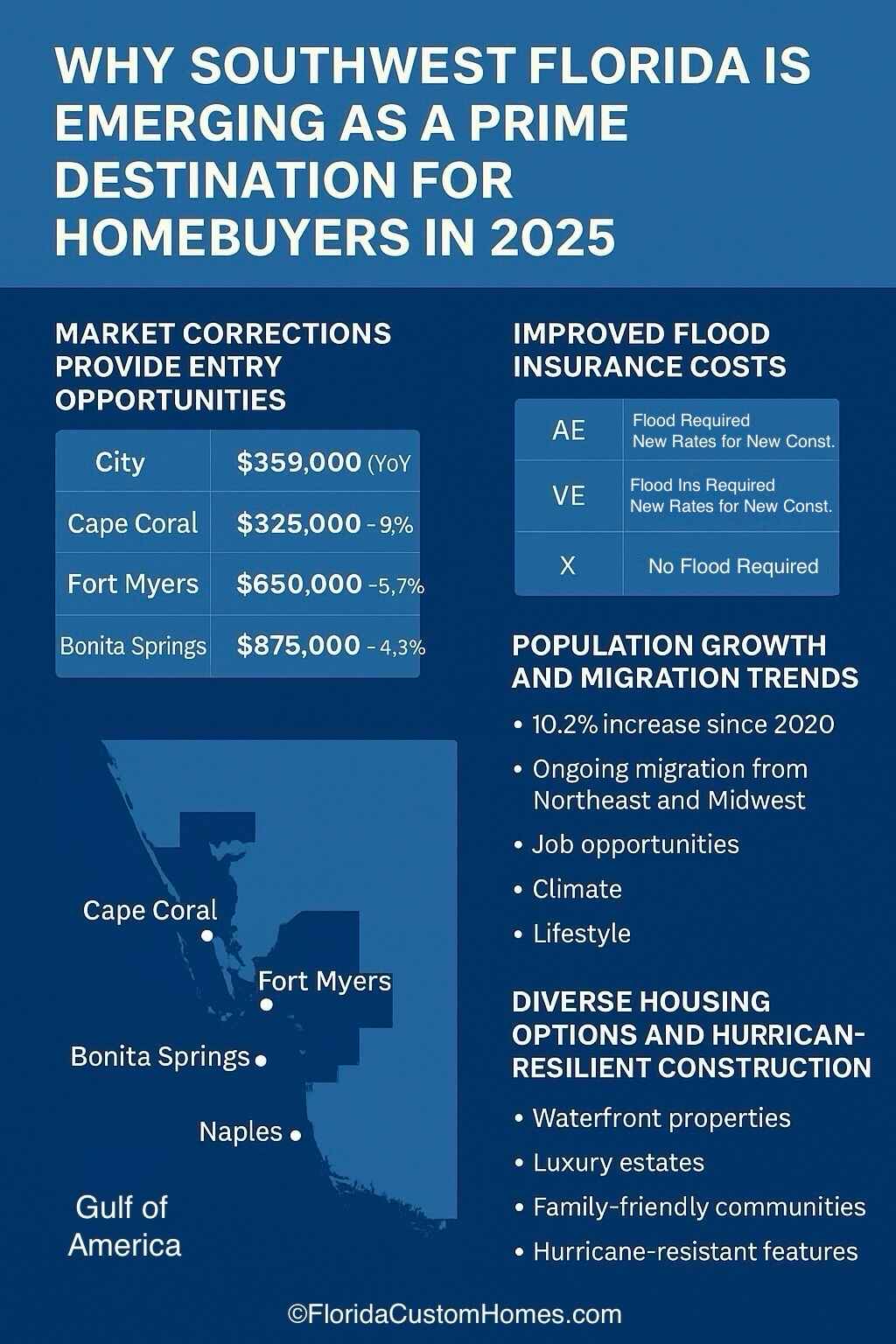
Flood zones are designated by FEMA based on projected flood hazards. These include:
- Zone VE: Coastal areas with high-velocity waves.
- Zone AE: Areas with a 1% annual chance of flooding (100-year flood zones).
- Zone X: Areas of minimal flood risk.
For years, many Cape Coral properties fell into AE or VE zones, leading to higher flood insurance rates. However, FEMA’s 2022 updated Flood Insurance Rate Maps (FIRMs) have reclassified certain properties, which has already contributed to rate reductions for new construction homes.
2. FEMA’s Updated Flood Insurance Rate Maps (FIRMs)
On November 17, 2022, FEMA released updated FIRMs for Lee County, including Cape Coral. These maps incorporated advanced hydrological and engineering studies to more accurately assess flood risk.
Key outcomes of the updated FIRMs include:
- Some properties previously designated as AE or VE zones were reclassified to Zone X, resulting in lower flood insurance rates.
- Base Flood Elevations (BFEs) were recalculated, providing more precise elevation data for properties.
- Homeowners with accurate elevation data can now take advantage of lower premiums through Risk Rating 2.0, FEMA’s new flood insurance pricing model.
According to Lee County’s floodplain management reports, approximately 15–20% of new construction sites in Cape Coral now fall into lower-risk classifications, directly impacting insurance costs.
3. Enhanced Building Codes and Elevation Requirements
In addition to FEMA map updates, Cape Coral has implemented stricter building codes for new construction, particularly regarding flood resilience. These updates were largely motivated by lessons learned from Hurricane Ian in 2022, which highlighted vulnerabilities in older homes.
Key building code changes for new construction homes include:
- Elevation requirements: The lowest floor must now be elevated to or above the Base Flood Elevation plus 1 foot of freeboard (BFE +1’).
- Flood-resistant materials: Homes must utilize flood-resistant materials in areas prone to flooding.
- Mechanical systems elevated: Electrical and HVAC systems must be elevated to reduce flood damage risk.
These upgrades not only protect homes from flood damage but also qualify them for lower flood insurance premiums. Insurers reward properties that meet or exceed current building standards, making new construction homes financially advantageous compared to older homes.
4. FEMA Risk Rating 2.0: A Game-Changer for Insurance Premiums
FEMA’s Risk Rating 2.0, implemented in October 2021, revolutionized flood insurance by pricing policies based on a property’s individual risk factors rather than broad flood zone categories.
Factors considered in Risk Rating 2.0 include:
- Elevation of the home relative to Base Flood Elevation.
- Distance to nearest water body (river, canal, or coastline).
- Building type, construction materials, and replacement costs.
- History of flood claims on the property.
For new construction homes in Cape Coral, which now comply with stricter codes and elevated foundations, this has translated to premium reductions in many cases. Homeowners previously paying $1,500 annually may now pay as little as $1,125 per year, depending on property-specific risk factors.
5. The Community Rating System (CRS) Advantage
Cape Coral participates in FEMA’s Community Rating System (CRS), which rewards communities that go above and beyond minimum floodplain management standards. Cape Coral maintains a Class 5 CRS rating, giving residents a 25% discount on their flood insurance premiums.
CRS initiatives include:
- Public information campaigns about flood risks.
- Local floodplain management enforcement.
- Encouraging voluntary property elevations and mitigation measures.
For new construction homeowners, the CRS discount combined with Risk Rating 2.0 and updated FIRMs can result in substantial annual savings.
6. Navigating the FEMA 50% Rule for Substantial Improvements
Homeowners planning improvements or upgrades to existing homes in Cape Coral need to understand FEMA’s 50% Rule.
What it means:
- If the cost of repairs or improvements exceeds 50% of a structure’s market value, the entire building must comply with current floodplain management codes.
- This includes elevating the home to meet BFE + freeboard requirements.
- While initially costly, compliance reduces flood insurance premiums over the long term.
For builders of new homes, understanding this rule ensures full compliance from day one, avoiding potential retrofitting expenses later.
7. Regional Comparisons: Cape Coral vs Other Florida Cities
| City |
Average Annual NFIP Premium |
Notes |
| Cape Coral |
$1,508 → $1,125* |
Rate decline due to FIRMs + new building codes |
| Miami-Dade |
$584 |
Lower risk zones, flat premiums |
| Naples |
$1,700 |
Higher property values and coastal exposure |
| Fort Myers Beach |
$2,300 |
VE zone properties, storm surge risk |
*New construction homes in Cape Coral meeting 2025 building codes.
8. Financial Implications for Homebuyers
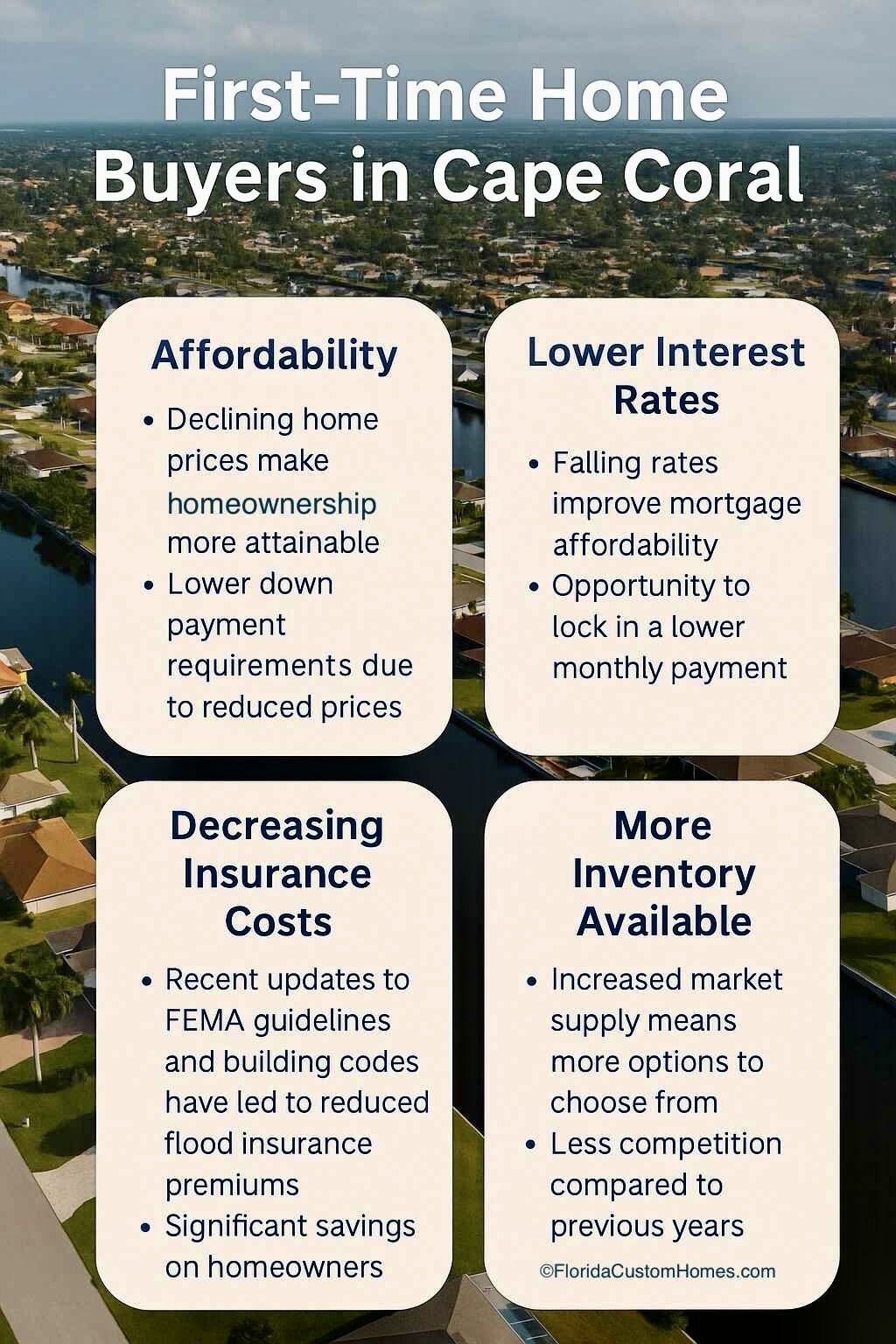
- Annual Savings: Homeowners can save $300–$500 per year on insurance.
- Mortgage Qualification: Lower insurance costs reduce monthly expenses, making financing easier.
- Resale Value: Homes built to current flood codes are more attractive to buyers, potentially commanding higher sale prices.
Additionally, insurance savings can offset higher initial construction costs associated with elevated foundations and flood-resistant building materials.
9. Steps for Homebuyers and Builders
- Verify Flood Zone Status: Use FEMA’s Flood Map Service Center to determine your property’s flood zone designation.
- Obtain an Elevation Certificate: Required by insurance providers to calculate accurate premiums.
- Consult with Licensed Insurance Agents: Compare NFIP and private flood insurance options.
- Ensure Compliance with Current Codes: Work with builders who understand Cape Coral’s updated elevation and construction requirements.
- Consider Long-Term Mitigation Investments: Elevation, flood-resistant materials, and properly installed drainage systems not only protect your home but also reduce premiums further.
10. Future Outlook for Flood Insurance in Cape Coral
With climate change and rising sea levels, flood risks in Florida remain a concern. However, Cape Coral’s proactive approach is helping homeowners mitigate risk:
- Updated FIRMs ensure accurate flood risk assessment.
- Stricter building codes reduce structural vulnerability.
- CRS participation incentivizes community-wide mitigation efforts.
- Risk Rating 2.0 allows premium adjustments based on individual property resilience.
Experts project that, over the next 5–10 years, new construction homes that comply with all requirements could see additional premium reductions as data-driven flood risk modeling continues to improve.
Conclusion
Cape Coral, Florida, is setting a model example of how proactive flood management and modern building codes can protect residents while reducing insurance costs. New construction homes benefit the most, as they comply with updated FEMA guidelines, elevation requirements, and Risk Rating 2.0 calculations, resulting in tangible annual savings on flood insurance premiums.
For homeowners, builders, and real estate investors, these changes offer an opportunity to invest in Cape Coral with greater confidence in both financial stability and flood resilience.
Note: This article is intended for informational purposes and does not constitute legal or insurance advice. Always consult with qualified professionals for specific guidance related to your property.
.jpeg)
.png)
.jpeg)