July 23, 2014

Billionaire says Real Estate is Best Investment Possible

Billionaire says Real Estate is Best Investment Possible
Billionaire says Real Estate is Best Investment Possible |Keeping Current Matters 

Billionaire money manager John Paulson was interviewed last week at the Delivering Alpha Conference presented by CNBC and Institutional Investor. He boldly stated:

"I still think, from an individual perspective, the best deal investment you can make is to buy a primary residence that you're the owner-occupier of.”

Who is John Paulson?

Paulson is the person who, back in 2005 & 2006, made a fortune betting that the subprime mortgage mess would cause the real estate market to collapse. He understands how the housing market works and knows when to buy and when to sell. What do others think of Paulson? According to Forbes, John Paulson is:

“A multibillionaire hedge fund operator and the investment genius.”

According to the Wall Street Journal, Paulson is:

“A hedge fund tycoon who made his name, and a fortune, betting against subprime mortgages when no one else even knew what they were.”

Why does he believe homeownership is such a great investment?

Paulson breaks down the math of homeownership as an investment:

"Today financing costs are extraordinarily low. You can get a 30-year mortgage somewhere around 4.5 percent. And if you put down, let's say, 10 percent and the house is up 5 percent, which is the latest data, then you would be up 50 percent on your investment."

How many are seeing a 50% return on a cash investment right now? Paulson goes on to compare the long term financial benefits of owning verses renting:

“And you’ve locked in the cost over the next 30 years. And today the cost of owning is somewhat less than the cost of renting. And if you rent, the rent goes up every year. But if you buy a 30-year mortgage, the cost is fixed.”

Bottom Line

Whenever a billionaire gives investment advice, people usually clamor to hear it. This billionaire gave simple advice – if you don’t yet live in your own home, go buy one.

Bottom Line

Whenever a billionaire gives investment advice, people usually clamor to hear it. This billionaire gave simple advice – if you don’t yet live in your own home, go buy one.

July 21, 2014

Selling Your House?

Selling Your House? 5 Reasons to Do It Now!

Selling Your House? 5 Reasons to Do It Now! | Keeping Current Matters 

Many sellers are still hesitant about putting their house up for sale. Where are prices headed? Where are interest rates headed? Can buyers qualify for a mortgage?  These are all valid questions. However, there are several reasons to sell your home sooner rather than later. Here are five of those reasons.

1. Demand is Strong

There is currently a pent-up demand of purchasers as many home buyers pushed off their search this past winter & early spring because of extreme weather. According to the National Association of Realtors (NAR), the number of buyers in the market, which feel off dramatically in December, January and February, has begun to increase again over the last few months. These buyers are ready, willing and able to buy…and are in the market right now!

2. There Is Less Competition Now

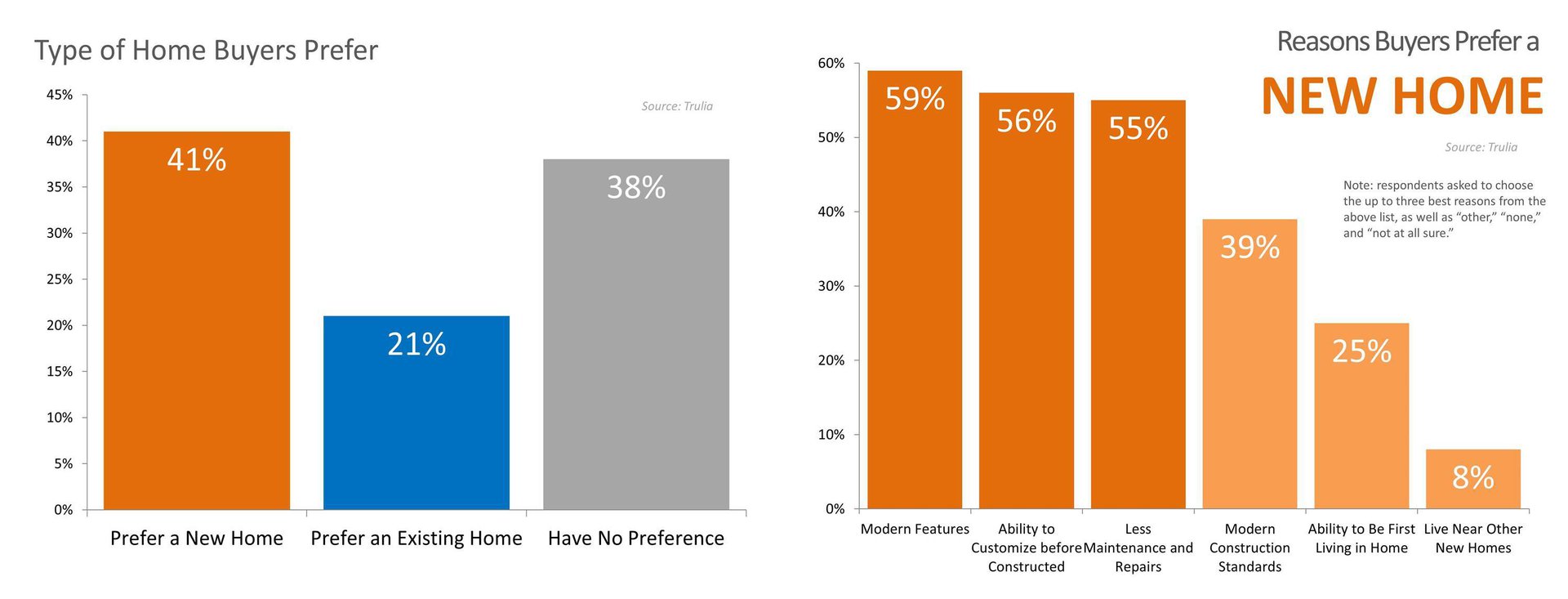
Housing supply is still under the historical number of 6 months’ supply. This means that, in many markets, there are not enough homes for sale to satisfy the number of buyers in that market. This is good news for home prices. However, additional inventory is about to come to market. There is a pent-up desire for many homeowners to move as they were unable to sell over the last few years because of a negative equity situation. Homeowners are now seeing a return to positive equity as prices increased over the last eighteen months. Many of these homes will be coming to the market in the near future. Also, new construction of single-family homes is again beginning to increase. A recent study by Harris Poll revealed that 41% of buyers would prefer to buy a new home while only 21% prefer an existing home (38% had no preference). The choices buyers have will continue to increase over the next few months. Don’t wait until all this other inventory of homes comes to market before you sell.

3. The Process Will Be Quicker

One of the biggest challenges of the 2014 housing market has been the length of time it takes from contract to closing. Banks are requiring more and more paperwork before approving a mortgage. As the market heats up, banks will be inundated with loan inquiries causing closing timelines to lengthen.  Selling now will make the process quicker and simpler.

4. There Will Never Be a Better Time to Move-Up

If you are moving up to a larger, more expensive home, consider doing it now. Prices are projected to appreciate by over 19% from now to 2018. If you are moving to a higher priced home, it will wind-up costing you more in raw dollars (both in down payment and mortgage payment) if you wait. You can also lock-in your 30 year housing expense with an interest rate in the low 4’s right now. Rates are projected to be over 5% by the end of next year.

5. It’s Time to Move On with Your Life

Look at the reason you decided to sell in the first place and determine whether it is worth waiting. Is money more important than being with family? Is money more important than your health? Is money more important than having the freedom to go on with your life the way you think you should? Only you know the answers to the questions above. You have the power to take back control of the situation by putting your home on the market and pricing it so it sells. Perhaps, the time has come for you and your family to move on and start living the life you desire. That is what is truly important.


Bottom Line

Selling Your House? 5 Reasons to Do It Now! | Keeping Current Matters 

Many sellers are still hesitant about putting their house up for sale. Where are prices headed? Where are interest rates headed? Can buyers qualify for a mortgage?  These are all valid questions. However, there are several reasons to sell your home sooner rather than later. Here are five of those reasons.

1. Demand is Strong

There is currently a pent-up demand of purchasers as many home buyers pushed off their search this past winter & early spring because of extreme weather. According to the National Association of Realtors (NAR), the number of buyers in the market, which feel off dramatically in December, January and February, has begun to increase again over the last few months. These buyers are ready, willing and able to buy…and are in the market right now!

2. There Is Less Competition Now

Housing supply is still under the historical number of 6 months’ supply. This means that, in many markets, there are not enough homes for sale to satisfy the number of buyers in that market. This is good news for home prices. However, additional inventory is about to come to market. There is a pent-up desire for many homeowners to move as they were unable to sell over the last few years because of a negative equity situation. Homeowners are now seeing a return to positive equity as prices increased over the last eighteen months. Many of these homes will be coming to the market in the near future. Also, new construction of single-family homes is again beginning to increase. A recent study by Harris Poll revealed that 41% of buyers would prefer to buy a new home while only 21% prefer an existing home (38% had no preference). The choices buyers have will continue to increase over the next few months. Don’t wait until all this other inventory of homes comes to market before you sell.

3. The Process Will Be Quicker

One of the biggest challenges of the 2014 housing market has been the length of time it takes from contract to closing. Banks are requiring more and more paperwork before approving a mortgage. As the market heats up, banks will be inundated with loan inquiries causing closing timelines to lengthen.  Selling now will make the process quicker and simpler.

4. There Will Never Be a Better Time to Move-Up

If you are moving up to a larger, more expensive home, consider doing it now. Prices are projected to appreciate by over 19% from now to 2018. If you are moving to a higher priced home, it will wind-up costing you more in raw dollars (both in down payment and mortgage payment) if you wait. You can also lock-in your 30 year housing expense with an interest rate in the low 4’s right now. Rates are projected to be over 5% by the end of next year.

5. It’s Time to Move On with Your Life

Look at the reason you decided to sell in the first place and determine whether it is worth waiting. Is money more important than being with family? Is money more important than your health? Is money more important than having the freedom to go on with your life the way you think you should? Only you know the answers to the questions above. You have the power to take back control of the situation by putting your home on the market and pricing it so it sells. Perhaps, the time has come for you and your family to move on and start living the life you desire. That is what is truly important.
July 17, 2014

Millennials: How Many are Actually ‘Living with their Parents’

Millennials: How Many are Actually ‘Living with their Parents’
Millennials: Millennials: How Many are Actually ‘Living with their Parents’ | Keeping Current Matters 

Every day we are pleasantly surprised with the research coming forward regarding the Millennial generation. Whether it was the over-exaggeration of the student debt challenge, the misbelief that they are not yet ready to buy or the under estimation of their actual home purchases, evidence is beginning to debunk the myths many have held about this generation and homeownership. Now, one more strongly held belief is being questioned.

Do Millennials Live in their Parents Basements?

It seems not as many as once was reported. Our friends at Calculated Risk (CR) alerted us to a post by Derek Thompson in the AtlanticThe Misguided Freakout About Basement-Dwelling Millennials. The article explains that according to the Census Reports:

“It is important to note that the Current Population Survey counts students living in dormitories as living in their parents' home.”

What?!? If you live in a college dorm, the census counts you as living with your parents. Thompson has some fun with this when he explains:

“When you were adjusting to your freshman roommate, you were ‘living with your parents’. When you snagged that sweet triple with your best friends in grad housing, you were ‘living with your parents’. That one time you launched butt-rattling bottle rockets at the stroke of midnight off your fraternity roof? I hope you didn't make too much noise. After all, you were ‘living with your parents’."

The data is “Criminally Misleading”

According to Thompson, the counting of those living in college dorms as living with their parents is “criminally misleading”. He explains that part of the increase in these numbers is actually attributed to the fact that more people are attending college:

“[T]he share of 25- to 29-year-olds with a bachelor degree has grown by almost 50 percent since the early 1980s. More than 84 percent of today's 27-year-olds spend at least some time in college and now 40 percent have a bachelor's or associate's degree. More young people going to school means more young people living in dorms, which means more young people ‘living with their parents’, according to the weird Census.”

Thompson then goes on to reveal that:

"[T]he share of 18-to-24-year-olds living at home who aren't in college has declined since 1986. But the share of college students living "at home" (i.e.: in dorms, often) has increased. So the Millennials-living-in-our-parents meme is almost entirely a result of higher college attendance.” (emphasis added)

The Other Side of the Argument

However, Trulia’s chief economist Jed Kolko, doesn’t totally agree. In a post in response to the Thompson article, Kolko explains:

“The Current Population Survey’s (CPS) Annual Social and Economic Supplement (ASEC) counts college students who are living in dorms as living with their parents, and college enrollment has indeed gone up. But it does not follow that basement-dwelling millennials are a myth. The ASEC and other Census data show that after adjusting for college enrollment and for dormitory living, millennials were more likely to live with parents in 2012 and 2013 than at any other time for which a consistent data series is available.”

Bottom Line

There are more Millennials living with their parents than ever before. However, the numbers being quoted by some seem to be exaggerated.

Bottom Line

There are more Millennials living with their parents than ever before. However, the numbers being quoted by some seem to be exaggerated.

July 15, 2014

Home Mortgage Rates: Where are They Headed?

Home Mortgage Rates: Where are They Headed?
Home Mortgage Rates: Where are They Headed?  

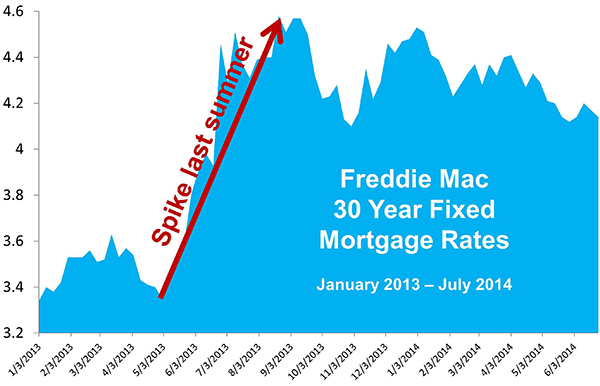
Many readers have asked where interest rates are headed over the next several months. While no one has a crystal ball, we did want to share what some experts are saying on the subject.

HSH.com

“For now, and likely through the summer, we may see data-driven bumps and dips in rates. Although we managed a slight dip presently, a bump is in order before long.”

Freddie Mac

“In the next few months, mortgage rates are likely to remain at their current, low level, but will not remain there for long. As the Federal Reserve is expected to ‘taper’ its purchases of long-term Treasuries and mortgage-backed securities, and as economic growth picks up, long-term yields will gradually rise. Fixed-rate mortgages are expected to be higher in six months, and may even approach 5 percent a year from now.”

National Association of Realtors

“Mortgage rates could move suddenly higher in anticipation of rate increases, much as they did last summer when refinance and transaction activity was high. Steady purchase transaction volume and lower refinance volume could mean that mortgages rates may adjust in a more gradual fashion. In either case, as the economy improves—and today’s data clearly suggests it is improving—the overall trend for mortgage rates is up, not down.”

Fannie Mae

Projects the 30 year fixed mortgage rate to be 4.3% by the end of the year.

Mortgage Bankers Association

Projects the 30 year fixed mortgage rate to be 4.7% by the end of the year.

Bottom Line

Home Mortgage Rates: Where are They Headed?  Many readers have asked where interest rates are headed over the next several months. While no one has a crystal ball, we did want to share what some experts are saying on the subject.

HSH.com

“For now, and likely through the summer, we may see data-driven bumps and dips in rates. Although we managed a slight dip presently, a bump is in order before long.”

Freddie Mac

“In the next few months, mortgage rates are likely to remain at their current, low level, but will not remain there for long. As the Federal Reserve is expected to ‘taper’ its purchases of long-term Treasuries and mortgage-backed securities, and as economic growth picks up, long-term yields will gradually rise. Fixed-rate mortgages are expected to be higher in six months, and may even approach 5 percent a year from now.”

National Association of Realtors

“Mortgage rates could move suddenly higher in anticipation of rate increases, much as they did last summer when refinance and transaction activity was high. Steady purchase transaction volume and lower refinance volume could mean that mortgages rates may adjust in a more gradual fashion. In either case, as the economy improves—and today’s data clearly suggests it is improving—the overall trend for mortgage rates is up, not down.”

Fannie Mae

Projects the 30 year fixed mortgage rate to be 4.3% by the end of the year.

Mortgage Bankers Association

Projects the 30 year fixed mortgage rate to be 4.7% by the end of the year.

July 8, 2014

New Construction Will Be New Competition

Thinking of Selling? New Construction Will Soon Be New Competition
Thinking of Selling? | Keeping Current Matters 

For the last several years, home sellers had to compete with huge inventories of distressed properties (foreclosures and short sales). The great news is that the supply of these properties is falling like a rock in the vast majority of housing markets. Many homeowners are now thinking of selling as the impact of this substantially discounted competition has disappeared. However, every seller of an existing residential property must realize that there is a new form of competition about to hit the market: newly constructed homes. As the economy improves, builders will again be bringing their housing developments to the market. Trulia recently reported that the purchaser, given a choice, actually prefers new construction. Here are two charts showing the results of the Trulia survey: New Construction Trends | Keeping Current Matters

Bottom Line

If you are thinking of selling, perhaps you should do it now to avoid the additional competition that will come to the market later this year.

Bottom Line

If you are thinking of selling, perhaps you should do it now to avoid the additional competition that will come to the market later this year.

July 3, 2014

Two Reasons to Sell Now

NAR Reports Reveal Two Reasons to Sell Now
NAR Reports Reveal Reasons to Sell Now | Keeping Current Matters 

We all realize that the best time to sell anything is when demand is high and the supply of that item is limited. The last two major reports issued by the National Association of Realtors (NAR) revealed information that suggests that now may be the best time to sell your house. Let’s look at the data covered by the latest Pending Home Sales Report and Existing Home Sales Report.

THE PENDING HOME SALES REPORT

The report announced that pending home sales (homes going into contract) “surged” by 6.1%. The increase was “the largest month-over-month gain since April 2010, when first-time home buyers rushed to sign purchase contracts before a popular tax credit program ended”. Lawrence Yun, NAR’s chief economist, expects improving home sales throughout the rest of the year: “Sales should exceed an annual pace of five million homes in some of the upcoming months behind favorable mortgage rates, more inventory and improved job creation.” TakeawayDemand is beginning to increase dramatically compared to earlier in the year.

THE EXISTING HOME SALES REPORT

The most important data point revealed in the report was not sales but instead the inventory of homes on the market (supply). The report explained:

  • Total housing inventory climbed 2.2 percent to 2.28 million homes available for sale
  • That represents a 5.6-month supply at the current sales pace
  • Unsold inventory is 6.0 percent higher than a year ago

There were two more interesting comments made by Yun in the report: 1.)   “Rising inventory bodes well for slower price growth and greater affordability, but the amount of homes for sale is still modestly below a balanced market.” In real estate, there is a guideline that often applies. When there is less than 6 months inventory available, we are in a sellers’ market and we will see appreciation. Between 6-7 months is a neutral market where prices will increase at the rate of inflation. More than 7 months inventory means we are in a buyers’ market and should expect depreciation in home values. As Yun notes, we are currently in a sellers’ market (prices still increasing) but are headed to a neutral market. 2.)   New home construction is still needed to keep prices and housing supply healthy in the long run.” As new construction begins to be built, there will be increased downward pressure on the prices of existing homes on the market. TakeawaySupply is about to increase significantly. The supply of existing homes is already increasing and the number of newly constructed homes is about to increase.

Bottom Line

If you are going to sell, now may be the time.

July 2, 2014

Buying a Home?

Buying a Home? Know your Options

Buying a Home? Know ALL Your Options | Keeping Current Matters 

In a post earlier this week, we suggested that the Millennial generation’s struggles with student debt and the overarching concept of homeownership are not the reasons for so many first time buyers hesitating to move forward with the purchase of their first home. Now there is another firm suggesting the same. The asset management company, Nomura, came out with strong guidance to their investors. According to an article in Housing Wire last week: “Nomura’s note to clients has a take few have offered: The first time homebuyers are holding out and it’s not student debt, a shift away from homeownership as a choice by Millennials, or any of that.” Instead, they think it is a lack of a full understanding of the mortgage process. The article explains: “Analysts say it’s not that Millennials and other potential homebuyers aren’t qualified in terms of their credit scores or in how much they have saved for their down payment. It’s that they think they’re not qualified or they think that they don’t have a big enough down payment.” (emphasis added) This comes off the heels of a survey by Zelman & Associates that revealed that 38% of those between the ages of 25-29 years old and 42% of those between the ages of 30-34 years old believe that a minimum of 15% is required as a down payment to purchase a home. In actually, a purchaser may be able to put down far less.

The Reality of the Situation

According to Christina Boyle, Freddie Mac’s VP and Head of Single-Family Sales & Relationship Management, in a recent Executive Perspectives piece:

  • A person “can get a conforming, conventional mortgage with a down payment of as little as 5 percent (sometimes with as little as 3 percent coming out of their own pockets)”.
  • Freddie Mac's purchase of mortgages with down payments under 10 percent more than quadrupled between 2009 and 2013.
  • More than one in five borrowers who took out conforming, conventional mortgages in 2014 put down 10 percent or less.
  • Qualified borrowers can further reduce the down payment coming out of their own pockets to 3 percent by lining up gifts from family or grants or loans from non-profits or public agencies.

Ms. Boyle goes on to explain: “Letting more consumers know how down payments are determined could bring more qualified borrowers off the sidelines. Depending on their credit history and other factors, many borrowers can expect to make a down payment of about 5 or 10 percent.”

Bottom Line

If you have considered purchasing a house or moving-up to a new dream home, know all of your options. Reach out to a real estate and/or mortgage professional in your marketplace to get the best, most up-to-date information available. You may be surprised to learn what you and your family are capable of achieving.

Bottom Line

If you have considered purchasing a house or moving-up to a new dream home, know all of your options. Reach out to a real estate and/or mortgage professional in your marketplace to get the best, most up-to-date information available. You may be surprised to learn what you and your family are capable of achieving.

June 30, 2014

Millennials and Student Debt: We Knew They Were Wrong!

Millennials and Student Debt: We Knew They Were Wrong!
Millennials & Student Debt: We Knew They Were Wrong! | Keeping Current Matters 

For almost a year now, we have been trying to debunk the myth that student debt is keeping the vast majority of Millennials from purchasing a home. We explained that Millennials have purchased more homes over a recent twelve month period than any other generation as was reported by the National Association of Realtors). We explained that the homeownership rate of people currently between the ages of 25-29 is 34.3%. That is higher than the 33.6% rate members of the previous generation (people currently between the ages of 45-49) achieved when they were that age (as per John Burns Consulting). We explained that a recent survey showed that almost three out of every four (74%) young adults between the ages of 18-34 plan to buy a home in the next five years with 32% planning to do it in the next twelve months. However, no matter how hard we tried, the same recourse was trumpeted back at us – What about student debt? The good news is that the real facts about student debt are coming to light. Last week, The New York Times posted an article titled The Reality of Student Debt Is Different from the Clichés. This article went into great depth regarding the findings of a new study just released by the Brookings InstitutionIs a Student Loan Crisis on the Horizon? which looked at data through 2010. The NYT article quoted key elements of the report:

  • 58% of young-adult households have less than $10,000 in debt. An additional 18% have between $10,000 and $20,000
  • 36% of households with people between the ages of 20 and 40 had education debt, up from 14% in 1989. Some of the increase stems from the good news that more people are going to college.
  • Taking financial aid into account, the average tuition at private (nonprofit) colleges has not increased any faster than overall inflation over the last decade.
  • Because the incomes of college graduates have grown since the early 1990s, the share of income that a typical student debtor has to devote to loan payments is only marginally higher than it was in the early 1990s — and somewhat lower than it was in late 1990s. It was 3.5% in 1992, 4.3% in 1998 and 4% in 2010.
  • The burden for the people with the most debt is significantly lower today than two decades ago. Someone at the 90th percentile of debt had to devote 15% of their income to repayment in 2010, down from 20% in 1992.

Bottom Line The authors of the actual study put it simply in their conclusion: “Despite the widely held belief that circumstances for borrowers with student loan debt are growing worse over time, our findings reveal no evidence in support of this narrative. In fact, the average growth in lifetime income among households with student loan debt easily exceeds the average growth in debt, suggesting that, all else equal, households with debt today are in a better financial position than households with debt were two decades ago. Furthermore, the incidence of burdensome monthly payments does not appear to have become more widespread over the last two decades.”

Bottom Line

Millennials & Student Debt: We Knew They Were Wrong! | Keeping Current Matters 

For almost a year now, we have been trying to debunk the myth that student debt is keeping the vast majority of Millennials from purchasing a home. We explained that Millennials have purchased more homes over a recent twelve month period than any other generation as was reported by the National Association of Realtors). We explained that the homeownership rate of people currently between the ages of 25-29 is 34.3%. That is higher than the 33.6% rate members of the previous generation (people currently between the ages of 45-49) achieved when they were that age (as per John Burns Consulting). We explained that a recent survey showed that almost three out of every four (74%) young adults between the ages of 18-34 plan to buy a home in the next five years with 32% planning to do it in the next twelve months. However, no matter how hard we tried, the same recourse was trumpeted back at us – What about student debt? The good news is that the real facts about student debt are coming to light. Last week, The New York Times posted an article titled The Reality of Student Debt Is Different from the Clichés. This article went into great depth regarding the findings of a new study just released by the Brookings InstitutionIs a Student Loan Crisis on the Horizon? which looked at data through 2010. The NYT article quoted key elements of the report:

  • 58% of young-adult households have less than $10,000 in debt. An additional 18% have between $10,000 and $20,000
  • 36% of households with people between the ages of 20 and 40 had education debt, up from 14% in 1989. Some of the increase stems from the good news that more people are going to college.
  • Taking financial aid into account, the average tuition at private (nonprofit) colleges has not increased any faster than overall inflation over the last decade.
  • Because the incomes of college graduates have grown since the early 1990s, the share of income that a typical student debtor has to devote to loan payments is only marginally higher than it was in the early 1990s — and somewhat lower than it was in late 1990s. It was 3.5% in 1992, 4.3% in 1998 and 4% in 2010.
  • The burden for the people with the most debt is significantly lower today than two decades ago. Someone at the 90th percentile of debt had to devote 15% of their income to repayment in 2010, down from 20% in 1992.

Bottom Line The authors of the actual study put it simply in their conclusion: “Despite the widely held belief that circumstances for borrowers with student loan debt are growing worse over time, our findings reveal no evidence in support of this narrative. In fact, the average growth in lifetime income among households with student loan debt easily exceeds the average growth in debt, suggesting that, all else equal, households with debt today are in a better financial position than households with debt were two decades ago. Furthermore, the incidence of burdensome monthly payments does not appear to have become more widespread over the last two decades.”

June 10, 2014

Should I Rent My House

Should I Rent My House if I Can’t Sell It?


Should I Rent If I Can't Sell | The KCM Crew 

There has been a lot written about how buying a home is less expensive than renting one in most parts of the country. Rents are skyrocketing and homes are still at great prices. These two situations are also causing some sellers to consider renting their home instead of selling it. After all, a homeowner can get great rental income now and perhaps wait until house values increase even further before selling. This logic makes sense in some cases. There is a strong belief that residential real estate is a great investment right now. However, if you have no desire to actually become an educated investor in this sector, you may be headed for more trouble than you were looking for. Before renting your home, you should answer the following questions to make sure this is the right course of action for you and your family.

10 Questions to ask BEFORE renting your home

  1. How will you respond if your tenant says they can’t afford to pay the rent this month because of more pressing obligations? (This happens most often during holiday season and back-to-school time when families with children have extra expenses).
  2. Because of the economy, many homeowners cannot make their mortgage payment. What percentage of tenants do you think cannot afford to pay their rent?
  3. Have you interviewed experienced eviction attorneys in case a challenge does arise?
  4. Have you talked to your insurance company about a possible increase in premiums as liability is greater in a non-owner occupied home?
  5. Will you allow pets? Cats? Dogs? How big a dog?
  6. How will you actually collect the rent? By mail? In person?
  7. Repairs are part of being a landlord. Who will take tenant calls when necessary repairs come up?
  8. Do you have a list of craftspeople readily available to handle these repairs?
  9. How often will you do a physical inspection of the property?
  10. Will you alert your current neighbors that you are renting the house?

Bottom Line

Again, renting out residential real estate is historically a great investment. However, it is not without its challenges. Make sure you have decided to rent the house because you want to be an investor, not because you are hoping to get a few extra dollars by postponing a sale.

Bottom Line

Again, renting out residential real estate is historically a great investment. However, it is not without its challenges. Make sure you have decided to rent the house because you want to be an investor, not because you are hoping to get a few extra dollars by postponing a sale.

June 9, 2014

4 Reasons to Buy YOUR HOME Now!

4 Reasons to Buy YOUR HOME Now!


Home 

Here are four great reasons to consider buying a home today, instead of waiting.

1. Prices Will Continue to Rise

The Home Price Expectation Survey polls a distinguished panel of over 100 economists, investment strategists, and housing market analysts. Their most recent report projects appreciation in home values over the next five years to be between 30.8% (most optimistic) and 9.4% (most pessimistic). The bottom in home prices has come and gone. Home values will continue to appreciate for years. Waiting no longer makes sense.

2. Mortgage Interest Rates Are Increasing

Although Freddie Mac’s Primary Mortgage Market Survey shows that interest rates for a 30-year mortgage have softened recently, most experts predict that they will begin to rise later this year. The Mortgage Bankers Association, Fannie Mae, Freddie Mac, and the National Association of Realtors are in unison; projecting that rates will be up almost a full percentage point by the end of next year. An increase in rates will impact YOUR monthly mortgage payment. Your housing expense will be more a year from now if a mortgage is necessary to purchase your next home.

3. Either Way, You are Paying a Mortgage

As a recent paper from the Joint Center for Housing Studies at Harvard University explains:

“Households must consume housing whether they own or rent. Not even accounting for more favorable tax treatment of owning, homeowners pay debt service to pay down their own principal while households that rent pay down the principal of a landlord plus a rate of return. That’s yet another reason owning often does—as Americans intuit—end up making more financial sense than renting.”

4. It’s Time to Move On with Your Life

The ‘cost’ of a home is determined by two major components: the price of the home and the current mortgage rate. It appears that both are on the rise. But, what if they weren’t? Would you wait? Look at the actual reason you are buying and decide whether it is worth waiting. Whether you want to have a great place for your children to grow up, you want your family to be safer, or you just want to have control over renovations, maybe it is time to buy. If the right thing for you and your family is to purchase a home this year, buying sooner rather than later could lead to substantial savings.

Bottom Line

Home 

Here are four great reasons to consider buying a home today, instead of waiting.

1. Prices Will Continue to Rise

The Home Price Expectation Survey polls a distinguished panel of over 100 economists, investment strategists, and housing market analysts. Their most recent report projects appreciation in home values over the next five years to be between 30.8% (most optimistic) and 9.4% (most pessimistic). The bottom in home prices has come and gone. Home values will continue to appreciate for years. Waiting no longer makes sense.

2. Mortgage Interest Rates Are Increasing

Although Freddie Mac’s Primary Mortgage Market Survey shows that interest rates for a 30-year mortgage have softened recently, most experts predict that they will begin to rise later this year. The Mortgage Bankers Association, Fannie Mae, Freddie Mac, and the National Association of Realtors are in unison; projecting that rates will be up almost a full percentage point by the end of next year. An increase in rates will impact YOUR monthly mortgage payment. Your housing expense will be more a year from now if a mortgage is necessary to purchase your next home.

3. Either Way, You are Paying a Mortgage

As a recent paper from the Joint Center for Housing Studies at Harvard University explains:

“Households must consume housing whether they own or rent. Not even accounting for more favorable tax treatment of owning, homeowners pay debt service to pay down their own principal while households that rent pay down the principal of a landlord plus a rate of return. That’s yet another reason owning often does—as Americans intuit—end up making more financial sense than renting.”

4. It’s Time to Move On with Your Life

The ‘cost’ of a home is determined by two major components: the price of the home and the current mortgage rate. It appears that both are on the rise. But, what if they weren’t? Would you wait? Look at the actual reason you are buying and decide whether it is worth waiting. Whether you want to have a great place for your children to grow up, you want your family to be safer, or you just want to have control over renovations, maybe it is time to buy. If the right thing for you and your family is to purchase a home this year, buying sooner rather than later could lead to substantial savings.