June 5, 2014

You Can’t Sell What You Don’t Have

Real Estate Listings:
You Can’t Sell What You Don’t Have


Real Estate Listings: You Can’t Sell What You Don’t Have | The KCM Crew 

Some housing experts are concerned that the housing recovery seems to be stalling. Some are blaming the one percent increase in mortgage interest rates since the first quarter of last year. Others are pointing at an economy that is improving but only at a snail’s pace. Still, others are questioning whether homeownership is even considered by some to still be part of the American Dream. However, there is great evidence that the true reason home sales aren’t stronger is because we lack inventory in the vast majority of markets across the country. Here are a few reasons why we believe this to be true:

Buyers Are Searching the Internet for Homes in Record Numbers

Trulia, a major online residential real estate site for home buyers that lists properties for sale, recently reported that it is experiencing record levels of traffic as the spring buying season kicks into high gear. The site reached a record number of unique visitors in April with nearly 50 million.

Buyers Are Physically Out Shopping

The number of potential home buyers physically looking at homes is increasing. The National Association of Realtors (NAR) measures this each month in a data point they call “foot traffic”. Foot traffic measures the number of homes being shown by agents. That number has increased for each of the last three months and has doubled over that period of time.

Inventory Levels are BELOW Historic Norms

History shows us that a balanced real estate market requires a six month supply of available housing inventory. We have not reached that mark in over two years. Though inventory numbers are improving, the recent increase in buyers now looking will again put a strain on this number.

Bottom Line

While inventory levels remain below historic norms, it will remain a seller’s market. This being the case, if you are considering selling your home, now may be the time to list it for sale.

Bottom Line

While inventory levels remain below historic norms, it will remain a seller’s market. This being the case, if you are considering selling your home, now may be the time to list it for sale.

June 4, 2014

Pent-Up Buyer & Seller Demand about to be Released?

Pent-Up Buyer & Seller Demand about to be Released?


Pent-Up Buyer & Seller Demand about to be Released? | The KCM Crew 

American consumers’ perception of the residential real estate market was revealed in a recent survey by Edelman Berland. They interviewed 2,500 Americans who are “in the market” to buy or sell a home. Respondents were between 25-64 years old with a household income of at least $50,000. Here are the key findings of the survey:

BELIEF in the HOUSING MARKET

There is a strong belief among this segment of the population that the housing market is on the right track and that is committing almost 7 out of 10 to buy or sell a home this year. Millennials belief in real estate is actually higher than the overall population.

  • 77% of consumers (and 85% of Millennials) have a favorable view of housing
  • 79% of people (and 83% of Millennials) believe the housing market is on the right track
  • 69% of consumers said they are committed to buying or selling a home now

CHALLENGES

The extreme weather faced by much of the U.S. definitely delayed many real estate transactions. That pent-up demand is now being released causing price appreciation in many regions of the country. This rise in prices and the expected increase in interest rates is causing many purchasers to buy sooner than later.

  • The main reason (45%) people waited to make a real estate transaction is they were waiting for spring weather to arrive
  • 76% of consumers believe that pent-up demand will create even more competition for existing homes
  • 74% of consumers are most concerned about higher than expected prices when buying a home this spring
  • 83% of consumers are motivated to act sooner than later because they fear interest rates will increase

Other interesting findings from the survey (broken down by buyers and sellers):

Buyers

  • 80% of real estate consumers are more committed to buying
  • 78% of potential buyers said it will be easier to purchase a home this spring since “homeowners want to sell”
  • 72% are encouraged because “the economy is improving”
  • 46% of buyers said spring was a more favorable time to buy a home
  • 28% of buyers said summer was a more favorable time to buy a home (an 8% increase over last summer)

Sellers

  • 83% of real estate consumers are more committed to selling
  • 63% of sellers are buoyed this spring by the improving economy and their perception that buyers are motivated following the difficult winter

Bottom Line

The real estate market will continue to gain ground through the summer as more and more people realize this is a great time to move. And, the vast majority (88%) of those surveyed realized that hiring a real estate professional is important to their home buying or selling success.

Bottom Line

The real estate market will continue to gain ground through the summer as more and more people realize this is a great time to move. And, the vast majority (88%) of those surveyed realized that hiring a real estate professional is important to their home buying or selling success.

June 2, 2014

5 Reasons to Sell Now

5 Reasons to Sell Now
5 Reasons to Sell Now | The KCM Crew 

Many sellers are still hesitant about putting their house up for sale. Where are prices headed? Where are interest rates headed? Can buyers qualify for a mortgage?  These are all valid questions. However, there are several reasons to sell your home sooner rather than later. Here are five of those reasons.

1. Demand is Strong

There is currently a pent-up demand of purchasers as many home buyers pushed off their search this past winter because of extreme weather. According to the National Association of Realtors (NAR), the number of buyers in the market, which feel off dramatically in December, January and February, has begun to increase again over the last few months. These buyers are ready, willing and able to buy…and are in the market right now!

2. There Is Less Competition Now

Housing supply is still under the historical number of 6 months’ supply. This means that, in many markets, there are not enough homes for sale to satisfy the number of buyers in that market. This is good news for home prices. However, additional inventory is about to come to market. There is a pent-up desire for many homeowners to move as they were unable to sell over the last few years because of a negative equity situation. Homeowners are now seeing a return to positive equity as prices increased over the last eighteen months. Many of these homes will be coming to the market in the near future. Also, new construction of single-family homes is again beginning to increase. A recent study by Harris Poll revealed that 41% of buyers would prefer to buy a new home while only 21% prefer an existing home (38% had no preference). The choices buyers have will continue to increase over the next few months. Don’t wait until all this other inventory of homes comes to market before you sell.

3. The Process Will Be Quicker

One of the biggest challenges of the 2014 housing market has been the length of time it takes from contract to closing. Banks are requiring more and more paperwork before approving a mortgage. As the market heats up, banks will be inundated with loan inquiries causing closing timelines to lengthen.  Selling now will make the process quicker and simpler.

4. There Will Never Be a Better Time to Move-Up

If you are moving up to a larger, more expensive home, consider doing it now. Prices are projected to appreciate by over 19% from now to 2018. If you are moving to a higher priced home, it will wind-up costing you more in raw dollars (both in down payment and mortgage payment) if you wait. You can also lock-in your 30 year housing expense with an interest rate in the low 4’s right now. Rates are projected to be over 5% by this time next year.

5. It’s Time to Move On with Your Life

Look at the reason you decided to sell in the first place and determine whether it is worth waiting. Is money more important than being with family? Is money more important than your health? Is money more important than having the freedom to go on with your life the way you think you should? Only you know the answers to the questions above. You have the power to take back control of the situation by putting your home on the market and pricing it so it sells. Perhaps, the time has come for you and your family to move on and start living the life you desire. That is what is truly important.

Bottom Line

5 Reasons to Sell Now | The KCM Crew 

Many sellers are still hesitant about putting their house up for sale. Where are prices headed? Where are interest rates headed? Can buyers qualify for a mortgage?  These are all valid questions. However, there are several reasons to sell your home sooner rather than later. Here are five of those reasons.

1. Demand is Strong

There is currently a pent-up demand of purchasers as many home buyers pushed off their search this past winter because of extreme weather. According to the National Association of Realtors (NAR), the number of buyers in the market, which feel off dramatically in December, January and February, has begun to increase again over the last few months. These buyers are ready, willing and able to buy…and are in the market right now!

2. There Is Less Competition Now

Housing supply is still under the historical number of 6 months’ supply. This means that, in many markets, there are not enough homes for sale to satisfy the number of buyers in that market. This is good news for home prices. However, additional inventory is about to come to market. There is a pent-up desire for many homeowners to move as they were unable to sell over the last few years because of a negative equity situation. Homeowners are now seeing a return to positive equity as prices increased over the last eighteen months. Many of these homes will be coming to the market in the near future. Also, new construction of single-family homes is again beginning to increase. A recent study by Harris Poll revealed that 41% of buyers would prefer to buy a new home while only 21% prefer an existing home (38% had no preference). The choices buyers have will continue to increase over the next few months. Don’t wait until all this other inventory of homes comes to market before you sell.

3. The Process Will Be Quicker

One of the biggest challenges of the 2014 housing market has been the length of time it takes from contract to closing. Banks are requiring more and more paperwork before approving a mortgage. As the market heats up, banks will be inundated with loan inquiries causing closing timelines to lengthen.  Selling now will make the process quicker and simpler.

4. There Will Never Be a Better Time to Move-Up

If you are moving up to a larger, more expensive home, consider doing it now. Prices are projected to appreciate by over 19% from now to 2018. If you are moving to a higher priced home, it will wind-up costing you more in raw dollars (both in down payment and mortgage payment) if you wait. You can also lock-in your 30 year housing expense with an interest rate in the low 4’s right now. Rates are projected to be over 5% by this time next year.

5. It’s Time to Move On with Your Life

Look at the reason you decided to sell in the first place and determine whether it is worth waiting. Is money more important than being with family? Is money more important than your health? Is money more important than having the freedom to go on with your life the way you think you should? Only you know the answers to the questions above. You have the power to take back control of the situation by putting your home on the market and pricing it so it sells. Perhaps, the time has come for you and your family to move on and start living the life you desire. That is what is truly important.

May 29, 2014

Retirement” Metros Becoming Meccas for Older Adults

Non-Traditional “Retirement” Metros Becoming Meccas for Older Adults Who Want to Age in Place
Our guest blogger today is Nikki Buckelew. As the Founder and CEO of the Seniors Real Estate Institute, Nikki brings great insight into the Senior Market. 

It's probably only natural for real estate agents to assume that most boomers or retirees bent on moving to a new city to enjoy their golden years will be on the trail to Florida, Arizona, or some other state blessed with warmth and plenty of sunshine. And those states are probably the ones best situated to offer plenty of age-in-place benefits, right? Nope. When a boomer or senior who's open-minded about where they wish to move and retire searches Google for the best cities to age in place or best cities to retire, they finds some spots that are a bit out of the norm, but quite intriguing nonetheless. Places like Sioux Falls, SD; Provo, UT; Iowa City, IA; Bismarck, ND; Columbia, MO; Omaha, NE; Madison, WI; and Boston, MA top the list. As adults 55+ begin to contemplate their future and plan for a possible move, they are hearing more and more about the importance of preparing to age-in-place. They already know they hope to live in their own home, independently, for as long as possible. And the cities listed above – plus many other non-traditional retirement options – are receiving plenty of attention as go-to spots for their aging-in-place benefits in the form of quality healthcare, accessible transportation, government initiatives in building the city as senior-friendly, and a number of other indexes. The Milken Institute, a non-partisan think tank, compiled a list in 2012 of the 259 Best Cities to Age Successfully. Another ranking is due later this summer of 2014. It divided the rankings into "Large Metros" and 'Small Metros," with Provo, Utah topping the Large City list and Sioux Falls the Small City rankings. Others in the Top 10 of Large Cities to Age Successfully include Pittsburgh, Toledo, Des Moines, Salt Lake City, and Washington D.C. Others in the Top 10 of Small Cities to Age Successfully include Rochester, MN, Ann Arbor, MI, Missoula, MT, Durham-Chapel Hill, NC, and Gainesville, FL. See the entire list here and learn more about the Milken Institute's approach to promoting aging-in-place awareness. Frankly, if I were a real estate agent or broker in any of these top cities (and even many further down the list), I'd be going full-bore to make sure I was positioned to capture as much of this older adult segment in my town as possible. Yes, older adults will purposefully be moving to my city and I should be the one to serve them and find a stellar house for them to buy. That would include promoting my area's dominance as a haven for older adults, while working to ensure that I had the knowledge to properly help them. And oh yeah. Since older adults from outside the area will be searching online for information about my city, I'd want to make sure that I popped up front and center on Google as an expert in real estate for boomers and seniors in my town. Simply put, lists like this give you plenty of marketing power - plus motivation - to grab a huge segment of business in your market that perhaps you never even knew existed.

Bottom Line

Our guest blogger today is Nikki Buckelew. As the Founder and CEO of the Seniors Real Estate Institute, Nikki brings great insight into the Senior Market. 

It's probably only natural for real estate agents to assume that most boomers or retirees bent on moving to a new city to enjoy their golden years will be on the trail to Florida, Arizona, or some other state blessed with warmth and plenty of sunshine. And those states are probably the ones best situated to offer plenty of age-in-place benefits, right? Nope. When a boomer or senior who's open-minded about where they wish to move and retire searches Google for the best cities to age in place or best cities to retire, they finds some spots that are a bit out of the norm, but quite intriguing nonetheless. Places like Sioux Falls, SD; Provo, UT; Iowa City, IA; Bismarck, ND; Columbia, MO; Omaha, NE; Madison, WI; and Boston, MA top the list. As adults 55+ begin to contemplate their future and plan for a possible move, they are hearing more and more about the importance of preparing to age-in-place. They already know they hope to live in their own home, independently, for as long as possible. And the cities listed above – plus many other non-traditional retirement options – are receiving plenty of attention as go-to spots for their aging-in-place benefits in the form of quality healthcare, accessible transportation, government initiatives in building the city as senior-friendly, and a number of other indexes. The Milken Institute, a non-partisan think tank, compiled a list in 2012 of the 259 Best Cities to Age Successfully. Another ranking is due later this summer of 2014. It divided the rankings into "Large Metros" and 'Small Metros," with Provo, Utah topping the Large City list and Sioux Falls the Small City rankings. Others in the Top 10 of Large Cities to Age Successfully include Pittsburgh, Toledo, Des Moines, Salt Lake City, and Washington D.C. Others in the Top 10 of Small Cities to Age Successfully include Rochester, MN, Ann Arbor, MI, Missoula, MT, Durham-Chapel Hill, NC, and Gainesville, FL. See the entire list here and learn more about the Milken Institute's approach to promoting aging-in-place awareness. Frankly, if I were a real estate agent or broker in any of these top cities (and even many further down the list), I'd be going full-bore to make sure I was positioned to capture as much of this older adult segment in my town as possible. Yes, older adults will purposefully be moving to my city and I should be the one to serve them and find a stellar house for them to buy. That would include promoting my area's dominance as a haven for older adults, while working to ensure that I had the knowledge to properly help them. And oh yeah. Since older adults from outside the area will be searching online for information about my city, I'd want to make sure that I popped up front and center on Google as an expert in real estate for boomers and seniors in my town. Simply put, lists like this give you plenty of marketing power - plus motivation - to grab a huge segment of business in your market that perhaps you never even knew existed.

May 19, 2014

Selling a House?

Selling a House? FannieMae Suggests You Use an Agent


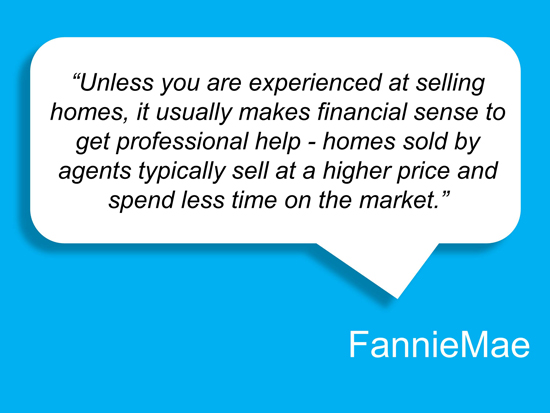
There are many advantages a homeowner has when they use a real estate professional to help sell their home. It’s good to know that FannieMae agrees. Here is a quote directly from the Know Your Options section of their website. FannieMae Quote.simplify

Bottom Line

There are many advantages a homeowner has when they use a real estate professional to help sell their home. It’s good to know that FannieMae agrees. Here is a quote directly from the Know Your Options section of their website. FannieMae Quote.simplify

May 14, 2014

5 Reasons to Hire a Real Estate Professional


5 Reasons to Hire a Real Estate Professional


5 GoldWhether you are buying or selling a home, you need an experienced Real Estate Professional to lead you toward your ultimate goal. In this world of instant gratification and Internet searches, many sellers think that they can For Sale by Owner or FSBO. The 5 Reasons You NEED a Real Estate Professional in your corner haven’t changed, but rather have been strengthened in recent months due to rising interest rates & home prices as the market recovers.

1. What do you do with all this paperwork?

Each state has different regulations regarding the contracts required for a successful sale, and these regulations are constantly changing. A true Real Estate Professional is an expert in their market and can guide you through the stacks of paperwork necessary to make your dream a reality.

2. Ok, so you found your dream house, now what?

According to the Orlando Regional REALTOR Association, there are over 230 possible actions that need to take place during every successful real estate transaction. Don’t you want someone who has been there before, who knows what these actions are to make sure that you acquire your dream?

3. Are you a good negotiator?

So maybe you’re not convinced that you need an agent to sell your home. However, after looking at the list of parties that you need to be prepared to negotiate with, you’ll realize the value in selecting a Real Estate Professional. From the buyer (who wants the best deal possible), to the home inspection companies, to the appraiser, there are at least 11 different people that you will have to be knowledgeable with and answer to, during the process.

4. What is the home you’re buying/selling really worth?

Not only is it important for your home to be priced correctly from the start, to attract the right buyers and shorten the time that it’s on the market, but you also need someone who is not emotionally connected to your home, to give you the truth as to your home’s value. According to the National Association of REALTORS“the typical FSBO home sold for $184,000 compared to $230,000 among agent-assisted home sales.” Get the most out of your transaction by hiring a professional.

5. Do you know what’s really going on in the market?

There is so much information out there on the news and the Internet about home sales, prices, mortgage rates; how do you know what’s going on specifically in your area? Who do you turn to, to tell you how to competitively price your home correctly at the beginning of the selling process? How do you know what to offer on your dream home without paying too much, or offending the seller with a low-ball offer? “When getting help with money, whether it’s insurance, real estate or investments, you should always look for someone with the heart of a teacher, not the heart of a salesman.” – Dave Ramsey Hiring an agent who has their finger on the pulse of the market will make your buying/selling experience an educated one. You need someone who is going to tell you the truth, not just what they think you want to hear.

Bottom Line:

You wouldn’t hike up Kilimanjaro without a Sherpa, or replace the engine in your car without a trusted mechanic, why would you make one of your most important financial decisions of your life without hiring a Real Estate Professional?

Bottom Line

5 GoldWhether you are buying or selling a home, you need an experienced Real Estate Professional to lead you toward your ultimate goal. In this world of instant gratification and Internet searches, many sellers think that they can For Sale by Owner or FSBO. The 5 Reasons You NEED a Real Estate Professional in your corner haven’t changed, but rather have been strengthened in recent months due to rising interest rates & home prices as the market recovers.

1. What do you do with all this paperwork?

Each state has different regulations regarding the contracts required for a successful sale, and these regulations are constantly changing. A true Real Estate Professional is an expert in their market and can guide you through the stacks of paperwork necessary to make your dream a reality.

2. Ok, so you found your dream house, now what?

According to the Orlando Regional REALTOR Association, there are over 230 possible actions that need to take place during every successful real estate transaction. Don’t you want someone who has been there before, who knows what these actions are to make sure that you acquire your dream?

3. Are you a good negotiator?

So maybe you’re not convinced that you need an agent to sell your home. However, after looking at the list of parties that you need to be prepared to negotiate with, you’ll realize the value in selecting a Real Estate Professional. From the buyer (who wants the best deal possible), to the home inspection companies, to the appraiser, there are at least 11 different people that you will have to be knowledgeable with and answer to, during the process.

4. What is the home you’re buying/selling really worth?

Not only is it important for your home to be priced correctly from the start, to attract the right buyers and shorten the time that it’s on the market, but you also need someone who is not emotionally connected to your home, to give you the truth as to your home’s value. According to the National Association of REALTORS“the typical FSBO home sold for $184,000 compared to $230,000 among agent-assisted home sales.” Get the most out of your transaction by hiring a professional.

5. Do you know what’s really going on in the market?

There is so much information out there on the news and the Internet about home sales, prices, mortgage rates; how do you know what’s going on specifically in your area? Who do you turn to, to tell you how to competitively price your home correctly at the beginning of the selling process? How do you know what to offer on your dream home without paying too much, or offending the seller with a low-ball offer? “When getting help with money, whether it’s insurance, real estate or investments, you should always look for someone with the heart of a teacher, not the heart of a salesman.” – Dave Ramsey Hiring an agent who has their finger on the pulse of the market will make your buying/selling experience an educated one. You need someone who is going to tell you the truth, not just what they think you want to hear.

Bottom Line:

You wouldn’t hike up Kilimanjaro without a Sherpa, or replace the engine in your car without a trusted mechanic, why would you make one of your most important financial decisions of your life without hiring a Real Estate Professional?

May 13, 2014

5 Financial Reasons to Buy a Home

Harvard: 5 Financial Reasons to Buy a Home


Bank as House.1

Eric Belsky is Managing Director of the Joint Center of Housing Studies at Harvard University. He also currently serves on the editorial board of the Journal of Housing Research and Housing Policy Debate. Last year he released a paper on homeownership - The Dream Lives On: the Future of Homeownership in America. In his paper, Belsky reveals five financial reasons people should consider buying a home. Here are the five reasons, each followed by an excerpt from the study: 1.) Housing is typically the one leveraged investment available. “Few households are interested in borrowing money to buy stocks and bonds and few lenders are willing to lend them the money. As a result, homeownership allows households to amplify any appreciation on the value of their homes by a leverage factor. Even a hefty 20 percent down payment results in a leverage factor of five so that every percentage point rise in the value of the home is a 5 percent return on their equity. With many buyers putting 10 percent or less down, their leverage factor is 10 or more.” 2.) You're paying for housing whether you own or rent. “Homeowners pay debt service to pay down their own principal while households that rent pay down the principal of a landlord.” 3.) Owning is usually a form of “forced savings”. “Since many people have trouble saving and have to make a housing payment one way or the other, owning a home can overcome people’s tendency to defer savings to another day.” 4.) There are substantial tax benefits to owning. “Homeowners are able to deduct mortgage interest and property taxes from income...On top of all this, capital gains up to $250,000 are excluded from income for single filers and up to $500,000 for married couples if they sell their homes for a gain.” 5.) Owning is a hedge against inflation. “Housing costs and rents have tended over most time periods to go up at or higher than the rate of inflation, making owning an attractive proposition.”

Bottom Line

We realize that homeownership makes sense for many Americans for many social and family reasons. It also makes sense financially.

Bottom Line

Bank as House.1

Eric Belsky is Managing Director of the Joint Center of Housing Studies at Harvard University. He also currently serves on the editorial board of the Journal of Housing Research and Housing Policy Debate. Last year he released a paper on homeownership - The Dream Lives On: the Future of Homeownership in America. In his paper, Belsky reveals five financial reasons people should consider buying a home. Here are the five reasons, each followed by an excerpt from the study: 1.) Housing is typically the one leveraged investment available. “Few households are interested in borrowing money to buy stocks and bonds and few lenders are willing to lend them the money. As a result, homeownership allows households to amplify any appreciation on the value of their homes by a leverage factor. Even a hefty 20 percent down payment results in a leverage factor of five so that every percentage point rise in the value of the home is a 5 percent return on their equity. With many buyers putting 10 percent or less down, their leverage factor is 10 or more.” 2.) You're paying for housing whether you own or rent. “Homeowners pay debt service to pay down their own principal while households that rent pay down the principal of a landlord.” 3.) Owning is usually a form of “forced savings”. “Since many people have trouble saving and have to make a housing payment one way or the other, owning a home can overcome people’s tendency to defer savings to another day.” 4.) There are substantial tax benefits to owning. “Homeowners are able to deduct mortgage interest and property taxes from income...On top of all this, capital gains up to $250,000 are excluded from income for single filers and up to $500,000 for married couples if they sell their homes for a gain.” 5.) Owning is a hedge against inflation. “Housing costs and rents have tended over most time periods to go up at or higher than the rate of inflation, making owning an attractive proposition.”

Bottom Line

We realize that homeownership makes sense for many Americans for many social and family reasons. It also makes sense financially.

May 12, 2014

Americans Prefer to Build

41% of Americans Would Prefer to Build Their Home


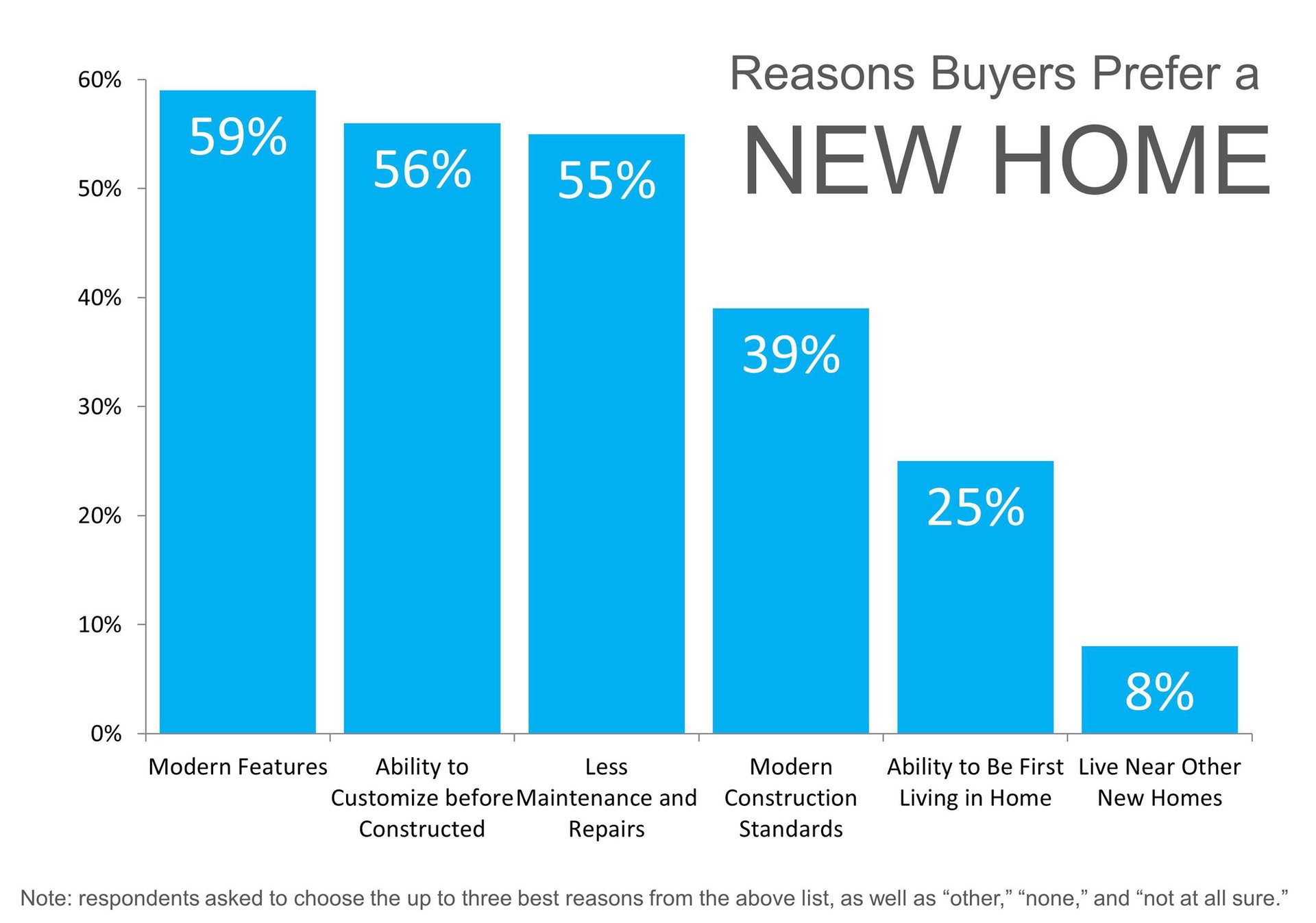
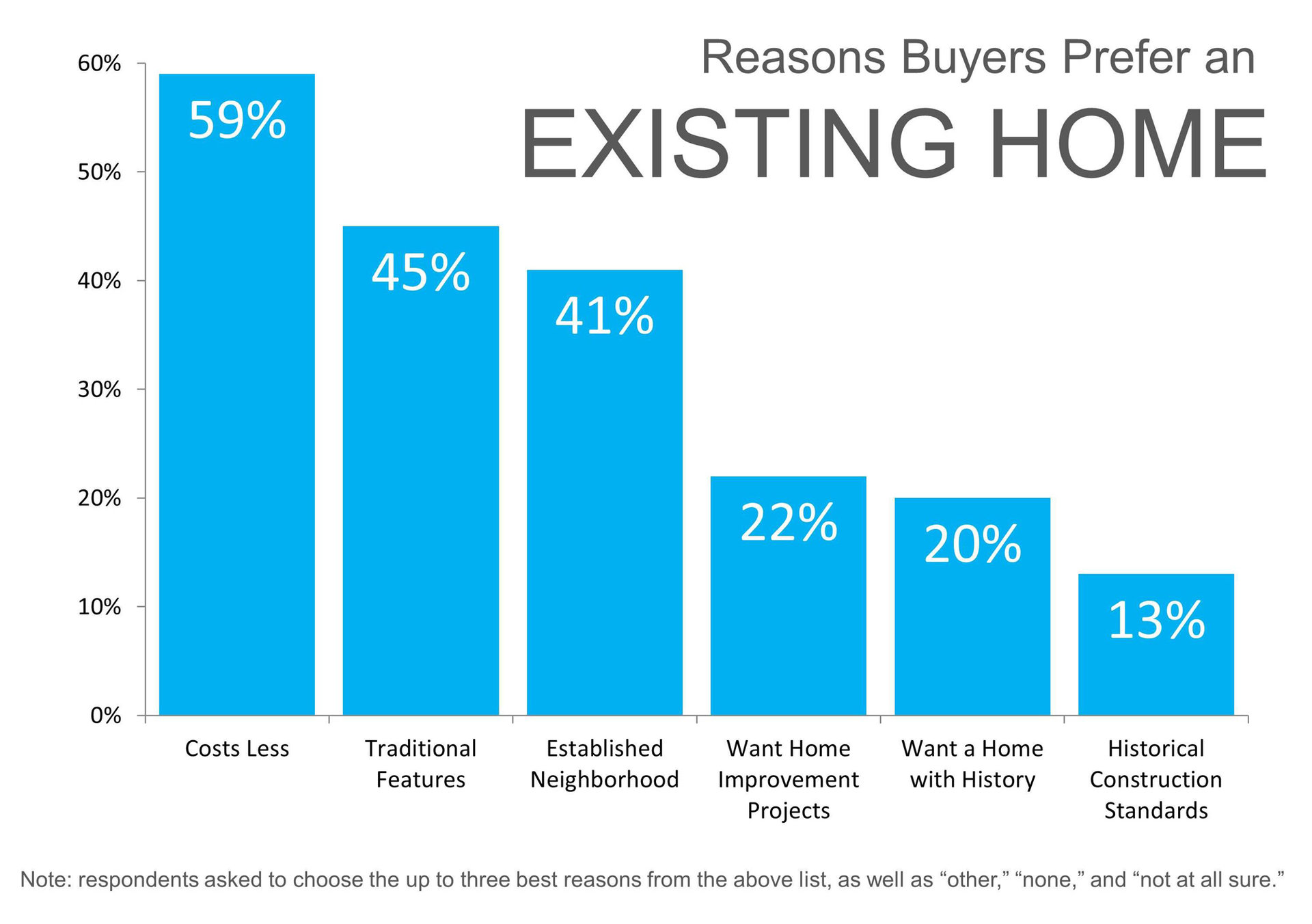
5.12 Visualrecent study by Harris Poll revealed that, for the same price, forty one percent of Americans would prefer to buy a newly built home instead of an existing home. Twenty one percent prefer an existing home while thirty eight percent didn’t have a preference. However, those desiring a new home may not be prepared to ante-up the difference in price. Only forty six percent of those who strongly prefer a new home are willing to pay at least 20 percent extra* to purchase a new home versus a comparable existing home. *Trulia estimates “that new homes built in 2013 or 2014 are typically priced 20 percent higher than older homes of a similar size and location.” Why People Prefer a New Home? Reasons to Buy a New Home1 Existing Home Preferences1

Bottom Line

5.12 Visualrecent study by Harris Poll revealed that, for the same price, forty one percent of Americans would prefer to buy a newly built home instead of an existing home. Twenty one percent prefer an existing home while thirty eight percent didn’t have a preference. However, those desiring a new home may not be prepared to ante-up the difference in price. Only forty six percent of those who strongly prefer a new home are willing to pay at least 20 percent extra* to purchase a new home versus a comparable existing home. *Trulia estimates “that new homes built in 2013 or 2014 are typically priced 20 percent higher than older homes of a similar size and location.” Why People Prefer a New Home? Reasons to Buy a New Home1 Existing Home Preferences1