July 20, 2025

How Recent Hurricanes Have Impacted the Seafood Industry on Fort Myers Beach, Florida

How Recent Hurricanes Have Impacted the Seafood Industry on Fort Myers Beach, Florida

🌊 How Recent Hurricanes Have Impacted the Seafood Industry on Fort Myers Beach, Florida

Meta Description: Explore how recent hurricanes have affected the seafood industry on Fort Myers Beach, Florida. Learn about economic impacts, recovery efforts, and the resilience of local fisheries.

Introduction

Fort Myers Beach, Florida, is renowned for its fresh seafood, bustling marinas, and a coastal economy deeply rooted in fishing. However, recent hurricanes—most notably Hurricane Ian in 2022 and Hurricane Helene in 2025—have tested the limits of this industry’s resilience. From destroyed docks to disrupted supply chains, the seafood industry has faced widespread challenges. This blog dives into the ongoing impacts, how local fisheries are recovering, and why this topic matters for the future of Southwest Florida’s economy.

🌀 Hurricane Ian: A Turning Point

Hurricane Ian made landfall in September 2022 as a powerful Category 4 storm, leaving widespread devastation in its path. Fort Myers Beach suffered catastrophic damage, including:

  • Destroyed fishing piers and seafood markets
  • Flooded processing facilities and cold storage units
  • Lost fishing vessels and gear
  • Massive beach erosion and habitat disruption

Many local seafood businesses were forced to shut down temporarily, with some never reopening. For months after the storm, shrimp boats and crabbers struggled to access key fishing grounds due to damaged navigation channels and lingering debris.

🦐 Disruption to Commercial Fisheries

Fort Myers Beach is known for its Gulf pink shrimp, stone crab, grouper, and other commercial catches. Hurricanes significantly affected both the harvest and distribution of these products. Impacts included:

  • Delayed Seasons: The 2022-2023 shrimping season opened late due to dock repairs and missing vessels.
  • Reduced Yields: Turbidity and water pollution from storm runoff reduced the availability of certain species.
  • Labor Shortages: Displaced workers and housing losses compounded staffing problems in post-storm months.
  • Loss of Revenue: Restaurants and wholesalers faced major seafood supply gaps, resulting in a revenue decline for local fishers.

🌎 Environmental Aftermath

Storm surges and flooding from hurricanes also disrupted the fragile marine ecosystems that support Southwest Florida’s seafood supply. Specific environmental effects included:

  • Seagrass damage that reduced nursery habitats for fish and shellfish
  • Algal blooms fueled by nutrient runoff, including red tide events that killed marine life
  • Contaminated waters from septic overflows and urban runoff, affecting seafood safety and quality

According to NOAA and local marine biologists, these stressors could have long-term consequences on breeding cycles, migratory patterns, and ecosystem health.

⚓ Community Resilience and Recovery Efforts

Despite the devastation, the Fort Myers Beach community has shown remarkable resilience. Recovery efforts have included:

  • Federal Aid: FEMA and NOAA grants helped fund dock restoration and facility rebuilds.
  • State Investment: Florida approved emergency funds for marine infrastructure and seafood industry stabilization.
  • Local Initiatives: Nonprofits and fishing cooperatives organized equipment replacements and hosted job fairs for displaced workers.
  • Innovation: Some fisheries invested in GPS vessel tracking, sustainable aquaculture, and climate-resilient gear to prepare for future storms.

Many seafood restaurants also pivoted to sourcing from unaffected areas while rebuilding local supply chains. Some even expanded their menus to include more sustainable fish choices from aquaculture systems.

🧑‍🍳 Impact on Local Cuisine and Tourism

Seafood is central not just to the economy but also to Fort Myers Beach’s identity. Tourism dropped sharply post-Ian, affecting seafood restaurants, boat tours, and dockside markets. However, recent years have shown a rebound thanks to:

  • High-profile seafood festivals promoting local products
  • Marketing campaigns encouraging tourists to “Eat Local, Support Recovery”
  • Partnerships between chefs and fisheries to highlight local catches

By 2025, many restaurants report sales returning to pre-Ian levels—an encouraging sign of the seafood sector’s rebound.

🔍 Future Outlook: Building a Storm-Resilient Seafood Economy

With climate change increasing storm frequency and intensity, Fort Myers Beach is taking action to build a more hurricane-proof seafood economy. Key strategies include:

  • Elevating and hardening seafood facilities against flood risks
  • Supporting sustainable aquaculture as a backup to wild-caught harvests
  • Investing in real-time water quality monitoring to ensure seafood safety
  • Training programs to prepare the next generation of fishers and processors

These strategies reflect a broader regional effort to align environmental sustainability with economic recovery—critical for long-term resilience.

✅ Final Thoughts: A Community Anchored by the Sea

The seafood industry on Fort Myers Beach is more than an economic driver—it’s a cultural cornerstone. Hurricanes like Ian and Helene tested its limits, but the determination of fishers, chefs, and locals has kept the industry afloat. As infrastructure is rebuilt and ecosystems heal, Fort Myers Beach stands poised not just to recover, but to thrive with a seafood sector that’s smarter, stronger, and more sustainable than ever.

📍 Stay Connected

Want to support Fort Myers Beach seafood? Visit local markets, dine at dockside restaurants, and follow regional fisheries for updates on fresh catches.

Contact: Scott Meadows | Fort Myers Beach Real Estate & Lifestyle Expert

July 19, 2025

How Recent Hurricanes Have Hit Florida’s Gulf Coast Seafood Industry

How Recent Hurricanes Have Hit Florida’s Gulf Coast Seafood Industry

🌪️ How Recent Hurricanes Have Hit Florida’s Gulf Coast Seafood Industry

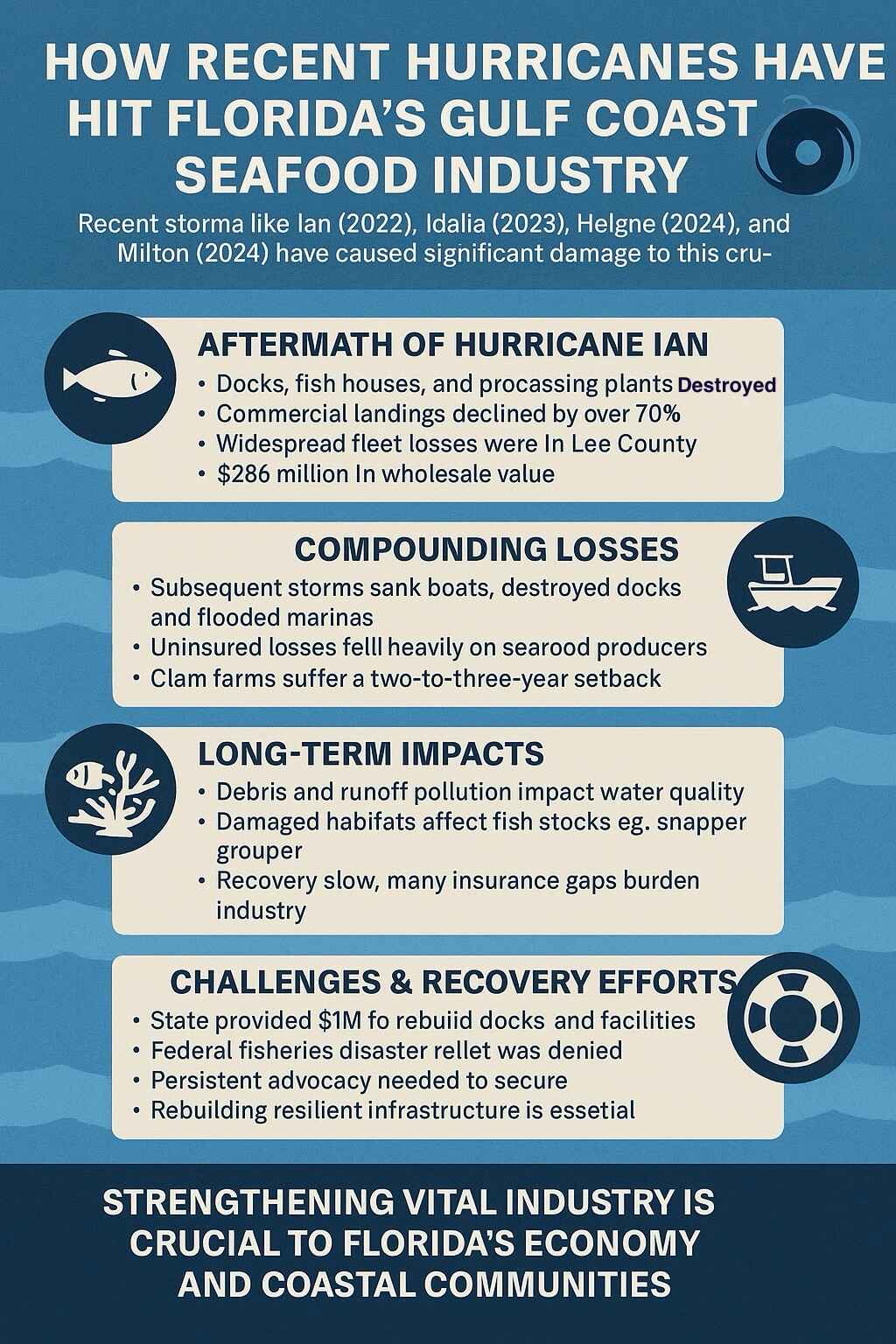
Florida’s Gulf Coast—known for its vibrant fisheries, seafood restaurants, and coastal communities—has faced increasing challenges in recent years due to major hurricanes such as Ian (2022), Idalia (2023), Helene and Milton (2024). These storms have inflicted serious damage to boats, docks, processing facilities, and marine habitats, delivering a harsh economic blow to both commercial and recreational fishing sectors.

🐟 The Aftermath of Hurricane Ian (2022)

Devastated Infrastructure

Hurricane Ian was especially destructive, wiping out three of Lee County’s deep-water fish houses and causing extensive damage to docks, marinas, and fish processing facilities. As Casey Streeter of Island Seafood Co. put it:

“In all reality, our infrastructure’s gone… if you don’t have docks and you don’t have ice… you don’t have a fishery.”

Economic Fallout

Florida's Gulf Coast fisheries typically pull in 96 million lbs of seafood worth $286M wholesale annually. Post-Ian, commercial landings dropped by over 70% compared to historical averages, underscoring widespread fleet losses and operational disruptions.

⚓ Compounding Losses in 2023–2024

Subsequent storms like Idalia and Superstorm Helene further strained the industry. Reports show these events sank boats, destroyed docks, and flooded shore operations, forcing fishermen to foot 75% of uninsured losses. One Florida marina operator noted a two-to-three-year setback for clam farms alone.

Shrimpers Under Pressure

Even traditionally resilient sectors like shrimping reported significantly reduced fleets and hardship. Experts say Gulf shrimpers faced a pivotal moment after Ian demolished their infrastructure.

🏛️ Recovery Efforts & State Support

Funding Rebound

In 2024, the State of Florida allocated $1 million from the Disaster Fund to help rebuild docks, fish houses, and aquaculture facilities. Governor DeSantis also pushed for a federal fisheries disaster declaration to secure more aid.

Federal Challenges

Unfortunately, initial requests to NOAA Fisheries for disaster assistance were denied, leaving fishermen without immediate federal support.

🌊 Long-Term Ecosystem & Market Impacts

Storm runoff, debris, and disrupted septic systems carrying nitrogen and phosphorus may further damage water quality. Such disruptions threaten inshore fish stocks like snappers and groupers.

Industry Resilience

Despite hardship, many fishermen have rebuilt quickly. By late 2024, most commercial fleets were back in operation, thanks to grit, insurance, and state backing. Still, insurance claims often don’t cover 100% of pre-storm losses.

📈 The Broader Picture

Post-pandemic and post-storm figures show a 30% drop in Gulf landings by weight, even while value per pound increased by 9.6%. These dynamics indicate a smaller overall catch but higher-value species dominating the market.

Florida’s seafood sector supports around 3,500 jobs and contributes over $435 million in economic impact. The Gulf region is particularly valuable—representing about 16% of U.S. fishery value.

🔑 Key Takeaways

Challenge Impact
Storm damage (Ian, Idalia, Helene, Milton) Fleet, dock, processing plant destruction
Catch reductions 70%+ declines after storms; industry still rebuilding
Economic hardship $1M state aid; denied NOAA disaster relief
Environmental risks Pollution threats to fisheries and marine habitats
Recovery efforts Slow rebuild; insurance gaps and ongoing vulnerabilities

🧭 Looking Ahead: Resilience & Restoration

  • Strengthen Infrastructure: Rebuilding with resilient materials, backup generators, and elevated docks could reduce long-term vulnerability.
  • Policy Advocacy: Persistent efforts to secure federal disaster designation are essential—fishery disaster relief funds remain among the industry’s best hope.
  • Environmental Safeguards: Protecting inshore habitats and improving water quality can support sustainable fish populations.
  • Market Diversification: Expanding into aquaculture, eco-tourism, and seafood branding may offer economic buffers against future disasters.

🌟 Final Thoughts

Recent hurricanes have dealt gut-punches to Florida’s Gulf Coast seafood industry—decimating physical assets, reducing catch volumes, and imposing hefty rebuilding costs. But Florida fishermen remain determined, and recent state aid has helped buoy recovery.

Protecting this vital industry means investing in resilient infrastructure, securing disaster funding, restoring coastal ecosystems—and supporting the hardworking individuals who sustain Florida’s seafood legacy.


📞 Want to discuss waterfront real estate, sustainable investment, or coastal recovery solutions?

Contact Scott Meadows:
📧 ScottMeadows3@gmail.com
📞 (239) 220-1157
🌐 www.FloridaCustomHomes.com

July 19, 2025

The C-43 Reservoir: A Lifeline for Southwest Florida’s Waterways

C-43 Reservoir

💧 The C-43 Reservoir: A Lifeline for Southwest Florida’s Waterways

By Scott Meadows | Florida Custom Homes | July 2025

Southwest Florida’s scenic beauty, vibrant ecosystems, and thriving coastal communities depend on one essential resource—clean, well-managed water. But for decades, Lake Okeechobee discharges into the Caloosahatchee River have triggered damaging algal blooms, estuary degradation, and environmental imbalances.

Enter the C-43 Reservoir, one of Florida’s most impactful water infrastructure projects. Scheduled for completion in 2026, this monumental undertaking will reshape water management in Lee County and protect the Caloosahatchee River and nearby communities like Cape Coral, Fort Myers, and Sanibel Island.

🌊 What Is the C-43 Reservoir?

The C-43 Reservoir, officially known as the Caloosahatchee Reservoir, is a massive water storage facility under construction near LaBelle, Florida. Developed in partnership between the South Florida Water Management District (SFWMD) and the U.S. Army Corps of Engineers, this reservoir is designed to hold up to 170,000 acre-feet of water, equivalent to about 55 billion gallons.

  • Size: Over 10,000 acres in Hendry County
  • Storage Capacity: 170,000 acre-feet
  • Completion: Late 2026
  • Budget: Approx. $524 million

The primary purpose? To capture and store harmful freshwater discharges before they reach the fragile lower Caloosahatchee Estuary and Gulf of Mexico.

🐬 Why the C-43 Reservoir Matters for Southwest Florida

For years, Southwest Florida has suffered the consequences of unregulated water flows. During rainy seasons, Lake Okeechobee is forced to release large volumes of nutrient-rich water down the Caloosahatchee River. This imbalance can:

  • Trigger harmful algal blooms
  • Reduce salinity levels, harming oysters, seagrass, and marine life
  • Introduce pollutants into coastal ecosystems
  • Disrupt tourism, fishing, and real estate

The C-43 Reservoir will act as a "shock absorber", capturing these harmful discharges and releasing clean, regulated flows to sustain the estuary.

📈 How the Reservoir Will Help Southwest Florida’s Waterways

1. Improves Caloosahatchee River Health

The reservoir helps maintain a balanced freshwater-saltwater mix—critical for marine life—by storing excess freshwater and releasing it gradually when needed.

2. Reduces Harmful Algal Blooms

By regulating the flow of nutrient-rich water, the C-43 minimizes conditions that encourage the spread of blue-green algae to communities like Sanibel, Fort Myers Beach, and Cape Coral.

3. Enhances Wildlife Habitat

The reservoir helps restore estuary conditions essential for manatees, dolphins, snook, roseate spoonbills, and other native species.

4. Boosts Water Quality and Public Health

Cleaner water means reduced toxins and fewer health risks for residents and visitors, especially those who fish, swim, or drink from local water sources.

🏝️ Benefits for Coastal Communities

🏖️ Cape Coral & Fort Myers

These cities depend on clean waterways for recreation, boating, and real estate. The reservoir helps reduce brown water episodes and preserve property values.

🐚 Sanibel & Captiva Islands

These tourist-driven barrier islands have experienced severe economic losses from red tide and algae. The C-43 helps reduce nutrient flow that feeds these blooms.

⚙️ How the System Will Work

  1. Capture: Excess water is diverted during rainy seasons.
  2. Store: Water is safely held in lined reservoirs.
  3. Release: Water is gradually released to stabilize salinity and prevent estuary shock.

Though it doesn’t treat water chemically, the reservoir’s regulated releases will significantly reduce the impact of harmful freshwater floods on coastal systems.

🏗️ Project Progress and Timeline

As of July 2025:

  • Embankments are 90% complete
  • Pump station construction underway
  • Testing phase begins early 2026
  • Full operations expected by late 2026

🌍 Long-Term Vision: A More Resilient Southwest Florida

The C-43 Reservoir goes beyond flood prevention. It supports:

  • Economic resilience for tourism and real estate
  • Environmental justice for local communities
  • Ecosystem recovery for native plants and wildlife
  • Storm protection through smarter water management

✅ Final Thoughts: A New Era of Water Stewardship

The C-43 Reservoir marks a turning point in Florida’s water management strategy. It shows that balancing growth, environment, and quality of life is possible through smart, forward-thinking infrastructure. As Southwest Florida continues to grow, projects like this ensure that its most precious resource—water—remains protected for generations to come.


📞 Want to Learn More About Waterfront Living or Smart Investments in Southwest Florida?

Contact Scott Meadows:

July 19, 2025

Discover Naples, Florida's Newest Communities in 2025

Discover Naples, Florida's Newest Communities in 2025

Discover Naples, Florida's Newest Communities in 2025: A Deep Dive Into Luxury, Lifestyle, and Location

Naples, Florida continues to set the standard for upscale living, and in 2025, the real estate market is buzzing with brand-new communities that redefine luxury, convenience, and lifestyle. From beachfront elegance to nature-inspired estates and urban high-rises, Naples offers something for every homebuyer. If you're exploring real estate opportunities in Southwest Florida, here are the newest communities to watch.


🏠 Caymas: Lakefront Luxury with Resort Amenities

Developed by Pulte and Stock Development, Caymas is one of Naples' most anticipated new communities. Nestled across 780 acres in East Naples, Caymas will feature 457 homes, including 97 premium lakefront lots. Homes are spacious, modern, and designed for upscale comfort with one- and two-story floorplans ranging around 3,300 square feet.

What sets Caymas apart is its massive 18-acre amenity campus. Residents will enjoy a beach-entry resort pool, tennis and pickleball courts, a movie theater, golf simulator, and an expansive 30,000 sq ft clubhouse with indoor/outdoor dining. A kayak and paddleboard launch along with lush nature trails make this community perfect for active Floridians. Prices start in the $840K range, offering high-end value in a rapidly growing area.


🏖️ Rosewood Residences Naples: Ultra-Luxury Beachfront Living

For those craving true coastal elegance, Rosewood Residences Naples delivers beachfront living at its finest. Developed by the world-renowned Rosewood Hotels & Resorts brand, this exclusive condominium community offers panoramic Gulf views, high-end architecture, and five-star amenities.

Located on the sands of Naples Beach, these residences are designed for discerning buyers seeking both privacy and prestige. Homeowners will enjoy access to private beach clubs, full-service concierge, wellness spas, and fine dining all within a few steps of home. Each unit is meticulously crafted with state-of-the-art finishes, expansive layouts, and designer interiors. Rosewood Residences is redefining what it means to live luxuriously on the Gulf Coast.


🌇 The Ritz-Carlton Residences, Naples: Gulf Views and Unmatched Prestige

The Ritz-Carlton Residences, Naples represent the pinnacle of waterfront condo living. Currently under development by STOCK Residences, this iconic three-tower community is located next to the Ritz-Carlton Beach Resort. With direct marina access, Gulf views, and five-star service, these mid-rise residences blend hotel luxury with the comforts of home.

Residences include 3 to 5-bedroom floorplans, starting at $5.2M. Amenities include a 22-slip private marina, 28,000 sq ft Vanderbilt Club, rooftop lounges, golf simulators, spa, private restaurant, and concierge services. The community is expected to be complete in early 2026 and has already pre-sold over 75% of its units. It’s a rare opportunity to live under the Ritz-Carlton banner in one of Florida’s most exclusive zip codes.


🌆 Aura at Metropolitan Naples: Chic High-Rise Living Near Downtown

Urban living meets coastal charm at Aura at Metropolitan Naples. Located just east of Naples' famed 5th Avenue South, Aura is a boutique 15-story high-rise offering only 56 luxury condos. Designed for those seeking walkability and elevated design, Aura features two- to four-bedroom floor plans with rooftop infinity pools, panoramic fitness centers, fire pits, and private BBQs on each lanai.

Condos range from 1,890 to over 6,000 square feet and are priced between $2M and $7M+. Each residence includes high-end appliances, two-car garages, and floor-to-ceiling impact windows. With concierge services, beach shuttles, and business lounges, Aura blends downtown accessibility with Naples' signature lifestyle.


🌿 The Isles of Collier Preserve: A Nature-Lover’s Paradise

The Isles of Collier Preserve offers a serene escape surrounded by over 2,400 acres of lakes, preserves, and natural waterways. Developed by Minto Communities, this nature-inspired community features luxury villas, coach homes, and single-family estates designed to blend seamlessly with the surrounding environment.

Homeowners enjoy resort-style amenities like a waterfront clubhouse, kayak launches, resort and lap pools, tennis and pickleball courts, fitness center, and on-site waterfront dining at "Overlook Bar & Grill." The community also offers miles of hiking and biking trails. With a focus on sustainability and wellness, the Isles is ideal for nature enthusiasts who value luxury and tranquility.


🧓 GL Homes 55+ Community in East Naples: Active-Adult Resort Living

GL Homes is launching a brand-new 55+ active adult community just east of downtown Naples. Tailored for retirees and empty nesters, this development features six thoughtfully designed floor plans ranging from 1,800 to 2,700 square feet. Homes are built with open concepts, energy-efficient systems, and smart-home features.

Residents will enjoy a lifestyle centered around wellness and social connection, with access to a sprawling clubhouse, lap and leisure pools, pickleball and tennis courts, fitness centers, walking paths, and on-site restaurants and bars. With its community-centric amenities and age-restricted exclusivity, this GL Homes project is shaping up to be one of the most desirable 55+ options in Southwest Florida.


🔍 Emerging Areas to Watch

Big Cypress (East Collier County)

Approved as a future master-planned town, Big Cypress will include three primary villages: Rivergrass, Longwater, and Bellmar. Though currently facing environmental scrutiny, the long-term vision includes thousands of homes, parks, and retail centers designed to accommodate Collier County's growth. Watch for movement in this area as development plans evolve.

Ave Maria Expansion

Located about 30 minutes east of Naples, Ave Maria continues to expand as a self-sustained planned community. With over 5,000 acres of development space, it features schools, retail centers, churches, sports parks, and a growing number of residential villages. Ave Maria offers more affordability than coastal Naples with strong community values and modern amenities.


🌴 Final Thoughts: A New Era of Living in Naples

Naples is experiencing a construction renaissance in 2025, with new communities offering something for every lifestyle. Whether you’re dreaming of a lakefront home in Caymas, a beachfront condo at Rosewood, high-rise elegance at Aura, or active adult living with GL Homes, there's never been a better time to invest in Southwest Florida.

With continued demand, limited inventory, and evolving lifestyle preferences, these new neighborhoods are positioned to attract buyers from across the country. Don’t miss your chance to be part of Naples' next chapter.

Interested in floor plans, incentives, or private tours? Contact us today to learn more about opportunities in Naples' hottest new communities.

July 19, 2025

How the EAA Reservoir Will Benefit Gulf Waters Near Fort Myers, Sanibel & Captiva

EAA Reservoir

🌊 How the EAA Reservoir Will Benefit Gulf Waters Near Fort Myers, Sanibel & Captiva

Southwest Florida’s iconic coastal destinations—Fort Myers Beach, Sanibel Island, and Captiva Island—are known for their turquoise waters, world-class shelling, and vibrant marine ecosystems. But in recent years, these beloved communities have been plagued by water quality issues stemming from polluted discharges out of Lake Okeechobee. Fortunately, the Everglades Agricultural Area (EAA) Reservoir is poised to offer a long-awaited solution.

💧 The Problem: Polluted Discharges and Algal Blooms

Historically, when Lake Okeechobee’s water levels rise, massive volumes of nutrient-laden freshwater are discharged east and west into the St. Lucie and Caloosahatchee Rivers. These releases bring harmful nitrogen and phosphorus into delicate estuaries and coastal waters—fueling toxic algal blooms, red tide events, fish kills, and seagrass die-offs.

🏗️ The EAA Reservoir: A Game-Changer for Coastal Health

The EAA Reservoir, located just south of Lake Okeechobee, is designed to capture, store, and treat excess freshwater before it ever reaches the coasts. Once completed, the system will include a 10,500-acre reservoir and a 6,500-acre stormwater treatment area (STA), significantly reducing the frequency and intensity of damaging discharges.

🌱 Gulf Benefits for Sanibel, Captiva, and Fort Myers Beach

  • Improved Water Clarity: With fewer nutrient-rich discharges, water clarity along the beaches will improve—enhancing snorkeling, fishing, and boating experiences.
  • Reduced Algal Blooms: By limiting excess phosphorus and nitrogen, the EAA Reservoir helps curb the conditions that lead to red tide and blue-green algae outbreaks.
  • Healthier Seagrasses and Fisheries: Clearer, cleaner water supports vital seagrass habitats that shelter fish, manatees, and sea turtles—essential for tourism and biodiversity.
  • Boosted Local Economy: A healthier coastline means more visitors, more bookings, and sustained property values across coastal Lee County.

📢 What Governor DeSantis Announced

In July 2025, Governor Ron DeSantis announced an accelerated timeline for the EAA Reservoir—moving completion from 2034 to 2029 through a new agreement with the U.S. Army Corps of Engineers. This speeds up critical environmental benefits and solidifies Florida’s leadership in clean water advocacy.

📍 Final Thoughts: A Cleaner, Healthier Gulf Future

For the communities of Fort Myers Beach, Sanibel, and Captiva, the EAA Reservoir is more than a restoration project—it’s a promise of protection. It means safeguarding marine life, tourism, public health, and the natural beauty that defines the region. Cleaner water is coming, and its impact will ripple far beyond the Everglades.


📞 Learn More from a Local Expert

Want to understand how environmental initiatives like the EAA Reservoir affect your property, lifestyle, or real estate investment in Southwest Florida?

Contact Scott Meadows – Your trusted local real estate advisor.

July 18, 2025

Crystal Lake Park: Cape Coral’s Newest Gem Transforming Northwest Cape

Crystal Lake Park

🌊 Crystal Lake Park: Cape Coral’s Newest Gem Transforming Northwest Cape

Meta Description: Discover how Crystal Lake Park is poised to transform Northwest Cape Coral, Florida. Learn about the park’s features, its impact on real estate, local economy, and the future of recreation in the region.

Welcome to the Future of Northwest Cape Coral

Cape Coral, Florida, is no stranger to growth and transformation. Known for its 400+ miles of canals, waterfront lifestyle, and proximity to the Gulf of Mexico, the city continues to attract new residents, investors, and vacationers alike. But as the city expands, one area in particular is drawing increased attention: Northwest Cape Coral—and it’s all thanks to the exciting development of Crystal Lake Park.

Set to become a signature destination for recreation and outdoor living, Crystal Lake Park isn’t just another neighborhood amenity. It represents a turning point for the entire region. This 175-acre mixed-use park will feature Crystal Lake, a 50-acre artificial lake built from a former limestone mine. With plans that include swimming beaches, boat ramps, picnic pavilions, nature trails, and even potential commercial and community space, Crystal Lake Park is expected to enhance quality of life, boost property values, and create new economic opportunities in one of Cape Coral’s most underdeveloped areas.

🏞️ What Is Crystal Lake Park?

Crystal Lake Park is a master-planned public recreation facility under development in Northwest Cape Coral, just east of Burnt Store Road and south of Kismet Parkway. The centerpiece of the park will be Crystal Lake, a large freshwater body created from a former aggregate mining pit.

  • 50-acre recreational lake for paddleboarding, kayaking, and electric boats
  • Man-made beach areas for swimming and sunbathing
  • Boat launch ramps and fishing piers
  • Picnic areas, playgrounds, and shaded pavilions
  • Walking and biking trails
  • Future options for community events, concerts, and markets

📍 Why Northwest Cape Coral?

Northwest Cape Coral has long been seen as a “sleeping giant.” This section of the city is known for its natural preserves, wide canals, and larger residential lots. With ongoing infrastructure improvements, expanding utilities, and major projects like the Burnt Store Road widening, the area is primed for growth. Crystal Lake Park is a catalyst for both lifestyle and real estate transformation in this region.

🌟 Benefits of Crystal Lake Park for Cape Coral Residents

1. Recreational Access Close to Home

Residents will enjoy local access to water activities like paddleboarding and kayaking, all without leaving the city. The lake’s beaches and trails add vacation-like amenities to everyday life.

2. Increased Property Values

Public parks increase home desirability. Expect properties near Crystal Lake Park to rise in value as demand surges for homes close to recreational space.

3. Boost to the Local Economy

Crystal Lake Park will draw thousands of annual visitors, supporting local businesses and possibly inspiring new retail, hospitality, and recreational service growth nearby.

4. Environmental Rehabilitation

Repurposing a former mining site into a thriving lake promotes sustainability, biodiversity, and improved stormwater management.

5. Community Gathering Space

From live music to farmers markets, Crystal Lake Park is expected to become a vibrant community hub for residents of all ages.

🏠 Real Estate Outlook: A Hotspot in the Making

For real estate investors and homebuyers, Northwest Cape Coral is full of potential. The area offers:

  • Larger lots at affordable prices
  • Proximity to Pine Island, Matlacha, and nature preserves
  • Fewer deed restrictions and open zoning options
  • New custom and spec home construction underway

Crystal Lake Park adds another layer of value to this up-and-coming neighborhood, making it one of Cape Coral’s most promising long-term investments.

🏗️ What’s Next for Crystal Lake Park?

The development is expected to unfold in phases. Watch for:

  • Final design approvals and permitting
  • Public input sessions and community planning meetings
  • Initial site preparation and environmental assessments
  • Road and utility expansion around the project zone

🧭 Final Thoughts: Crystal Lake Park Is a Game-Changer

Crystal Lake Park is more than just a park—it’s a bold vision for smart, sustainable growth in Northwest Cape Coral. By turning a former mine into a recreational lake, the city is investing in quality of life, environmental stewardship, and future economic opportunity.

Whether you’re a local, a visitor, or a potential buyer, Crystal Lake Park represents the bright future of Cape Coral’s northwest quadrant.


🏡 Ready to Explore Real Estate Near Crystal Lake?

If you're interested in buying or building near Crystal Lake Park in Northwest Cape Coral, contact:

Scott Meadows – Southwest Florida Real Estate Expert
📞 (239) 220-1157
📧 ScottMeadows3@gmail.com
🌐 www.FloridaCustomHomes.com

July 18, 2025

What Is the EAA Reservoir?

EAA Reservoir

🌿 What Is the EAA Reservoir?

The Everglades Agricultural Area (EAA) Reservoir is a major environmental infrastructure project located south of Lake Okeechobee. It’s designed to store and treat excess water before it flows into Florida’s delicate ecosystems—most notably the Everglades, Florida Bay, and the Caloosahatchee and St. Lucie estuaries.

Key Features:

  • Capacity: Stores 270 to 470 billion gallons of freshwater annually
  • Function: Holds and cleans water before sending it south to the Everglades
  • Size: 10,500 acres of reservoir and 6,500 acres of stormwater treatment areas (STA)

The EAA Reservoir is a central piece of the Comprehensive Everglades Restoration Plan (CERP)—the largest ecosystem restoration project in U.S. history.

🧪 Why It Matters: Environmental Impact

Florida’s waterways have suffered for decades from polluted runoff, algal blooms, and unnatural water discharges from Lake Okeechobee. The EAA Reservoir provides a long-term fix by:

  • ✅ Reducing toxic discharges into the Caloosahatchee and St. Lucie Rivers
  • ✅ Rehydrating the Everglades and Florida Bay with clean, natural flow
  • ✅ Supporting native wildlife and endangered habitats
  • ✅ Improving water quality for fishing, boating, and drinking
  • ✅ Mitigating harmful algal blooms fueled by nutrient runoff

For coastal and inland communities alike, this means cleaner water, healthier ecosystems, and stronger storm resilience.

📣 July 2025 Announcement: DeSantis Speeds Up Completion

Speaking from Marco Island, Governor Ron DeSantis today unveiled a new agreement with the U.S. Army Corps of Engineers that accelerates construction of the EAA Reservoir from 2034 to 2029.

Key Elements of the Announcement:

  • New Agreement Signed: Between Florida and the Army Corps
  • State Responsibility: Florida will now construct the inflow/outflow pump stations and the Blue Shanty flowway
  • Federal Focus: The Corps will concentrate on building the reservoir basin
  • Permit Flexibility: Florida will streamline permitting, with authority to intervene if vendors miss deadlines
  • Funding Secured: Accelerated federal support for construction phases

Governor DeSantis called the deal “historic” and emphasized Florida’s leadership in protecting its water resources and wildlife habitats.

🌎 Long-Term Benefits of the EAA Reservoir

  • 💧 Water Quality: Reduces pollution and excess nutrients entering fragile coastal zones
  • 🌀 Storm Resilience: Improves the state’s ability to manage heavy rainfall and storm surges
  • 🐟 Ecosystem Recovery: Supports seagrasses, fisheries, and iconic species like manatees and panthers
  • 💵 Tourism & Economy: Clean water supports billions in tourism, recreation, and real estate

✅ Final Thoughts: A Turning Point for Florida’s Environment

With today’s announcement, Florida has made a bold commitment to accelerate the most impactful water restoration project in its history. The EAA Reservoir isn’t just an engineering marvel—it’s a lifeline for the Everglades, a solution for coastal pollution, and a legacy of resilience for future generations.

As sea levels rise and storms intensify, Cape Coral, Fort Myers, Naples, and all of South Florida stand to benefit from this investment in environmental infrastructure.

📍 Stay Informed and Get Involved

To follow the progress of the EAA Reservoir and learn how you can support Florida’s clean water movement:

🔗 Visit: South Florida Water Management District – EAA Reservoir

📞 For real estate guidance in Southwest Florida’s evolving coastal landscape:

Scott Meadows – Southwest Florida Real Estate Expert
📞 (239) 220-1157
📧 ScottMeadows3@gmail.com
🌐 www.FloridaCustomHomes.com

July 18, 2025

Cape Coral’s Hottest New Construction Zones in 2025

Cape Coral New Homes

🏗️ Cape Coral’s Hottest New Construction Zones in 2025

Cape Coral has become one of Florida’s top destinations for new residential development, with over 400 miles of canals, no local income tax, and strong post-hurricane infrastructure improvements. As of July 2025, new construction activity is concentrated in several key areas, with distinct characteristics attracting different buyer types.

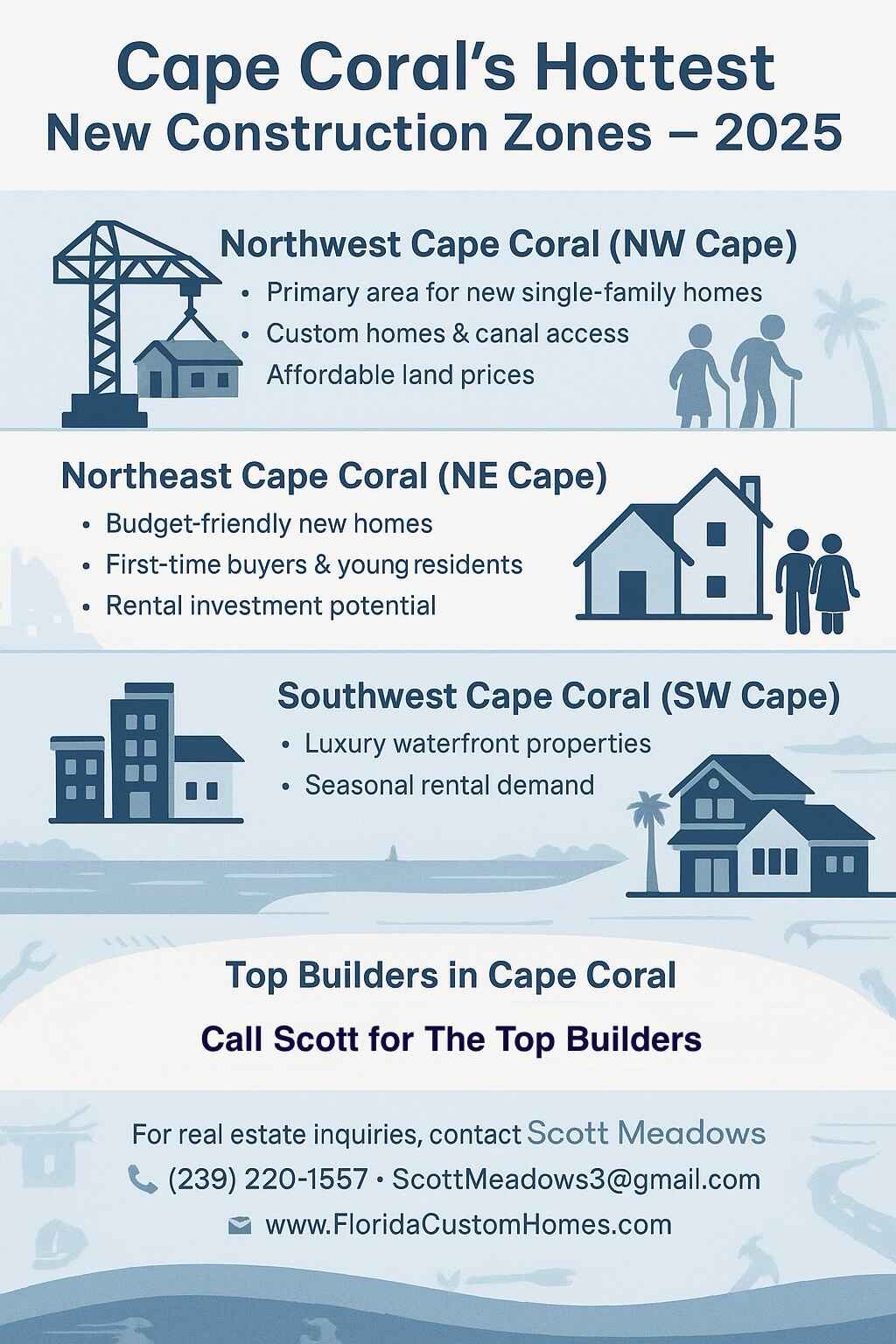
🌴 1. Northwest Cape Coral (NW Cape)

Primary Hotspot for New Single-Family Homes and Custom Builds

  • Key Features: Large tracts of undeveloped land, few deed restrictions, direct access to Burnt Store Road.
  • Why It’s Hot: Active infrastructure expansion, canal access, affordable land prices.
  • Target Buyer: Retirees, custom home builders, long-term investors.

🏘️ 2. Northeast Cape Coral (NE Cape)

Emerging Zone for Affordable New Builds

  • Key Features: Rapid spec home growth, close to U.S. 41 and Del Prado Blvd, some lots without city utilities.
  • Why It’s Hot: High volume of permits, lower price points, spillover from SW Cape.
  • Target Buyer: First-time homebuyers, rental property investors.

🌅 3. Southwest Cape Coral (SW Cape)

Luxury New Builds, Infill Projects & Waterfront Custom Homes

  • Key Features: Established neighborhoods, marinas, premium waterfront access.
  • Why It’s Still Relevant: Infill custom homes, premium demand for waterfront living.
  • Target Buyer: Luxury homebuyers, Airbnb and seasonal rental investors.

📈 Market Trends Fueling New Construction

  • Post-hurricane rebuilds are accelerating teardown and rebuild projects.
  • Builders are offering incentives like financing deals and free upgrades.
  • Ongoing city infrastructure investment in NW and NE Cape.
  • Increased demand for hurricane-resistant features like ICF and metal roofing.

🛠️ Notable Builders Active in Cape Coral

  • DR Horton: Affordable homes in NE Cape.
  • Sposen Homes: Custom modern builds in NW Cape.
  • Holiday Builders: Mid-range homes with impact features.
  • Coral Isle, Maronda, Lennar, LGI: Ready-to-move-in homes with upgrade packages.

🧭 Final Thoughts: Where to Focus in 2025

If you’re looking to build, invest, or buy new in Cape Coral:

  • Go NW: for growth and long-term value.
  • Go NE: for affordability and rental returns.
  • Go SW: for luxury lifestyle and waterfront access.

Each zone has unique advantages. Whether you’re a homeowner, investor, or builder, Cape Coral offers exceptional opportunity in 2025.


July 18, 2025

Hurricane-Proof Homes in Florida

Hurricane Proof Homes Florida

🏠 Hurricane-Proof Homes in Florida: What They Are and Why You Need One

Meta Description: Discover what defines a hurricane-proof home in Florida, the key features that enhance storm protection, and why it’s a smart long-term investment for homeowners.

What Is a Hurricane-Proof Home?

A hurricane-proof home is designed and built to withstand the destructive forces of major hurricanes—including wind gusts over 150 mph, storm surge flooding, and airborne debris. In Florida, where hurricane season runs from June through November, these homes are more than just a luxury—they’re a necessity for long-term property resilience and safety.

Key Features of a Hurricane-Proof Home

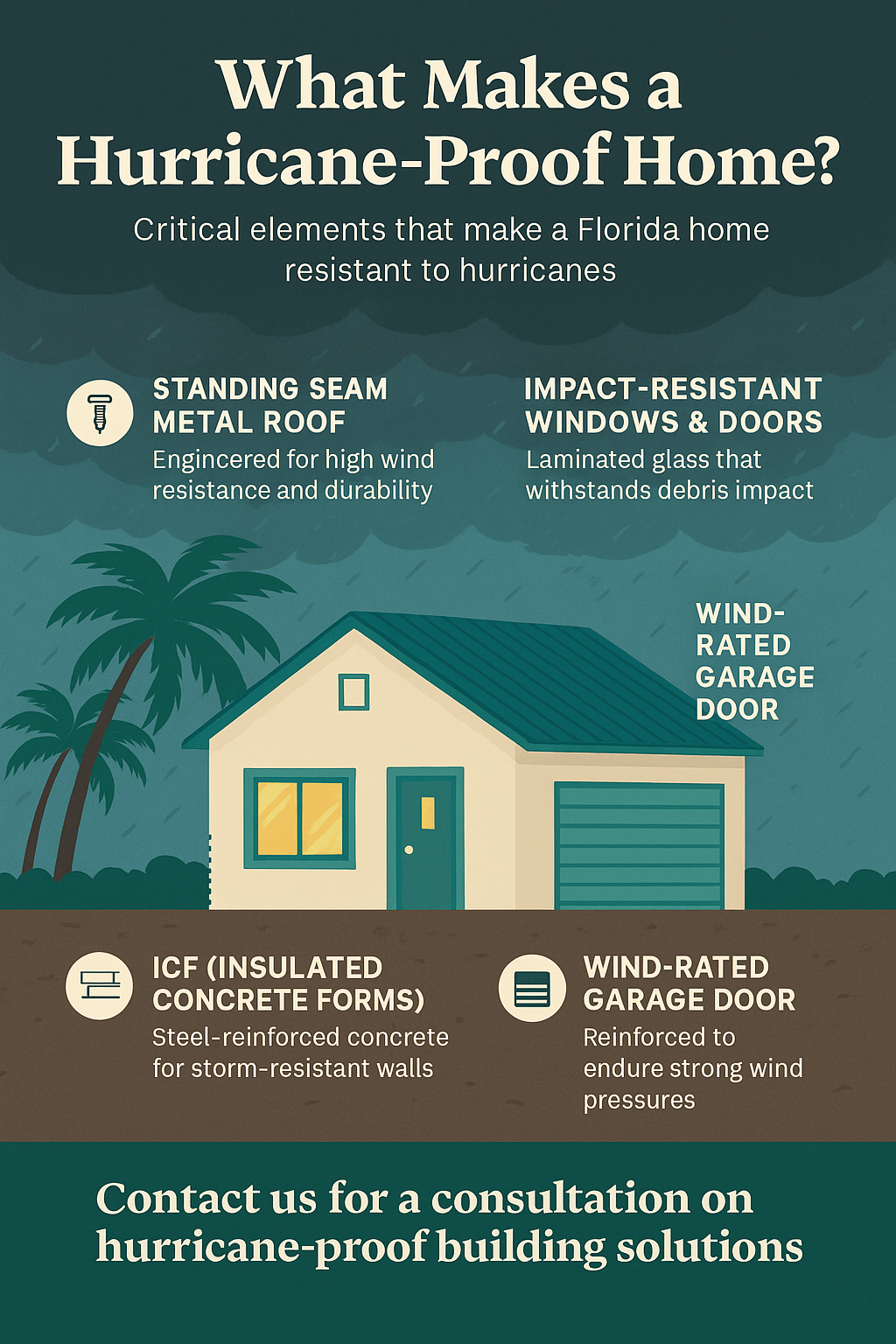
  • Impact-Resistant Windows & Doors: Laminated glass and heavy-duty frames resist breakage from flying debris, reducing the risk of wind or water entering your home.
  • Wind-Rated Roofing Systems: Metal or high-wind-rated asphalt shingles secured with ring-shank nails and secondary water barriers offer enhanced roof protection.
  • Reinforced Garage Doors: These doors prevent structural pressurization that can lead to catastrophic roof failure.
  • Elevated Foundations: Homes built on higher ground or pilings reduce flood risks, especially in coastal or low-lying zones.
  • Hurricane Straps and Clips: These secure the roof to the walls and the walls to the foundation, keeping the structure intact under high pressure.
  • Code-Compliant Construction: Homes built to Florida’s strict hurricane building codes, especially those in HVHZ (High-Velocity Hurricane Zones), are significantly more resilient.

Why Hurricane-Proof Homes Matter in Florida

Hurricanes like Ian, Irma, and Michael have taught Florida homeowners a painful lesson: storm preparedness isn’t optional. Homes that lacked proper reinforcement faced tens—or even hundreds—of thousands in damages. In contrast, hurricane-resistant homes often sustained minimal impact and were quicker to recover.

Benefits of a Hurricane-Resistant Home

  • Reduced Insurance Premiums: Wind mitigation features can lead to significant homeowners insurance discounts.
  • Higher Property Value: Buyers are increasingly prioritizing storm-ready features when shopping for Florida homes.
  • Peace of Mind: Whether you're home or away, knowing your property is protected brings security during hurricane season.
  • Lower Long-Term Costs: Investing in protective upgrades reduces the likelihood of expensive repairs after a storm.

How to Make Your Florida Home Hurricane-Ready

If you’re not buying new, you can retrofit your current home with hurricane-proof features:

  • Install impact windows or storm shutters
  • Upgrade to a wind-rated roof and reinforced garage doors
  • Use hurricane anchors and clips to tie the structural elements together
  • Elevate outdoor units and electrical systems above flood level

Final Thoughts

A hurricane-proof home in Florida is more than just a construction style—it’s a strategic investment in your family’s safety, financial security, and property longevity. As storms grow stronger and more frequent, having a home built or upgraded for resilience is one of the smartest moves a Florida homeowner can make.

🌴 Contact Scott Meadows at Florida Custom Homes to learn how to storm-proof your home or find a hurricane-ready property in Southwest Florida.

July 17, 2025

Cape Coral’s Hurricane Comeback

Cape Coral's Hurricane Resilience

Cape Coral’s Hurricane Comeback: Redefining Resilience in Southwest Florida

From Ian, Helene to Milton: A Storm-Smart Transformation

By Scott Meadows | June 2025

Cape Coral, Florida—a city known for its canal-lined neighborhoods and Gulf Coast charm—faced devastation in September 2022 when Hurricane Ian left a trail of destruction. Flooded homes, collapsed infrastructure, and power outages paralyzed the community. But rather than rebuild to the old standards, Cape Coral chose a new path. Today, it serves as a shining example of how cities can evolve into hurricane-resilient powerhouses.

🌀 From Chaos to Control: A Smarter Emergency Response System

In the wake of Ian, Cape Coral recognized the need for enhanced coordination. The city established a dedicated Emergency Operations Center (EOC) Director, separating responsibilities from fire and police departments. This change allowed for 24/7 hurricane readiness rather than last-minute scrambling.

The strategy paid off during Hurricanes Milton (2024) and Helene (2025), when shelters opened early, teams deployed proactively, and power restoration began immediately after landfall.

🌊 Fortifying the Canal System: A Flood-Proof Framework

Cape Coral's 400-mile canal system once made it uniquely vulnerable—but not anymore. The city has since launched 20+ canal and stormwater infrastructure upgrades, including:

  • Enhanced canal weirs and drainage paths
  • Flood-prone neighborhood retrofits
  • Pre-storm canal cleanouts before each hurricane season

These efforts have significantly improved stormwater runoff and reduced post-storm flooding.

🏗️ “Pull a Permit”: Reinforcing the Building Code Culture

Cape Coral introduced an aggressive education campaign urging homeowners to “Pull a Permit” for any storm-related repairs. Permitted work ensures compliance with the Florida Building Code, including wind-load ratings and elevation requirements.

This move not only strengthens structures but also boosts eligibility for Community Rating System (CRS) insurance discounts, saving residents money on flood policies.

⚡ Utility Upgrades: Keeping the Power On

Cape Coral invested heavily in hardening its utilities:

  • Replaced 2,000+ transformers and 60,000 power splices
  • Retrofitted sewer lift stations with generators
  • Modernized barrier island electrical systems

When Hurricane Helene struck, full power and water restoration occurred within 48 hours—compared to weeklong outages after Ian.

📊 Tech-Driven Recovery: Real-Time Emergency Tools

Cape Coral has become a data-first city. Post-Helene, drone and Lidar assessments were conducted to evaluate damage in real time. The city adopted:

  • Metadata-based emergency declarations using surge and wind data
  • High-water markers for tracking real-time flood conditions
  • Centralized dashboards to streamline response actions

🏘️ Community-Backed Resilience

Cape Coral’s residents are now part of the city’s hurricane readiness plan:

  • City apps, social media, and local news now deliver timely alerts and updates
  • Community response teams are trained and active
  • The city is sharing emergency best practices across Lee and Collier Counties

✅ Conclusion: Cape Coral’s Storm-Smart Future

Cape Coral is proving that recovery isn’t about returning to the past—it’s about preparing for the future. Its combination of smarter infrastructure, policy innovation, public engagement, and proactive planning makes it a blueprint for hurricane resilience in Florida.

With rising climate threats, Cape Coral stands ready—not just to endure storms, but to lead others through them.


Want to Stay Informed or Get Involved?

Visit capecoral.gov to access flood zone tools, real-time alerts, and updates on Cape Coral’s resilience initiatives.

Scott Meadows – Southwest Florida Real Estate Expert
📞 (239) 220-1157
📧 ScottMeadows3@gmail.com
🌐 www.FloridaCustomHomes.com