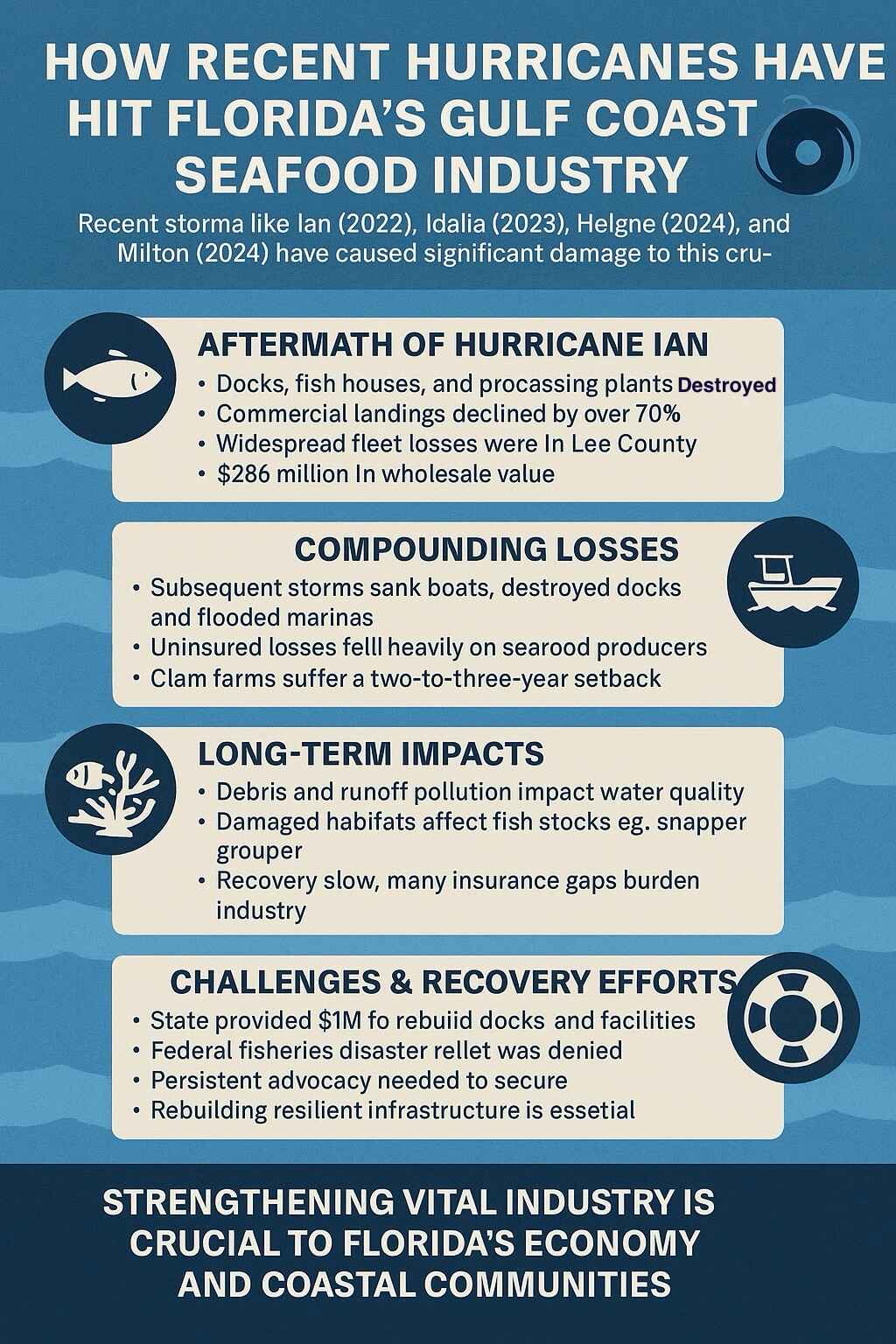
🌪️ How Recent Hurricanes Have Hit Florida’s Gulf Coast Seafood Industry
Florida’s Gulf Coast—known for its vibrant fisheries, seafood restaurants, and coastal communities—has faced increasing challenges in recent years due to major hurricanes such as Ian (2022), Idalia (2023), Helene and Milton (2024). These storms have inflicted serious damage to boats, docks, processing facilities, and marine habitats, delivering a harsh economic blow to both commercial and recreational fishing sectors.
🐟 The Aftermath of Hurricane Ian (2022)
Devastated Infrastructure
Hurricane Ian was especially destructive, wiping out three of Lee County’s deep-water fish houses and causing extensive damage to docks, marinas, and fish processing facilities. As Casey Streeter of Island Seafood Co. put it:
“In all reality, our infrastructure’s gone… if you don’t have docks and you don’t have ice… you don’t have a fishery.”
Economic Fallout
Florida's Gulf Coast fisheries typically pull in 96 million lbs of seafood worth $286M wholesale annually. Post-Ian, commercial landings dropped by over 70% compared to historical averages, underscoring widespread fleet losses and operational disruptions.
⚓ Compounding Losses in 2023–2024
Subsequent storms like Idalia and Superstorm Helene further strained the industry. Reports show these events sank boats, destroyed docks, and flooded shore operations, forcing fishermen to foot 75% of uninsured losses. One Florida marina operator noted a two-to-three-year setback for clam farms alone.
Shrimpers Under Pressure
Even traditionally resilient sectors like shrimping reported significantly reduced fleets and hardship. Experts say Gulf shrimpers faced a pivotal moment after Ian demolished their infrastructure.
🏛️ Recovery Efforts & State Support
Funding Rebound
In 2024, the State of Florida allocated $1 million from the Disaster Fund to help rebuild docks, fish houses, and aquaculture facilities. Governor DeSantis also pushed for a federal fisheries disaster declaration to secure more aid.
Federal Challenges
Unfortunately, initial requests to NOAA Fisheries for disaster assistance were denied, leaving fishermen without immediate federal support.
🌊 Long-Term Ecosystem & Market Impacts
Storm runoff, debris, and disrupted septic systems carrying nitrogen and phosphorus may further damage water quality. Such disruptions threaten inshore fish stocks like snappers and groupers.
Industry Resilience
Despite hardship, many fishermen have rebuilt quickly. By late 2024, most commercial fleets were back in operation, thanks to grit, insurance, and state backing. Still, insurance claims often don’t cover 100% of pre-storm losses.
📈 The Broader Picture
Post-pandemic and post-storm figures show a 30% drop in Gulf landings by weight, even while value per pound increased by 9.6%. These dynamics indicate a smaller overall catch but higher-value species dominating the market.
Florida’s seafood sector supports around 3,500 jobs and contributes over $435 million in economic impact. The Gulf region is particularly valuable—representing about 16% of U.S. fishery value.
🔑 Key Takeaways
| Challenge | Impact |
|---|---|
| Storm damage (Ian, Idalia, Helene, Milton) | Fleet, dock, processing plant destruction |
| Catch reductions | 70%+ declines after storms; industry still rebuilding |
| Economic hardship | $1M state aid; denied NOAA disaster relief |
| Environmental risks | Pollution threats to fisheries and marine habitats |
| Recovery efforts | Slow rebuild; insurance gaps and ongoing vulnerabilities |
🧭 Looking Ahead: Resilience & Restoration
- Strengthen Infrastructure: Rebuilding with resilient materials, backup generators, and elevated docks could reduce long-term vulnerability.
- Policy Advocacy: Persistent efforts to secure federal disaster designation are essential—fishery disaster relief funds remain among the industry’s best hope.
- Environmental Safeguards: Protecting inshore habitats and improving water quality can support sustainable fish populations.
- Market Diversification: Expanding into aquaculture, eco-tourism, and seafood branding may offer economic buffers against future disasters.
🌟 Final Thoughts
Recent hurricanes have dealt gut-punches to Florida’s Gulf Coast seafood industry—decimating physical assets, reducing catch volumes, and imposing hefty rebuilding costs. But Florida fishermen remain determined, and recent state aid has helped buoy recovery.
Protecting this vital industry means investing in resilient infrastructure, securing disaster funding, restoring coastal ecosystems—and supporting the hardworking individuals who sustain Florida’s seafood legacy.
📞 Want to discuss waterfront real estate, sustainable investment, or coastal recovery solutions?
Contact Scott Meadows:
📧 ScottMeadows3@gmail.com
📞 (239) 220-1157
🌐 www.FloridaCustomHomes.com