July 22, 2025

Discover Central Parc: Premier New Homes in North Port, Florida

New Homes North Port Florida

Discover Central Parc: Premier New Homes in North Port, Florida

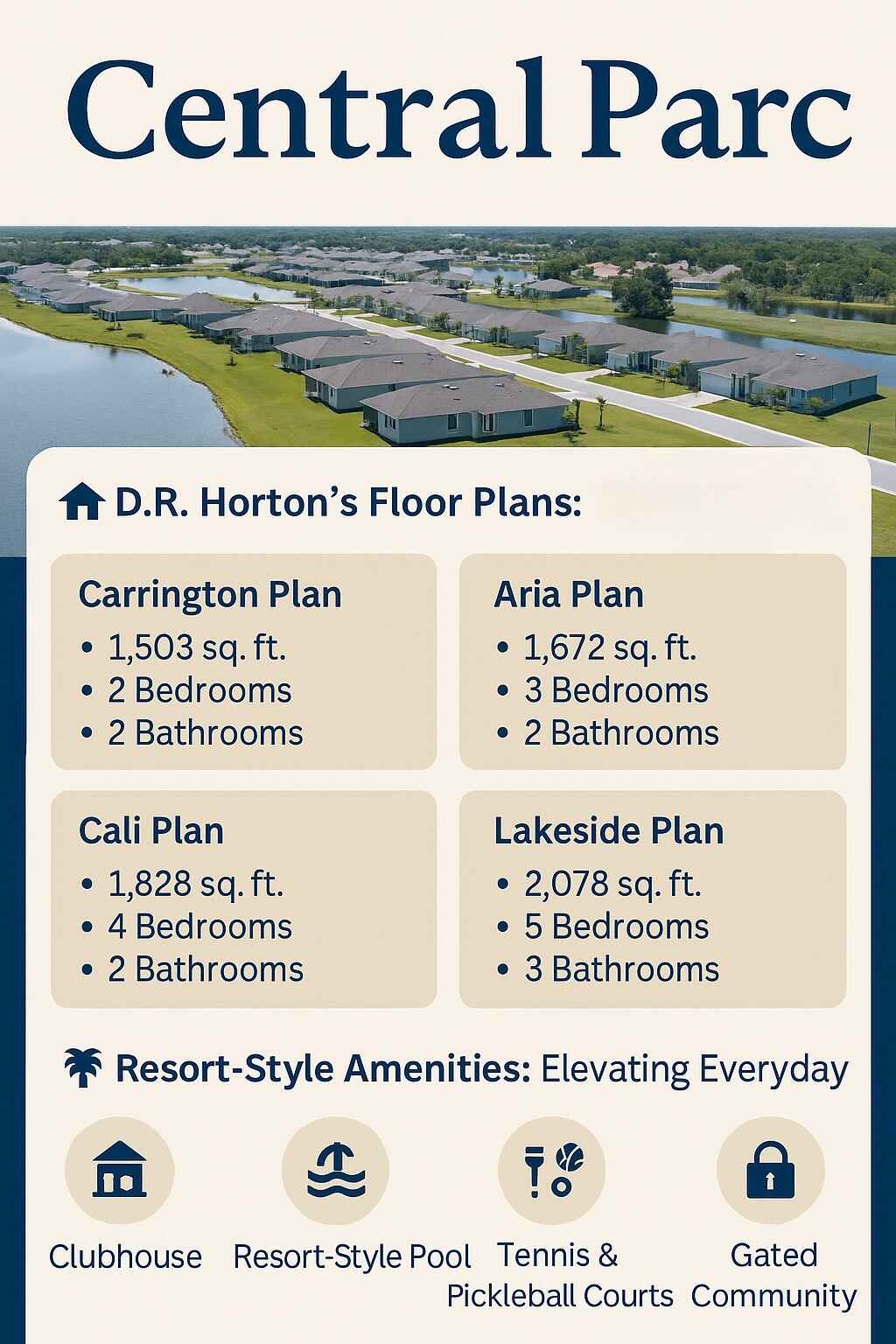
Central Parc, a vibrant new home community developed by D.R. Horton, is redefining modern living in North Port, Florida. Situated on the former Sabal Trace Golf Course, this 207.5-acre master-planned neighborhood offers a harmonious blend of contemporary architecture, resort-style amenities, and a prime location. Whether you're seeking a cozy twin villa or a spacious single-family home, Central Parc provides diverse options to suit various lifestyles and budgets.

🏡 D.R. Horton’s Floor Plans: Tailored to Your Needs

D.R. Horton, America's Builder®, presents four thoughtfully designed floor plans at Central Parc, each crafted to accommodate different family sizes and preferences:

**Carrington Plan**

  • Size: 1,503 sq. ft.
  • Bedrooms: 2
  • Bathrooms: 2
  • Features: This stylish twin villa boasts an open-concept design, seamlessly connecting the kitchen, dining, and living areas. The well-appointed kitchen includes quartz countertops and a breakfast bar, while sliding glass doors open to a covered lanai, extending the living space outdoors.

More Info on Carrington Plan

**Aria Plan**

  • Size: 1,672 sq. ft.
  • Bedrooms: 3
  • Bathrooms: 2
  • Features: The Aria plan offers a spacious layout with a two-car garage. The open-concept design enhances the modern feel of the home, providing a comfortable living space for families.

More Info on Aria Plan

**Cali Plan**

  • Size: 1,828 sq. ft.
  • Bedrooms: 4
  • Bathrooms: 2
  • Features: As one of D.R. Horton's most popular floor plans, the Cali plan features a one-story design with an open-concept layout, ideal for both relaxation and entertaining.

More Info on Cali Plan

**Lakeside Plan**

  • Size: 2,078 sq. ft.
  • Bedrooms: 5
  • Bathrooms: 3
  • Features: The Lakeside plan is a spacious home encompassing a great room, perfect for family gatherings and entertaining. The open-concept design includes a kitchen island and quartz countertops, creating an inviting space for cooking and dining.

More Info on Lakeside Plan

Homes in Central Parc are currently available for purchase, with prices ranging from $269,990 to $329,990, depending on the floor plan and features selected.

🌴 Resort-Style Amenities: Elevating Everyday Living

Central Parc is not just about beautiful homes; it's about a lifestyle. The community boasts a range of amenities designed to enhance residents' quality of life:

  • Clubhouse: A central hub featuring a fitness center, card room, lounge space, and office area, providing a space for relaxation and socialization.
  • Resort-Style Pool: A sparkling oasis perfect for unwinding or hosting gatherings under the Florida sun.
  • Tennis and Pickleball Courts: Well-maintained courts offering opportunities for friendly matches and staying active.
  • Gated Community: Ensuring privacy and security for all residents.

HOA Fees: Twin Villas: $189.37/month; Single-Family Homes: $215.37/month. These fees cover amenity area maintenance, lawn care, association management, and insurance for common areas.

📍 Prime Location: Convenience at Your Doorstep

Located off Sumter Road and Greenwood Avenue, Central Parc offers easy access to major roadways, making commuting a breeze. Nearby attractions include Dallas White Park and Hope Park, providing ample outdoor recreation options. Additionally, the community is close to shopping centers, dining establishments, and entertainment venues, ensuring that everything you need is within reach.

🏡 Pricing Overview: Affordable Options for Every Buyer

Central Parc provides a range of homes to fit various budgets:

  • Carrington Plan: Starting at $269,990
  • Aria Plan: Starting at $299,990
  • Cali Plan: Starting at $314,990
  • Lakeside Plan: Starting at $329,990

These prices offer competitive value for new construction homes in North Port, Florida.

🏡 About Scott Meadows: Your Trusted New Construction Specialist

With years of experience in the North Port real estate market, Scott Meadows specializes in helping buyers find their ideal new construction homes. His in-depth knowledge of communities like Central Parc, combined with a commitment to client satisfaction, makes him a valuable resource for anyone looking to purchase a new home in the area.

🔑 Why Choose Central Parc?

  • Quality Construction: Built by D.R. Horton, known for their commitment to quality and customer satisfaction.
  • Modern Designs: A variety of floor plans to suit different lifestyles and preferences.
  • Comprehensive Amenities: Resort-style facilities that enhance daily living.
  • Prime Location: Conveniently located near major roadways, shopping, dining, and recreational areas.
  • Affordable Pricing: Competitive pricing for new construction homes in North Port.

🏡 Explore Central Parc Today

If you're searching for new homes for sale in North Port, Florida, Central Parc offers an exceptional living experience. With its diverse floor plans, resort-style amenities, and prime location, it's a community that caters to various lifestyles and preferences. Contact Scott Meadows to schedule a tour and discover how Central Parc can be your next home.

📞 Ready to Find Your Florida Home?

For Florida real estate buyers seeking affordability, lifestyle, and long-term value, these top 10 cities should be on your radar. From rural retreats to beach towns, the Sunshine State still offers plenty of places where your housing dollar goes further.

Need help finding the right opportunity? Contact Scott Meadows for expert guidance, up-to-date listings, and local insights tailored to your goals.

📞 (239) 220-1157
📧 ScottMeadows3@gmail.com
🌐 www.FloridaCustomHomes.com

July 22, 2025

Sanibel Island: Impact of Recent Hurricanes, Recovery, and Future Outlook

Sanibel Island Recovery from recent Hurricanes

Sanibel Island: Impact of Recent Hurricanes, Recovery, and Future Outlook

Sanibel Island, a beautiful barrier island located on Florida's southwestern coast, has long been a beloved vacation destination for beachgoers, nature enthusiasts, and residents alike. Known for its pristine beaches, charming community, and unique wildlife, Sanibel Island is a gem of the Florida Gulf Coast. However, as with many coastal regions, the island faces significant challenges when it comes to hurricane season. The recent devastation caused by Hurricane Ian in 2022 was a stark reminder of the vulnerabilities of this island paradise.

This blog post will explore the impact of the most recent hurricanes, the ongoing recovery efforts, and the future outlook for Sanibel Island in terms of hurricane resilience. From infrastructure damage to community resilience, this post will delve into how the island has rebounded and what is being done to ensure a more secure future for residents, businesses, and visitors.

The Impact of Hurricane Ian on Sanibel Island

Devastating Flooding and Infrastructure Damage

Sanibel Island, like many coastal communities in Florida, is no stranger to hurricanes. The island is located in a region that has been hit by a number of major storms over the years. However, the damage caused by Hurricane Ian in September 2022 was unprecedented, with the storm making landfall as a Category 4 hurricane with winds reaching up to 150 mph. The storm's devastating force brought flooding, coastal erosion, and widespread destruction to the island.

One of the hardest-hit areas of Sanibel Island was the Sanibel Causeway, the only bridge connecting the island to the mainland. The causeway, which serves as the vital lifeline for residents, businesses, and emergency services, was severely damaged during Hurricane Ian. Sections of the bridge were washed away, and access to the island was completely cut off for several days. This isolation posed a serious challenge for emergency responders and hindered efforts to deliver supplies, conduct rescues, and assess the damage.

Additionally, many of Sanibel Island’s homes, businesses, and public buildings sustained extensive damage. Roofs were torn off, windows shattered, and many structures were rendered uninhabitable. Flooding further exacerbated the situation, with saltwater flooding streets, homes, and businesses, leaving behind debris, damaged property, and destroyed infrastructure. The island’s popular Sanibel Lighthouse and Bailey-Matthews National Shell Museum, which are integral parts of the island’s cultural and tourist appeal, were also severely impacted.

Environmental Damage

In addition to structural damage, Sanibel Island faced significant environmental destruction. The island's ecosystems, including its wetlands, beaches, and wildlife habitats, were severely affected by the storm. Sanibel’s wildlife, including sea turtles, shorebirds, and the island’s iconic shell population, were impacted by the storm’s winds and surge. The island’s natural habitats, including its mangrove forests and wildlife refuges, were disrupted, affecting the delicate balance of the local environment.

While these ecosystems are resilient, the immediate effects of the storm required significant recovery efforts to restore habitats, mitigate damage, and protect wildlife from further harm.

Sanibel Island’s Recovery Efforts

Restoration of the Sanibel Causeway

One of the top priorities in Sanibel Island’s recovery was restoring access to the island. Without the Sanibel Causeway, the island was isolated, and essential services could not reach residents. In response, emergency repairs began immediately after the storm to restore partial access to the island for emergency vehicles.

By October 2022, the causeway was reopened to emergency vehicles, allowing for the transportation of rescue teams, supplies, and other critical needs. The restoration of full access for all vehicles was completed shortly after, which allowed residents and visitors to return to the island and begin the recovery process.

However, rebuilding the Sanibel Causeway wasn’t a simple task. The causeway sustained significant structural damage, and long-term repairs were needed to ensure its resilience in the face of future storms. In addition to rebuilding the causeway, plans were put in place to reinforce and harden the bridge against future hurricanes. These efforts include upgrading the causeway's infrastructure and making it more resilient to high winds and storm surge.

Restoring Homes and Businesses

In the aftermath of the storm, residents and businesses on Sanibel Island faced the daunting task of rebuilding. Homeowners worked to repair or rebuild their homes, while many local businesses began the process of cleaning up and restoring their operations. While it was difficult to put a timeline on the recovery, it was clear that the island’s businesses, which rely heavily on tourism, would need time to regain their footing.

The Sanibel Chamber of Commerce and various community organizations played a significant role in helping businesses recover. Efforts to reopen businesses and accommodations were put into action quickly, and many local restaurants, shops, and hotels began repairs to make their locations functional again. By early 2025, over 50% of the hotels and short-term rentals on the island had resumed operations. Notably, the Sanibel Inn and Sundial Resort reopened in February 2025, marking significant milestones in the recovery process.

Environmental Restoration

As important as the physical rebuilding of homes and businesses was the restoration of Sanibel Island’s environment. Many of the island's natural ecosystems were heavily impacted by Hurricane Ian. Sanibel Island is home to critical wildlife habitats, including mangrove forests, seagrass beds, and beaches used by sea turtles for nesting.

Local organizations, such as the Sanibel-Captiva Conservation Foundation (SCCF), have been working tirelessly to restore these habitats and protect the wildlife that depends on them. This includes cleaning up debris from beaches, restoring vegetation, and addressing erosion along the shoreline.

Additionally, wildlife rescue efforts were launched immediately following the storm. Volunteers and local organizations worked together to rescue and rehabilitate injured wildlife, such as sea turtles and shorebirds, and restore natural habitats that were disrupted by the storm.

Looking Ahead: Sanibel Island’s Hurricane Resilience and Future Outlook

Infrastructure Improvements

Sanibel Island’s most vulnerable infrastructure, particularly the Sanibel Causeway, has been a focal point for upgrades to make the island more resilient in the face of future storms. This includes strengthening bridges, reinforcing critical buildings, and enhancing the overall infrastructure to withstand high winds and storm surges. The causeway is also being evaluated for long-term upgrades to improve its durability and ensure that the island can remain accessible even during severe weather events.

Additionally, flood mitigation measures are being explored to reduce the impact of future storm surges on residential and commercial areas. These include elevating homes, improving drainage systems, and utilizing natural barriers like wetlands and mangrove forests to absorb stormwater and reduce flood risk.

Environmental Protection and Restoration

Sanibel Island’s natural habitats are a crucial part of the island’s charm and appeal. Efforts to restore these habitats will continue in the coming years, with a focus on protecting critical areas like mangrove forests, seagrass beds, and wildlife refuges. This not only helps restore the local environment but also prevents erosion and serves as a natural buffer against storm surges.

The SCCF and other local conservation groups will continue their environmental restoration projects, including the replanting of native vegetation, the restoration of beach dunes, and the protection of the island’s fragile ecosystems. These efforts are vital for preserving the island’s unique wildlife and ensuring that Sanibel remains a haven for nature lovers for generations to come.

Building a Culture of Resilience

Beyond physical infrastructure, building a culture of resilience is essential for Sanibel’s future. This includes educating residents and businesses about the risks posed by hurricanes and encouraging the adoption of hurricane-resistant building materials and storm preparedness plans. Community organizations, local government agencies, and residents are working together to foster a collective effort to prepare for future hurricanes.

Additionally, emergency preparedness and evacuation plans are being enhanced to ensure that the community is ready for any future storm. The island’s strong sense of community and its ability to come together in the face of adversity has been a driving force behind the recovery and will continue to be essential as the island adapts to a future with more frequent and intense storms.

Conclusion

Sanibel Island’s recovery from Hurricane Ian has been nothing short of remarkable. The island, known for its natural beauty and vibrant community, faced significant challenges in the wake of the hurricane. However, through the determination of its residents, businesses, and local organizations, Sanibel is well on its way to rebuilding and strengthening its resilience.

While the recovery process is ongoing, there is a strong focus on making the island more resilient to future hurricanes. From improving infrastructure to restoring natural habitats, Sanibel is taking the necessary steps to protect its community and ensure that it remains a desirable destination for residents, businesses, and tourists alike.

As Sanibel Island continues to rebuild, its future outlook is optimistic. With a combination of community strength, environmental restoration, and hurricane preparedness, Sanibel Island is poised to not only recover but to thrive in the years to come.

July 22, 2025

How Business and Job Growth is Shaping Florida’s Real Estate and Home Sales Market in 2025

How Business and Job Growth is Shaping Florida's Real Estate and Home Sales Market in 2025

How Business and Job Growth is Shaping Florida’s Real Estate and Home Sales Market in 2025

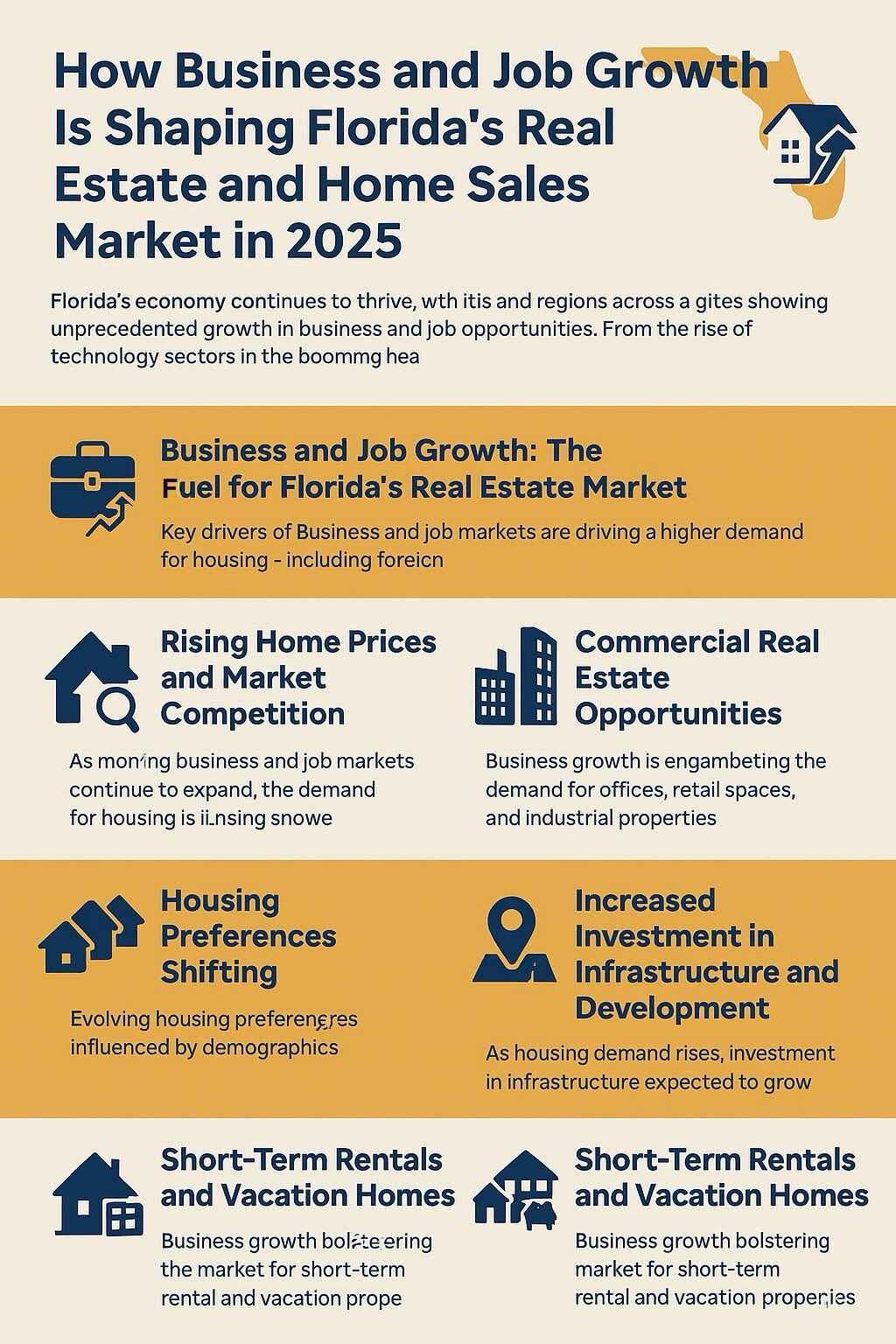
Florida’s economy continues to thrive, with cities and regions across the state showing unprecedented growth in business and job opportunities. From the rise of technology sectors in Orlando to the booming healthcare and logistics industries in Miami, Florida’s expanding economy is having a direct and profound impact on its real estate market. Whether you're a homebuyer, investor, or simply tracking trends, it’s important to understand how the ongoing economic expansion is influencing Florida’s housing market in 2025.

In this blog post, we will explore the key ways that Florida’s business and job growth are affecting real estate, including home sales, prices, demand for housing, and overall market dynamics. By the end, you’ll gain a deeper understanding of why these shifts are significant for homebuyers, sellers, and investors in the Sunshine State.

1. Business and Job Growth: The Fuel for Florida’s Real Estate Market

Key Drivers of Business Growth in Florida:

  • Tech Sector Expansion: Florida's technology sector, particularly in cities like Orlando and Tampa, has seen a significant increase in job creation, with companies in aerospace, simulation, and medical tech leading the charge. As these industries continue to expand, they create thousands of high-paying jobs, attracting workers from all over the country.
  • Healthcare and Biotech: Cities like Miami, Tampa, and Jacksonville are becoming top centers for healthcare innovation. Miami’s Moffitt Cancer Center and Tampa’s University of South Florida contribute heavily to research and medical advancements, while creating thousands of new jobs.
  • Logistics and International Trade: Ports in Miami and Jacksonville continue to expand as Florida grows its status as a key hub for international trade. This is particularly important for companies in logistics and distribution, contributing to Florida's rising employment numbers.
  • Foreign Investment: Florida’s business-friendly policies, low taxes, and strategic location have attracted international businesses, further fueling job growth and economic diversification in key areas like Miami and Tampa Bay.

2. Increased Demand for Housing

As Florida’s business and job markets continue to expand, the demand for housing will naturally follow. New residents moving to the state in search of job opportunities will need somewhere to live, thus driving up demand for both rental and for-sale homes. Whether individuals are moving for tech, healthcare, or logistics, they will be looking for places to settle near business hubs.

How this Affects Real Estate:

  • Orlando-Kissimmee-Sanford: With the tech sector booming and Orlando’s position as a top tourist destination, the demand for both residential and rental properties is skyrocketing. As more high-tech professionals, healthcare workers, and other highly-skilled laborers move to the city, demand for single-family homes and rental units will rise.
  • Tampa Bay Metro Area: Tampa's position as a foreign investment hotspot and its expanding healthcare and finance sectors are driving demand for housing. With new corporate relocations pushing professionals to the area, homebuyers and renters alike will find that competition for available homes is increasing.
  • Miami-Fort Lauderdale-West Palm Beach Metro Area: The demand for housing in Miami has been steadily increasing due to its role as Florida’s international trade hub. The influx of workers in logistics, finance, and healthcare will create a need for both high-end housing and affordable options to accommodate new professionals and their families.

3. Rising Home Prices and Market Competition

One of the most immediate effects of growing job markets in Florida’s cities is the potential for rising home prices. As demand for housing intensifies and inventory remains tight, home prices are likely to rise. This is especially true in regions directly impacted by significant job growth, such as the tech sector in Orlando or the biotech and healthcare industries in Tampa.

Factors Contributing to Rising Home Prices:

  • Increased demand: The growing number of residents in these cities creates a greater demand for available homes. As more people relocate to Florida for employment opportunities, sellers are able to raise their asking prices due to higher competition.
  • Limited housing inventory: In many of these rapidly growing areas, there is a limited amount of land available for development. Combined with the increasing population, this leads to a higher demand for the limited number of homes on the market.
  • Inflation and mortgage rates: Although inflation and mortgage rates have had a moderating effect on home prices, many of Florida’s growing cities are still seeing upward pressure on prices due to the aforementioned demand factors.

How This Impacts Homebuyers:

  • More competition: As more people move to these areas, prospective buyers may find themselves in bidding wars, especially for desirable properties close to business hubs.
  • Higher costs: Homebuyers will face higher costs for both purchasing homes and finding rental properties in these areas. Many buyers might need to adjust their budgets or reconsider the locations they are targeting.

4. Suburban Growth and New Developments

As housing becomes more expensive in major metro areas, many people are looking toward suburban communities for more affordable options. This is especially true for families and individuals who prefer more space but still want to be within a reasonable distance of their workplaces. The growing job markets in Florida's metro areas are pushing people to the suburbs, which are seeing more residential and commercial developments.

Suburbs Are Booming:

  • West Lake, Davenport, Eagle Lake (Central Florida Suburbs): These suburban areas are benefiting from the growth of nearby Orlando. As Orlando's housing market becomes more expensive, many buyers are moving to these outlying areas, where new developments are taking place at a rapid pace. With lower land prices and proximity to major job centers, these suburbs are well-positioned to attract homebuyers and investors.
  • Wildwood (Sumter County): As the #1 fastest-growing city in the U.S. from 2020-2024, Wildwood is experiencing a boom in residential development. Its proximity to The Villages has led to an increase in housing demand, particularly for retirement communities and age-targeted homes.

Impact on Real Estate:

  • New residential projects: Suburbs like Davenport and Wildwood are seeing increased residential development. Homebuilders are constructing single-family homes, townhomes, and apartment complexes to meet the growing demand from residents who are relocating for work.
  • Increased retail and commercial spaces: Along with new housing developments, suburban areas are also seeing new retail centers, restaurants, and entertainment venues. As these areas become more populated, businesses will follow suit, further fueling economic growth.

5. Commercial Real Estate Opportunities

Business growth also has a direct impact on commercial real estate markets. As more companies establish themselves in Florida or expand their operations, the demand for office space, retail locations, and industrial facilities increases.

Commercial Development Trends:

  • Tampa Bay Metro Area: With major companies moving to the area, the demand for office spaces, commercial real estate, and logistics centers is soaring. Mixed-use developments, combining residential, office, and retail spaces, are becoming increasingly popular in Tampa, providing a vibrant, connected community for workers and residents.
  • Miami-Fort Lauderdale-West Palm Beach: Miami, with its growing financial services sector, is seeing increased demand for office space, particularly from multinational corporations. Additionally, retail and hospitality businesses are flourishing, catering to the influx of both residents and tourists.

How This Affects the Market:

  • Mixed-use developments: Developers are increasingly focusing on creating integrated spaces that combine housing, offices, and commercial establishments. This trend helps to create more vibrant, walkable communities and attracts workers who want to live near their jobs.
  • Long-term investment: As businesses continue to flock to Florida, the need for commercial real estate will drive long-term investment opportunities. Commercial properties near growing business districts will remain in high demand, offering substantial returns for investors.

6. Housing Preferences Shifting

With business growth, the types of homes and neighborhoods in demand may shift. Professionals moving to Florida from other parts of the country may have different housing preferences, influenced by the industries they work in and the lifestyle they desire.

Changing Housing Preferences:

  • Urban vs. Suburban: In tech-heavy areas like Orlando, young professionals may prefer modern condos or apartments close to business hubs. In contrast, families moving to areas like Tampa Bay or Jacksonville may seek more suburban-style homes with access to schools and parks.
  • Affordable Housing: As home prices rise, there is a growing need for affordable housing, especially for workers in industries like logistics, healthcare, and education. Developers may focus on building affordable housing options in these rapidly growing areas to meet the increasing demand.

7. Increased Investment in Infrastructure and Development

As the demand for housing grows, local governments in Florida will need to increase their investment in infrastructure, such as roads, schools, healthcare, and public transportation, to support the expanding population.

Impact on Real Estate:

  • Transportation infrastructure: Suburban areas close to job hubs will benefit from expanded public transportation options, making these neighborhoods even more attractive to buyers.
  • Local amenities: Increased infrastructure investment also leads to improved local amenities such as parks, retail centers, and recreational facilities, which enhance the appeal of both new developments and existing homes.

8. Short-Term Rentals and Vacation Homes

Florida’s continued business and job growth, combined with the state's booming tourism industry, will likely keep the market for vacation homes and short-term rentals strong. Cities like Orlando, Miami, and Tampa are major tourist destinations, and workers relocating for job opportunities may opt to rent out vacation homes in the meantime, driving more demand for properties suitable for short-term rentals.

Investor Opportunities:

  • Short-term rentals: Investors looking for rental income opportunities may find short-term rental properties in high-tourism areas to be lucrative investments. With the continued influx of visitors and workers, vacation homes in these areas will remain in demand.
  • Vacation homes for remote workers: The rise of remote work has made vacation homes more accessible to professionals who no longer need to live near their office. This shift presents new opportunities for buyers to purchase homes in Florida's most desirable tourist destinations.

Conclusion

As Florida continues to see significant business and job growth, its real estate market will evolve to meet the demands of a growing population. From increased competition for housing to rising home prices and expanded commercial developments, the state's real estate market is directly tied to its economic expansion.

For homebuyers, investors, and businesses, the ongoing growth in Florida's key industries presents a wealth of opportunities in both residential and commercial real estate. By understanding the dynamics at play, you can make more informed decisions about where and when to invest in Florida’s booming real estate market. As the state continues to expand in 2025 and beyond, it remains a prime location for real estate growth, offering opportunities for all types of buyers and investors.

July 22, 2025

Top 10 Most Affordable Cities in Florida for Florida Real Estate Buyers

Top 10 Most Affordable Cities in Florida 2025

🏘️ Top 10 Most Affordable Cities in Florida for Real Estate Buyers

Florida continues to attract homebuyers from around the country, but with rising prices in coastal hotspots, many Florida real estate buyers are setting their sights on more affordable cities. Whether you're a first-time homebuyer, retiree, or investor, these 10 cities offer excellent value and lifestyle without breaking the bank.

1. Ocala – $303,575 Median Home Price

Known as the “Horse Capital of the World,” Ocala offers rural charm and wide-open spaces. Its housing costs are about 58% lower than high-end metros like Miami and Naples, making it a smart choice for budget-conscious Florida real estate buyers.

2. Gainesville – $250,000 Median Home Price

Home to the University of Florida, Gainesville provides a vibrant college town vibe with low living costs. It’s popular among students, staff, and retirees looking for affordability paired with cultural richness and quality healthcare.

3. Lake City – $254,640 Median Home Price

Located in North Central Florida, Lake City is a quiet inland region with some of the lowest home prices in the state. The area is popular with families and retirees looking to stretch their budgets in a relaxed, small-town setting.

4. Bartow – $272,450 Median Home Price

Bartow combines historic charm with affordability. Nestled between Tampa and Orlando, it offers proximity to larger metros while maintaining a quaint, small-town lifestyle.

5. Deltona – $301,872 Median Home Price

Located between Orlando and Daytona Beach, Deltona offers suburban convenience and family-friendly living. It’s ideal for commuters and families looking for value and location.

6. Pensacola – $257,567 Median Home Price

This Gulf Coast gem delivers beachside affordability. Pensacola’s mix of coastal lifestyle, military influence, and vibrant downtown scene make it a great pick for Florida real estate buyers seeking sunshine and savings.

7. Jacksonville – $289,190 Median Home Price

Florida’s largest city offers a dynamic mix of neighborhoods, a strong job market, and reasonable housing prices. With more inventory and slower price growth, Jacksonville is attracting savvy homebuyers and investors alike.

8. Kissimmee – $375,095 Median Home Price

Close to Walt Disney World, Kissimmee offers a family-oriented vibe and a wide range of affordable housing options. It’s an ideal choice for buyers wanting to live near Central Florida attractions without the Orlando price tag.

9. Edgewater – $299,506 Median Home Price

Edgewater, located on the Indian River near New Smyrna Beach, offers a peaceful coastal setting with reasonable prices. It’s gaining popularity among retirees and remote workers looking for water access and serenity.

10. Palm Bay – Below State Average

With one of the lowest cost-of-living scores in Florida, Palm Bay is a standout for affordability. Its housing prices remain well below the state average, drawing families, first-time buyers, and retirees to this quiet Space Coast city.

📊 Snapshot: Florida’s Affordable Cities

City Median Home Price
Ocala $303,575
Gainesville $250,000
Lake City $254,640
Bartow $272,450
Deltona $301,872
Pensacola $257,567
Jacksonville $289,190
Kissimmee $375,095
Edgewater $299,506
Palm Bay Below Avg.

🎯 Why These Cities Appeal to Florida Real Estate Buyers

  • More Home for Your Money: Inland and mid-size cities offer larger homes and land for a fraction of coastal prices.
  • Market Stability: Less competition and stable inventory help reduce bidding wars and buyer stress.
  • Diverse Lifestyles: Whether you’re a horse lover in Ocala or a beach lover in Pensacola, these cities offer something for everyone.
  • Retirement and Investment Potential: Great value for retirees on a budget and investors seeking high rent-to-cost ratios.

💡 Buyer Tips for Navigating Affordable Markets

  • Use Reliable Tools: Monitor price trends via Zillow, Redfin, and MLS platforms.
  • Get Pre-Approved: Beat other buyers with financing ready before house hunting.
  • Consult a Local Realtor: Local knowledge is essential to understand flood zones, neighborhood values, and future growth potential.
  • Think Long-Term: Choose areas with ongoing development, university expansions, or infrastructure upgrades.

📞 Ready to Find Your Florida Home?

For Florida real estate buyers seeking affordability, lifestyle, and long-term value, these top 10 cities should be on your radar. From rural retreats to beach towns, the Sunshine State still offers plenty of places where your housing dollar goes further.

Need help finding the right opportunity? Contact Scott Meadows for expert guidance, up-to-date listings, and local insights tailored to your goals.

📞 (239) 220-1157
📧 ScottMeadows3@gmail.com
🌐 www.FloridaCustomHomes.com

July 21, 2025

What Communities and Cities in Florida Show the Most Potential for Business and Job Growth?

What Communities and Cities in Florida Show the Most Potential for Business and Job Growth?

What Communities and Cities in Florida Show the Most Potential for Business and Job Growth?

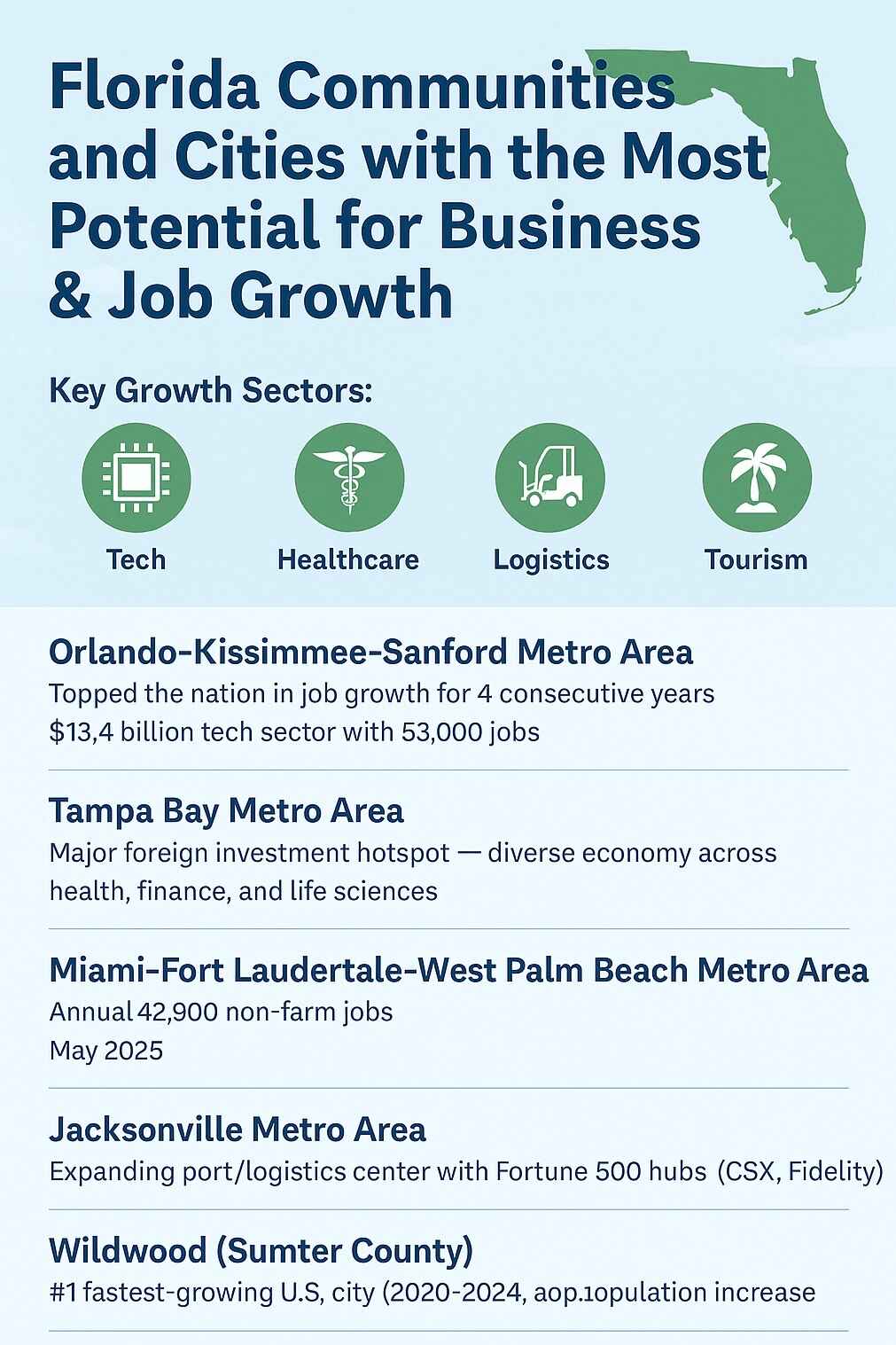
Florida continues to be a leading hub for business and job growth, fueled by its diverse economy, attractive business environment, and rapid population growth. Whether you're a real estate investor, a business owner, or someone looking for a thriving job market, Florida offers an array of opportunities in both established urban centers and emerging communities. In this article, we will explore the Florida cities and communities showing the most promise for business expansion and job creation, driven by key industries and growth factors.

1. Orlando-Kissimmee-Sanford Metro Area: The Tech and Tourism Powerhouse

Key Growth Sectors: Tech, Aerospace, Healthcare, Tourism

The Orlando-Kissimmee-Sanford metro area has been at the forefront of job and business growth in Florida. Known for its world-class tourism industry, Orlando is not only a top destination for visitors, but it also boasts a rapidly expanding economy fueled by tech, aerospace, and healthcare sectors.

In recent years, Orlando has consistently ranked among the top U.S. cities in job creation. In fact, for the fourth consecutive year, it topped the nation in job growth, with 113.4 billion dollars coming from the tech sector alone. The city has transformed from a tourism-only market into a dynamic hub for industries such as aerospace, simulation, and technology. The Central Florida Research Park, one of the largest tech research facilities in the U.S., employs over 53,000 people and drives major innovation in the field of aerospace and simulation technology.

Why it matters for business and job growth:

  • Tech-driven economy: Orlando has become a tech-driven economy, offering a plethora of opportunities in the simulation and aerospace fields. It also continues to grow as a hub for medical technology and healthcare innovation, providing ample job prospects in both high-skill and service roles.
  • Year-round population influx: With its ever-growing population, Orlando is increasingly attractive for real estate development, job creation, and business investments. The city's strong job market, driven by the tech and healthcare industries, ensures continued growth across various sectors.
  • Expanding infrastructure: New development projects and infrastructure expansion in the region are opening the door for more businesses to set up shop, while established companies are expanding their operations in the area.

2. Tampa Bay Metro Area: Foreign Investment and Industry Diversification

Key Growth Sectors: Healthcare, Biotech, Finance, Manufacturing

The Tampa Bay metro area has emerged as one of Florida's hottest markets for both business expansion and job creation. In recent years, Tampa has attracted significant foreign investment, particularly in the biotech, healthcare, and finance sectors. Its economy has diversified beyond its traditional industries, establishing itself as a powerhouse for healthcare innovation, finance, and manufacturing.

Tampa’s strategic location along Florida’s west coast, combined with its robust infrastructure, has drawn international businesses to set up operations in the region. This influx of capital, along with the region’s booming healthcare sector, continues to drive job creation and business growth in the area.

Why it matters for business and job growth:

  • Major foreign investment hotspot: Tampa’s ability to attract foreign investment has set the stage for significant growth across several key industries. This trend is expected to continue as more international companies recognize the benefits of doing business in the Tampa Bay region.
  • Healthcare and biotech growth: The city’s thriving healthcare and biotech sectors are adding jobs at an impressive rate. The University of South Florida (USF) and Moffitt Cancer Center, both located in Tampa, are world-renowned institutions driving innovation in medical research, biotechnology, and healthcare.
  • High quality of life: The Tampa Bay area is not only an attractive place for businesses to grow but also a highly desirable destination for talent. With a lower cost of living than many other major metropolitan areas, Tampa has become a magnet for professionals looking for an affordable and dynamic place to live and work.

3. Miami-Fort Lauderdale-West Palm Beach Metro Area: A Gateway for International Trade

Key Growth Sectors: Trade, Logistics, Healthcare, Finance

The Miami-Fort Lauderdale-West Palm Beach metropolitan area is another standout in Florida’s business and job growth landscape. With its status as Florida’s international gateway, the region serves as a hub for trade, logistics, finance, and healthcare. Miami’s port is one of the busiest in the U.S., facilitating trade between the Americas, Europe, and beyond. The region has also become a leading center for finance, with a growing number of global banks and financial institutions establishing their presence in the area.

Additionally, the healthcare sector in Miami is thriving, with major hospitals and medical research centers driving job growth and innovation in the industry.

Why it matters for business and job growth:

  • Global trade and logistics: Miami’s location as a strategic trade gateway between the U.S. and Latin America positions it as a key hub for logistics and trade-related businesses. The region's transportation infrastructure continues to expand, creating opportunities for growth in warehousing, transportation, and distribution.
  • Healthcare and medical research: Miami is home to several renowned hospitals and medical research facilities, such as the University of Miami Health System and Jackson Memorial Hospital. These institutions contribute to a booming healthcare sector that continues to create high-paying jobs in medical research, nursing, and administrative roles.
  • Financial services growth: Miami is increasingly being recognized as a financial center, with many companies opening new offices in the city. This expansion of financial services presents job opportunities in banking, investment, and insurance sectors.

4. Jacksonville Metro Area: A Logistics and Manufacturing Hub

Key Growth Sectors: Logistics, Manufacturing, Financial Services, Defense

Jacksonville, the largest city in Florida by land area, has established itself as a major player in logistics, manufacturing, and defense. The city’s strategic location along the U.S. East Coast and its proximity to major transportation corridors make it an ideal location for businesses involved in shipping, distribution, and manufacturing.

Jacksonville’s port is one of the busiest in the U.S., supporting the city’s role as a logistics and distribution center. Additionally, major companies like CSX, Fidelity, and Bank of America have expanded their operations in the region, creating thousands of new jobs.

Why it matters for business and job growth:

  • Expanding logistics infrastructure: Jacksonville is home to one of the busiest ports in the U.S., providing companies with access to global markets. The expansion of Jacksonville's port facilities and logistics infrastructure continues to fuel job growth in the shipping and distribution sectors.
  • Fortune 500 companies: Major companies like CSX, Fidelity, and Bank of America have chosen Jacksonville as their headquarters, bringing thousands of high-paying jobs to the area. This is further supported by the city’s growing financial services sector.
  • Defense and manufacturing growth: With key military and defense installations like NAS Jacksonville, the city benefits from strong demand in the defense and manufacturing sectors. These industries continue to provide stable job growth and new business opportunities.

5. Wildwood (Sumter County): The Fastest-Growing City in the U.S.

Key Growth Sectors: Retirement, Residential Development

Wildwood, located in Sumter County, has earned the title of the fastest-growing city in the U.S. between 2020 and 2024, with a population increase of nearly 20%. This rapid growth is largely driven by the overflow of retirees moving to the nearby Villages, a massive retirement community that continues to expand.

As the demand for retirement housing increases, new businesses are sprouting up to meet the needs of this growing demographic. This includes everything from healthcare providers to entertainment, dining, and retail establishments, creating a thriving market for both job seekers and investors.

Why it matters for business and job growth:

  • Retirement-driven development: Wildwood’s proximity to The Villages has made it a hotspot for retirement-focused development. Businesses catering to retirees, such as healthcare providers, golf courses, and recreational facilities, are thriving in the area.
  • Real estate and housing development: The high demand for housing in Wildwood, driven by the area's growth, is creating ample opportunities for real estate investors and homebuilders. As new subdivisions and residential developments are underway, Wildwood offers significant upside for business growth and job creation.

6. Central Florida Suburbs (West Lake, Davenport, Eagle Lake): The Suburban Boomtowns

Key Growth Sectors: Housing, Retail, Hospitality

Central Florida’s suburban communities, including West Lake, Davenport, and Eagle Lake, are experiencing a housing boom that’s being driven by the region’s rapid population growth. As more people move to the area for its affordable housing options and proximity to Orlando, these suburban markets are seeing a surge in residential and retail developments.

With lower land prices compared to Orlando and Tampa, these suburban areas are attracting homebuyers, retail businesses, and hospitality companies looking to take advantage of the region's population growth.

Why it matters for business and job growth:

  • Affordable housing: The growth of these suburban areas has led to an increase in new residential developments and an expanding real estate market. As more families seek affordable housing options outside Orlando and Tampa, these communities are poised for continued growth.
  • Retail and hospitality expansion: As these communities grow, so too do the opportunities for retail and hospitality businesses. The demand for grocery stores, restaurants, hotels, and entertainment options continues to rise as the population swells.

Conclusion: Florida’s Booming Business Landscape

From Orlando’s tech-driven economy to Miami’s international trade hub, Jacksonville’s logistics and defense industry, and Wildwood’s retirement-driven growth, Florida is teeming with opportunities for both businesses and job seekers. Whether you’re an entrepreneur looking to set up a new venture, an investor searching for the next booming market, or a professional looking for job opportunities, Florida’s diverse communities offer an array of possibilities. As the Sunshine State continues to grow, there’s no doubt that these cities and regions will remain at the forefront of Florida's economic expansion.

With Florida’s ongoing commitment to infrastructure development, business-friendly policies, and a growing population, these communities will continue to attract investment and offer exciting opportunities for years to come.

Posted in About Florida
July 21, 2025

Communities in Florida Returning to Prices Affordable to Florida Real Estate Buyers July 2025

Florida Returning to Prices Affordable to Florida Real Estate Buyers

🌴 Communities in Florida Returning to Prices Affordable to Florida Real Estate Buyers July 2025


📉 A Shift Toward Affordability in the Sunshine State

While Florida’s sunshine continues to attract new residents, the housing market is undergoing a notable correction. After several years of record-breaking price surges, 2025 is shaping up to be a year of rebalancing—especially for Florida real estate buyers who were previously priced out of the market.

Recent statewide data shows that the overheated pandemic-era growth is easing in many areas. This isn’t a crash—it’s a normalization. And for those patiently waiting for a more buyer-friendly market, that patience may now be paying off.

🏡 Statewide Snapshot: Florida’s Evolving Real Estate Landscape

According to May 2025 housing data from Florida Realtors:

  • Closed sales for single-family homes: 24,756, down 5.7% year-over-year

  • Median sale price statewide: $415,000, reflecting a 2.7% decrease

Florida Realtors’ Chief Economist, Dr. Brad O’Connor, explains that this is the third consecutive month where home prices have dropped year-over-year. However, despite these declines, prices remain over 50% higher than 2020 levels, showcasing how much ground the market gained over the past few years.

For Florida real estate buyers, this is not a signal of doom—but an invitation to return.


📍 Cape Coral-Fort Myers: The Benchmark for Price Corrections

Cape Coral-Fort Myers, once a poster child for rapid appreciation, now offers a useful reference point for evaluating affordability trends across Florida. Here's the May 2025 data for single-family homes in this metro:

  • Closed Sales: 1,443 (↓ 1.6% year-over-year)

  • Median Sale Price: $375,000 (↓ 9.6% year-over-year)

This nearly 10% drop signals a meaningful correction and makes Cape Coral more attainable for everyday buyers. Driven in part by hurricane recovery efforts and shifts in demand, the market is adjusting from its post-COVID highs. More importantly, it remains attractive—just at a better value.


🔍 Florida Metro Areas With Even Greater Affordability Gains

Several other communities across Florida are seeing even sharper corrections than Cape Coral—creating ideal conditions for budget-conscious Florida real estate buyers. Let’s explore four metros that now offer even better affordability potential.


1️⃣ Naples-Immokalee-Marco Island: High-End Retreats Repricing

  • Closed Sales: 431 (↓ 15.3%)

  • Median Sale Price: $767,800 (↓ 19.2%)

Once known for exclusivity and luxury, Naples has seen one of the most significant price reversals in the state. A nearly 20% price drop reflects a cooling in the high-end segment, often sensitive to economic conditions like interest rates and stock market trends. For Florida real estate buyers with an eye on luxury properties, Naples may now offer rare opportunities that weren’t available just a year ago.


2️⃣ Punta Gorda: Value Appreciation Meets Market Realignment

  • Closed Sales: 536 (↑ 1.7%)

  • Median Sale Price: $325,000 (↓ 14.5%)

Unlike most other metros, Punta Gorda saw an increase in closed sales even while prices declined sharply. This means buyers are still active, but sellers are now more realistic in pricing. Whether it’s hurricane recovery or a shift in investor interest, the drop in prices has opened the door to affordability.


3️⃣ Sebastian-Vero Beach: Coastal Market Becoming Buyer-Friendly

  • Closed Sales: 273 (↓ 6.8%)

  • Median Sale Price: $386,190 (↓ 10.2%)

This coastal market, long a haven for retirees and second-home buyers, is feeling the effects of rising insurance premiums and shifting buyer demand. With over a 10% price drop, this market is recalibrating. For those looking for affordable coastal living, it’s an opportune time to act.


4️⃣ North Port-Sarasota-Bradenton: Pandemic Boomtown Normalizing

  • Closed Sales: 1,574 (↓ 4.7%)

  • Median Sale Price: $475,000 (↓ 9.9%)

This region was among Florida’s hottest during the pandemic, but now it’s adjusting. With a nearly 10% drop in pricing and increased inventory, it presents a fresh window of opportunity for buyers who were previously shut out.


📊 Market Data Overview: Where Prices Are Falling Fastest

Metro Area Median Sale Price (May 2025) Price Change (Y/Y) Closed Sales Sales Change (Y/Y)
Cape Coral-Fort Myers $375,000 -9.6% 1,443 -1.6%
Naples-Immokalee-Marco Island $767,800 -19.2% 431 -15.3%
Punta Gorda $325,000 -14.5% 536 +1.7%
Sebastian-Vero Beach $386,190 -10.2% 273 -6.8%
North Port-Sarasota-Bradenton $475,000 -9.9% 1,574 -4.7%

Source: Florida Realtors®, May 2025 Market Activity


🔎 What’s Fueling the Price Resets?

🏦 Higher Interest Rates

The Federal Reserve’s prolonged rate hikes have raised mortgage costs, causing buyer budgets to shrink. This has directly pressured sellers to adjust pricing.

🌪️ Hurricane Recovery Effects

Markets hit by Hurricane Ian and other storms are seeing longer recovery periods, affecting local buyer confidence and insurance affordability.

📈 Oversupply of Listings

Many areas are experiencing higher inventory levels, returning to pre-pandemic norms. This gives buyers more leverage and softens bidding wars.

💼 Fewer Investment Buyers

Institutional buyers and investors are pulling back in response to rent regulation concerns, increasing holding costs, and softer rental demand.


🛠️ What This Means for Florida Real Estate Buyers

If you're one of the many Florida real estate buyers waiting on the sidelines, 2025 may be your moment. Here's why:

  • More Choices: Inventory levels are up in most metros

  • Lower Prices: Median prices are down statewide

  • More Negotiation Power: Sellers are more flexible on concessions, financing terms, and inspection contingencies

  • Less Competition: Fewer bidding wars, more room for decision-making


💡 How to Capitalize on This Shift

  1. Target Key Markets: Focus on metros like Punta Gorda, Sebastian-Vero Beach, and Cape Coral where affordability is returning.

  2. Get Pre-Approved: Know your budget and lock in financing to act fast when the right property comes along.

  3. Work With a Local Expert: Every Florida community has its nuances. A knowledgeable Realtor can help navigate property conditions, flood zones, and insurance rates.

  4. Plan for Longevity: Even if prices dip slightly further, buying during a correction ensures long-term equity when the market stabilizes.


🏘️ Closing Thoughts: A Comeback for Florida Buyers

The Florida housing market in 2025 is not in crisis—it’s in correction. For Florida real estate buyers, this is a welcome adjustment after years of rising prices and fierce competition.

Areas like Naples, Punta Gorda, and Sebastian-Vero Beach are becoming more accessible. Cape Coral, long a target for affordability, is now joined by other communities offering even greater price flexibility.

This trend toward affordability means opportunity—for first-time buyers, retirees, investors, and growing families alike. The key is to understand where prices are resetting, why it’s happening, and how to act while the window is open.


📞 Ready to Explore Florida’s Most Affordable Communities?

Whether you're relocating, investing, or looking for your forever home, now is the time to act. Let’s connect and find the right Florida property for your goals.

Contact: Scott Meadows
📧 ScottMeadows3@gmail.com
📞 (239) 220-1157
🌐 FloridaCustomHomes.com

July 21, 2025

Seafood Recovery in Southwest Florida: How Long Will It Take?

Southwest Florida Seafood Recovery

🌊 Seafood Recovery in Southwest Florida: How Long Will It Take Now That the C-43 Reservoir Is Functional?

Meta Description: Now that the C-43 Reservoir is operational, how long will it take for Southwest Florida’s seafood industry to recover? Discover what this major water project means for fish populations, water quality, and the region's fishing economy.

🦐 The C-43 Reservoir: A Game-Changer for Southwest Florida’s Waters

Southwest Florida's seafood industry has long been a cornerstone of the region’s economy and coastal culture. But in recent years, hurricanes, water pollution, and harmful algal blooms have taken a toll on fish stocks, shellfish beds, and the health of local ecosystems. With the opening of the C-43 Reservoir in 2025, many are hopeful that the tide is finally turning for the better.

So how long will it take for seafood supplies to recover now that this long-anticipated water project is online?

🚰 What Is the C-43 Reservoir?

The C-43 Reservoir—officially known as the Caloosahatchee Reservoir—is part of the Comprehensive Everglades Restoration Plan (CERP). It is located in Hendry County and is designed to capture and store up to 170,000 acre-feet of freshwater from the Caloosahatchee River during the wet season and release it during dry months.

Key Functions:

  • Reduces harmful discharges from Lake Okeechobee
  • Stabilizes salinity in the Caloosahatchee Estuary
  • Improves water quality by preventing toxic algae blooms
  • Restores estuarine ecosystems, which are vital for marine life

🌊 Why Water Quality Matters to Seafood

Estuarine environments like the Caloosahatchee River, San Carlos Bay, and Matlacha Pass are critical nurseries for juvenile fish, shrimp, oysters, and blue crabs. When these waters become too salty—or too fresh—due to imbalanced freshwater flows, the entire aquatic food chain suffers.

Poor water quality has led to:

  • Fish kills from low oxygen levels
  • Seagrass die-offs which reduce habitat
  • Shellfish contamination, impacting human health and harvest safety
  • Harmful algal blooms (HABs) that deplete marine life and close fisheries

⏳ Seafood Recovery Timeline: What to Expect

The recovery of seafood supplies won’t happen overnight. But with the C-43 Reservoir now operational, Southwest Florida’s estuaries have the potential to rebound more quickly and sustainably. Here's a realistic timeline:

0–12 Months: Stabilization Phase

  • Reduced salinity swings begin improving habitat conditions
  • Juvenile populations of species like snook, redfish, and tarpon see higher survival rates
  • Shellfish beds may start to recover, especially oysters and clams

1–3 Years: Early Rebound

  • Seagrass and mangrove habitats slowly return, supporting more fish and crustaceans
  • Blue crab and shrimp populations grow due to more stable water and better food sources
  • Commercial and recreational fishers report more consistent inshore catches

3–5 Years: Noticeable Seafood Supply Recovery

  • Oyster reef restoration accelerates naturally and with help from state/federal programs
  • Shellfish harvesting areas reopen more consistently
  • Local markets and restaurants see improved availability and lower prices for native seafood
  • Algal blooms decrease, allowing uninterrupted fishing seasons

5–10 Years: Full Ecosystem Resilience

  • Southwest Florida achieves greater seafood sustainability
  • Year-round harvesting becomes more reliable
  • Fish stocks return to pre-crisis levels—or better—with continued water management

🐟 Which Species Will Benefit Most?

📈 Most Likely to Rebound:

  • Oysters & Clams
  • Blue Crab
  • Snook, Redfish & Tarpon
  • Shrimp

🚫 At-Risk Species (Still Need Monitoring):

  • Grouper & Snapper
  • Stone Crab

💼 Impact on Commercial Fishing & Seafood Markets

The C-43 Reservoir’s success will also have economic ripple effects. Fort Myers Beach, Matlacha, Sanibel, and Pine Island have all seen their local seafood industries shrink due to unreliable harvests and closures. A healthier estuary means:

  • Fewer shellfish closures due to red tide or bacteria
  • Lower insurance and overhead costs for fishing operations
  • Increased tourism tied to fresh seafood availability
  • Job creation in fishing, aquaculture, and seafood distribution

🌿 The Role of Ongoing Conservation

While the C-43 Reservoir is a monumental achievement, it’s not a silver bullet. For full seafood recovery, it must be paired with:

  • Continued water quality monitoring
  • Stormwater runoff controls from agriculture and urban areas
  • Habitat restoration like oyster reef rebuilding and mangrove planting
  • Community involvement and education

📢 Final Thoughts: A Turning Point for the Gulf Coast Seafood Industry

The C-43 Reservoir represents a watershed moment—literally and figuratively—for the seafood industry in Southwest Florida. With stabilized water flows, cleaner estuaries, and revived marine habitats, the stage is set for a gradual but powerful recovery of native seafood supplies.

While full ecosystem recovery will take years, early signs of improvement are expected within the first 12–18 months. For residents, fishermen, chefs, and seafood lovers alike, the reservoir brings a wave of hope and the promise of a more resilient coastal economy.

🔗 Stay Updated & Support the Cause

To track the impact of the C-43 Reservoir and support local water restoration efforts:

July 20, 2025

How the C-43 Reservoir Will Transform Southwest Florida’s Seafood Industry

C-43 Reservoir Seafood

🌊 How the C-43 Reservoir Will Transform Southwest Florida’s Seafood Industry

Published: July 2025 | By Scott Meadows

In the heart of Southwest Florida, a monumental environmental initiative is now coming online: the C-43 Reservoir. Located in Hendry County along the Caloosahatchee River, this massive reservoir project—years in the making—has officially opened and is already being hailed as a game-changer for local ecosystems, communities, and perhaps most critically, the region’s seafood industry.

What Is the C-43 Reservoir?

The C-43 Reservoir, formally known as the Caloosahatchee Reservoir, is a 55-foot-deep manmade basin covering over 10,500 acres. It is designed to capture and store excess freshwater runoff from Lake Okeechobee during the rainy season and release it in a controlled manner during the dry months. This helps stabilize salinity levels in the Caloosahatchee Estuary, an essential nursery and habitat for many of Florida’s most commercially valuable marine species.

The reservoir is part of the larger Comprehensive Everglades Restoration Plan (CERP) and aims to reduce harmful freshwater discharges that have historically damaged estuarine life along the Gulf Coast.

💧 The Problem: Freshwater Discharges and Estuarine Collapse

Over the past two decades, the seafood industry in Southwest Florida has faced mounting challenges. Among the most serious: large-volume discharges from Lake Okeechobee via the Caloosahatchee River. These discharges often occur during storms and wet seasons, rapidly pushing huge amounts of freshwater into sensitive saltwater ecosystems around Fort Myers Beach, Pine Island Sound, Matlacha Pass, and San Carlos Bay.

The resulting imbalance in salinity levels has:

  • Devastated seagrass beds—critical for species like shrimp, scallops, and juvenile fish
  • Caused massive oyster and clam die-offs
  • Disrupted breeding cycles of fish and shellfish
  • Triggered algal blooms that suffocate marine life

This ecological disruption has had direct economic consequences for fishermen, crabbers, oyster harvesters, and seafood suppliers in Fort Myers Beach and the surrounding region.

🐟 How the C-43 Reservoir Will Help the Seafood Industry

Now that the C-43 Reservoir is operational, it is expected to provide consistent benefits to the local seafood economy by:

1. Stabilizing Salinity in Estuaries

By controlling the flow of water into the Caloosahatchee River, the reservoir helps prevent both too much and too little freshwater from reaching the estuary. This creates a stable brackish environment—ideal for oysters, blue crabs, mullet, and other commercially important species.

2. Rebuilding Seagrass Habitats

With fewer high-volume flushes and improved water clarity, seagrass meadows are expected to regenerate. These underwater meadows are essential breeding and feeding grounds for many fish and crustaceans harvested by the region’s seafood industry.

3. Reducing Algal Blooms and Red Tide

Harmful algal blooms (HABs), including the infamous red tide, have plagued the Gulf in recent years. By curbing nutrient overloads caused by uncontrolled runoff, the reservoir plays a key role in minimizing these destructive events—reducing mass fish kills and protecting marine biodiversity.

4. Supporting Sustainable Harvesting

A healthier marine environment leads to more reliable and sustainable catches. This boosts income for commercial fishing operations, seafood processors, and local restaurants that rely on fresh, local seafood to attract tourists and serve their communities.

🦐 Local Seafood Industry Reactions

Early feedback from local fishermen and seafood wholesalers has been overwhelmingly positive. According to the Florida Commercial Fishermen’s Association, shrimpers in Estero Bay and crabbers in Matlacha have already noticed improvements in water clarity and habitat recovery since pilot releases began.

“We’ve been begging for this kind of water control for years,” says Tom Diaz, a third-generation fisherman in San Carlos Island. “If this continues, we’ll see a real comeback in the fisheries.”

📈 Economic Ripple Effects Across Southwest Florida

The seafood industry isn’t the only sector set to benefit from the C-43 Reservoir. Tourism, dining, real estate, and recreation industries all depend on healthy coastal waters. Cleaner, more vibrant estuaries attract:

  • Eco-tourists and anglers seeking kayak and fishing tours
  • Real estate buyers looking for waterfront homes with pristine views
  • Restaurant-goers eager for authentic Gulf-caught seafood

Local economies from Fort Myers Beach to Captiva Island stand to benefit from this cascading economic lift.

🌎 Long-Term Outlook

The C-43 Reservoir is not a cure-all, but it represents a monumental step forward in managing Florida’s water and restoring its coastal ecology. As it becomes fully integrated into the state’s water management systems, we can expect:

  • Increased biodiversity in Southwest Florida’s estuaries
  • More consistent annual seafood harvests
  • Fewer fishing moratoriums due to red tide outbreaks
  • Improved community resilience in the face of climate change

📍 Final Thoughts: A New Chapter for Gulf Seafood

As one of the most ambitious water restoration projects in the United States, the C-43 Reservoir is more than just an engineering feat—it’s a lifeline for Florida’s coastal communities. For the hardworking fishermen of Fort Myers Beach, Pine Island, and Matlacha, it represents a chance to reclaim a livelihood that was once threatened by poor water management and environmental neglect.

In the coming years, expect to see Southwest Florida emerge not just as a tourism hotspot, but as a national model for how infrastructure can support ecological health and local industry in tandem.


Want to learn more about waterfront living, investment opportunities, or sustainable properties in Southwest Florida?

Contact Scott Meadows, a local real estate expert who understands the intersection of environment, economy, and community along the Gulf Coast.

📞 (239) 220-1157
📧 ScottMeadows3@gmail.com
🌐 FloridaCustomHomes.com

July 20, 2025

Are New Homes in Lehigh Acres Selling in 2025?

Lehigh Acres New Homes

Lehigh Acres New Homes

Are New Homes in Lehigh Acres Selling in 2025?

Lehigh Acres, Florida—once a hidden gem just east of Fort Myers—has become one of the most active new home construction zones in Lee County. With affordability, available land, and a growing population, it’s no wonder buyers are flocking to this thriving suburban community. But the big question remains: Are Lehigh Acres new homes selling in 2025? The short answer? Yes—and here’s why.

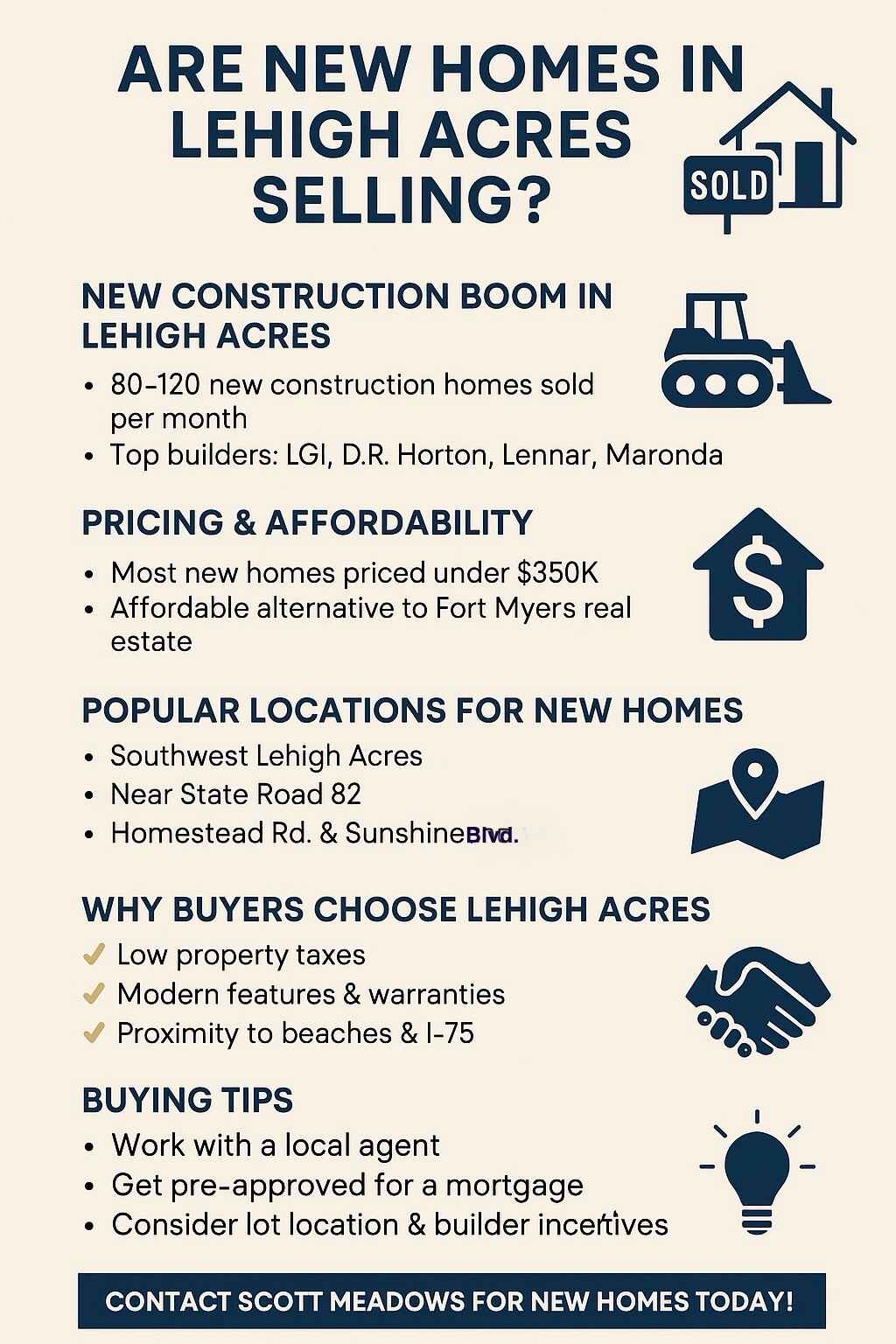
📈 New Construction Boom in Lehigh Acres

According to recent MLS data and local builder activity, Lehigh Acres continues to see a steady pace of new home construction. Builders such as LGI Homes, DR Horton, Lennar, and Maronda Homes are actively developing new communities across the area, offering one-story homes with modern finishes and energy-efficient systems.

With lot sizes larger than typical city parcels and more customization options, new homes in Lehigh Acres are attracting both first-time buyers and retirees alike. As of mid-2025, the region averages 80 to 120 new home sales per month, depending on seasonality and builder inventory levels.

💰 Pricing & Affordability

One of the key selling points of Lehigh Acres new homes for sale is affordability. While the median price for a new construction home in Lee County hovers around $420,000, Lehigh Acres remains more accessible. Buyers can still find brand-new homes under $350,000—some even in the low $300Ks depending on location and builder incentives.

This makes Lehigh Acres one of the few remaining places in Southwest Florida where new homes are within reach for middle-income families and retirees on fixed incomes.

🏘️ Popular Areas & Communities for New Homes

  • Southwest Lehigh Acres: Offers quicker access to Daniels Parkway and I-75—ideal for commuters.
  • Near State Road 82: This corridor is growing fast with new shopping centers, schools, and healthcare facilities.
  • Near Homestead Rd & Sunshine Blvd: These neighborhoods are popular for new home builds due to infrastructure improvements and proximity to amenities.

🔍 Why Buyers Are Choosing New Homes in Lehigh Acres

Beyond affordability, buyers are drawn to Lehigh Acres for several reasons:

  • Low Property Taxes
  • Modern Features: Granite countertops, vinyl plank flooring, impact windows (on select models)
  • Warranties on structure, systems, and appliances
  • Smart Home Packages and Energy Efficiency

📊 Market Outlook for 2025

Lehigh Acres is currently in a balanced-to-buyer-leaning market. This means buyers may be able to negotiate closing cost credits, upgraded features, or builder-paid incentives. However, as the Fort Myers metro area continues to grow, demand in Lehigh Acres is expected to remain strong—especially among investors and relocating families.

Inventory has remained healthy, with thousands of vacant lots available for infill construction and new community development. The region also benefits from its location just 30 minutes from Gulf Coast beaches, shopping centers, and RSW International Airport.

🧭 Tips for Buying a New Home in Lehigh Acres

  1. Work with a Local REALTOR®: A local expert can help you compare builders, navigate incentives, and find the best value.
  2. Get Pre-Approved: Knowing your budget helps streamline the builder selection and upgrade options.
  3. Review Builder Warranties: Not all warranties are the same—ask about structural coverage and appliance brands.
  4. Consider Lot Location: Corner lots, canal-front homes, and larger parcels may carry a premium but offer greater resale value.

✅ Final Thoughts: Lehigh Acres New Homes Are Selling—and Worth a Look

If you’re in the market for a new home in Southwest Florida, Lehigh Acres should be on your radar. With competitive pricing, strong builder presence, and improving infrastructure, this area is primed for continued growth. Whether you're a first-time homebuyer, investor, or retiree, there are excellent opportunities among Lehigh Acres new homes for sale.

Don’t miss your chance to own a brand-new home in one of Florida’s most promising markets.


📞 Ready to Tour New Homes in Lehigh Acres?

Contact Scott Meadows—a local Southwest Florida REALTOR® specializing in new construction and affordable housing options.

Let’s find your perfect home in Lehigh Acres today!

July 20, 2025

Are Cape Coral New Homes Selling in 2025?

Cape Coral New Homes

Cape Coral New Homes

🏡 Are Cape Coral New Homes Selling in 2025?

Meta Description: Are Cape Coral new homes selling in 2025? Explore market trends, buyer demand, and why new construction in Cape Coral is hotter than ever.

📈 Cape Coral’s Housing Boom: 2025 Overview

Cape Coral, Florida is experiencing a new construction renaissance in 2025. Known for its vast canal network, family-friendly neighborhoods, and fast-growing economy, Cape Coral has become a hotspot for builders and buyers alike. With over 400 miles of navigable waterways and room for growth, the city continues to attract both investors and full-time residents looking for quality homes in a coastal setting.

According to recent MLS data and builder reports, Cape Coral new homes are indeed selling at a steady pace in 2025, driven by affordability, lifestyle amenities, and a renewed interest in Florida's Gulf Coast living.

🏗️ What’s Fueling the Demand for Cape Coral New Homes?

  • Affordability Compared to Naples or Sarasota: New homes in Cape Coral often start in the $350K–$600K range—far more attainable than in nearby luxury markets.
  • Flexible Floorplans and Smart Tech: Today’s buyers want open layouts, energy efficiency, and smart-home integration—all of which are standard in many 2025 builds.
  • Location, Location, Location: Proximity to Fort Myers, Gulf beaches, boating, and fishing adds to Cape Coral’s appeal.
  • Retirees & Remote Workers: Florida’s tax-friendly policies and sunshine draw a mix of retirees and digital nomads who prefer new builds with minimal maintenance.

🏘️ Top Selling Cape Coral New Home Communities in 2025

Several new subdivisions and master-planned communities are seeing strong interest:

  • Northwest Cape Coral: A hotspot for waterfront homes, new construction, and larger lot sizes. Developers are focusing on luxury canal homes with pools, open-air lanais, and direct Gulf access.
  • Midtown Redevelopment District: The city’s investment into mixed-use development and infrastructure is attracting buyers who want walkable communities close to restaurants and shops.
  • Southeast & Southwest Cape Coral: Infills and teardowns are giving way to new luxury and semi-custom homes, especially near the Yacht Club area and Cape Harbour.

📊 Cape Coral New Homes for Sale: 2025 Market Statistics

  • Active New Home Listings: Approx. 2,300+ new construction homes listed in Q2 2025
  • Average Sale Price: ~$465,000 for newly built homes
  • Days on Market: 60–90 days (longer for canal homes or custom builds)
  • Buyer Incentives: Builders are offering closing cost assistance, rate buy-downs, and appliance packages

Builders are reporting a balanced market, where buyers have options—but demand is still steady enough to keep inventory moving.

🔍 What Homebuyers Want in 2025

Buyers looking for Cape Coral new homes for sale in 2025 are prioritizing:

  • Impact-resistant windows and hurricane-rated construction
  • Open-concept kitchens and living areas with upgraded finishes
  • Home offices, flex rooms, and high-speed internet connectivity
  • Outdoor entertainment areas with pools and summer kitchens
  • Proximity to schools, parks, and waterfront access

🏠 Who's Buying Cape Coral New Homes?

The demographic mix continues to diversify:

  • Florida Transplants: Many buyers are relocating from high-tax states like New York, Illinois, and California.
  • Local Move-Ups: Cape Coral residents upgrading from older homes to new builds with energy efficiency and modern layouts.
  • Retirees: 55+ buyers are seeking single-story living, gated communities, and waterfront lots.

💡 Pro Tips for Buyers Looking for New Homes in Cape Coral

  1. Work With a Local REALTOR®: Especially one who specializes in new construction—like Scott Meadows. Many homes aren’t on the public MLS yet.
  2. Tour Builder Model Homes: Check out floorplans, incentives, and customization options firsthand.
  3. Get Pre-Approved: Many builders have preferred lenders offering below-market financing in 2025.
  4. Compare HOA & CDD Fees: Some communities offer low-maintenance living with fees that can impact your budget.

✅ Final Thoughts: Cape Coral’s New Construction Market is Alive and Well

Cape Coral new homes for sale in 2025 continue to attract attention due to their value, variety, and vibrant surroundings. Whether you're buying your first home, upgrading for space, or investing in Southwest Florida real estate, the new construction market offers a range of opportunities to match every lifestyle.

As Cape Coral expands its infrastructure, walkable downtown zones, and recreational offerings, new builds remain a smart long-term investment. With favorable pricing, abundant inventory, and strong demand, 2025 is shaping up to be a golden year for new homes in Cape Coral.


Ready to find your perfect new home in Cape Coral?

Contact Scott Meadows – Southwest Florida Real Estate Expert

Browse the latest Cape Coral new homes for sale, schedule private tours, and get expert guidance on builder incentives and floorplan selection.