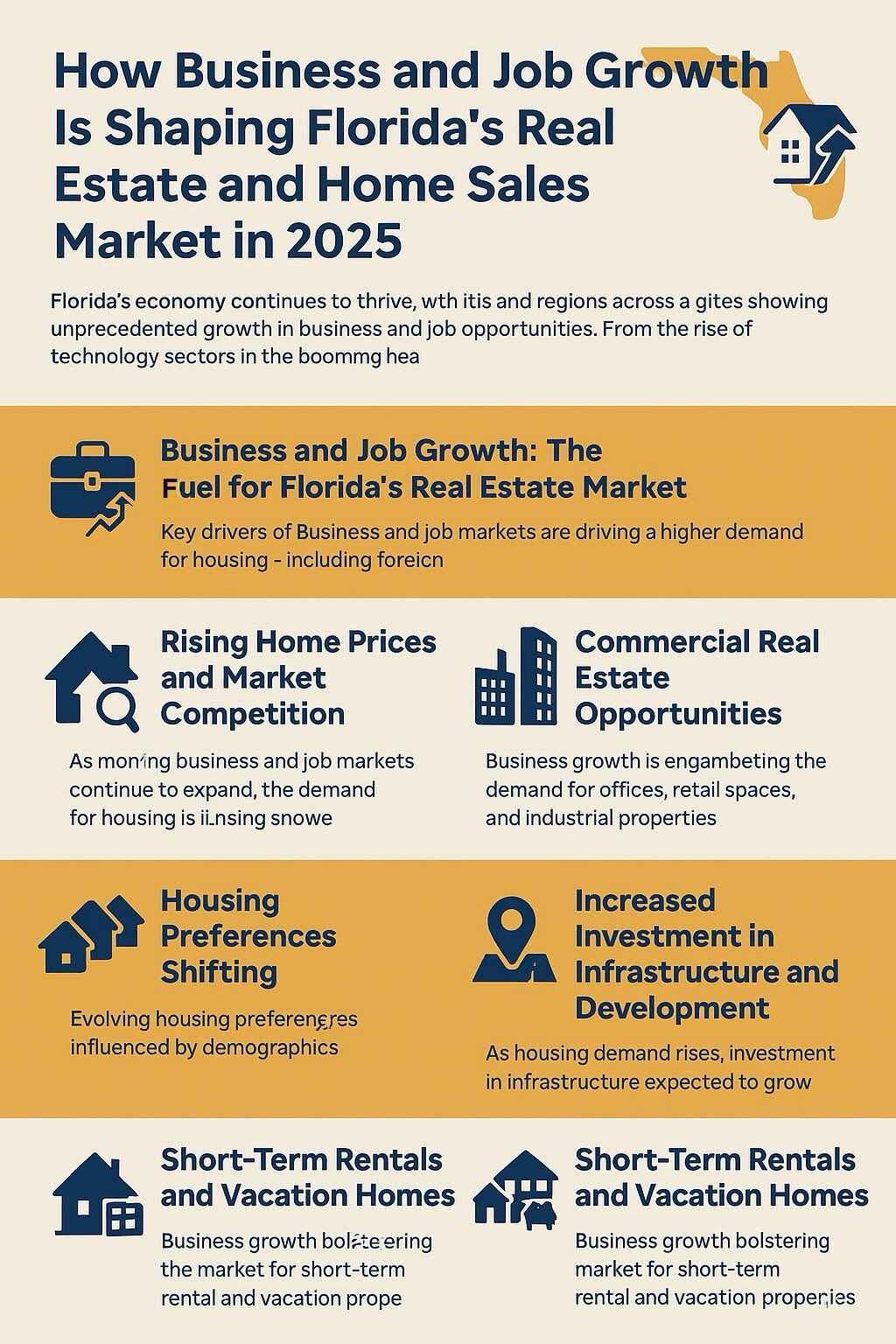
How Business and Job Growth is Shaping Florida’s Real Estate and Home Sales Market in 2025
Florida’s economy continues to thrive, with cities and regions across the state showing unprecedented growth in business and job opportunities. From the rise of technology sectors in Orlando to the booming healthcare and logistics industries in Miami, Florida’s expanding economy is having a direct and profound impact on its real estate market. Whether you're a homebuyer, investor, or simply tracking trends, it’s important to understand how the ongoing economic expansion is influencing Florida’s housing market in 2025.
In this blog post, we will explore the key ways that Florida’s business and job growth are affecting real estate, including home sales, prices, demand for housing, and overall market dynamics. By the end, you’ll gain a deeper understanding of why these shifts are significant for homebuyers, sellers, and investors in the Sunshine State.
1. Business and Job Growth: The Fuel for Florida’s Real Estate Market
Key Drivers of Business Growth in Florida:
- Tech Sector Expansion: Florida's technology sector, particularly in cities like Orlando and Tampa, has seen a significant increase in job creation, with companies in aerospace, simulation, and medical tech leading the charge. As these industries continue to expand, they create thousands of high-paying jobs, attracting workers from all over the country.
- Healthcare and Biotech: Cities like Miami, Tampa, and Jacksonville are becoming top centers for healthcare innovation. Miami’s Moffitt Cancer Center and Tampa’s University of South Florida contribute heavily to research and medical advancements, while creating thousands of new jobs.
- Logistics and International Trade: Ports in Miami and Jacksonville continue to expand as Florida grows its status as a key hub for international trade. This is particularly important for companies in logistics and distribution, contributing to Florida's rising employment numbers.
- Foreign Investment: Florida’s business-friendly policies, low taxes, and strategic location have attracted international businesses, further fueling job growth and economic diversification in key areas like Miami and Tampa Bay.
2. Increased Demand for Housing
As Florida’s business and job markets continue to expand, the demand for housing will naturally follow. New residents moving to the state in search of job opportunities will need somewhere to live, thus driving up demand for both rental and for-sale homes. Whether individuals are moving for tech, healthcare, or logistics, they will be looking for places to settle near business hubs.
How this Affects Real Estate:
- Orlando-Kissimmee-Sanford: With the tech sector booming and Orlando’s position as a top tourist destination, the demand for both residential and rental properties is skyrocketing. As more high-tech professionals, healthcare workers, and other highly-skilled laborers move to the city, demand for single-family homes and rental units will rise.
- Tampa Bay Metro Area: Tampa's position as a foreign investment hotspot and its expanding healthcare and finance sectors are driving demand for housing. With new corporate relocations pushing professionals to the area, homebuyers and renters alike will find that competition for available homes is increasing.
- Miami-Fort Lauderdale-West Palm Beach Metro Area: The demand for housing in Miami has been steadily increasing due to its role as Florida’s international trade hub. The influx of workers in logistics, finance, and healthcare will create a need for both high-end housing and affordable options to accommodate new professionals and their families.
3. Rising Home Prices and Market Competition
One of the most immediate effects of growing job markets in Florida’s cities is the potential for rising home prices. As demand for housing intensifies and inventory remains tight, home prices are likely to rise. This is especially true in regions directly impacted by significant job growth, such as the tech sector in Orlando or the biotech and healthcare industries in Tampa.
Factors Contributing to Rising Home Prices:
- Increased demand: The growing number of residents in these cities creates a greater demand for available homes. As more people relocate to Florida for employment opportunities, sellers are able to raise their asking prices due to higher competition.
- Limited housing inventory: In many of these rapidly growing areas, there is a limited amount of land available for development. Combined with the increasing population, this leads to a higher demand for the limited number of homes on the market.
- Inflation and mortgage rates: Although inflation and mortgage rates have had a moderating effect on home prices, many of Florida’s growing cities are still seeing upward pressure on prices due to the aforementioned demand factors.
How This Impacts Homebuyers:
- More competition: As more people move to these areas, prospective buyers may find themselves in bidding wars, especially for desirable properties close to business hubs.
- Higher costs: Homebuyers will face higher costs for both purchasing homes and finding rental properties in these areas. Many buyers might need to adjust their budgets or reconsider the locations they are targeting.
4. Suburban Growth and New Developments
As housing becomes more expensive in major metro areas, many people are looking toward suburban communities for more affordable options. This is especially true for families and individuals who prefer more space but still want to be within a reasonable distance of their workplaces. The growing job markets in Florida's metro areas are pushing people to the suburbs, which are seeing more residential and commercial developments.
Suburbs Are Booming:
- West Lake, Davenport, Eagle Lake (Central Florida Suburbs): These suburban areas are benefiting from the growth of nearby Orlando. As Orlando's housing market becomes more expensive, many buyers are moving to these outlying areas, where new developments are taking place at a rapid pace. With lower land prices and proximity to major job centers, these suburbs are well-positioned to attract homebuyers and investors.
- Wildwood (Sumter County): As the #1 fastest-growing city in the U.S. from 2020-2024, Wildwood is experiencing a boom in residential development. Its proximity to The Villages has led to an increase in housing demand, particularly for retirement communities and age-targeted homes.
Impact on Real Estate:
- New residential projects: Suburbs like Davenport and Wildwood are seeing increased residential development. Homebuilders are constructing single-family homes, townhomes, and apartment complexes to meet the growing demand from residents who are relocating for work.
- Increased retail and commercial spaces: Along with new housing developments, suburban areas are also seeing new retail centers, restaurants, and entertainment venues. As these areas become more populated, businesses will follow suit, further fueling economic growth.
5. Commercial Real Estate Opportunities
Business growth also has a direct impact on commercial real estate markets. As more companies establish themselves in Florida or expand their operations, the demand for office space, retail locations, and industrial facilities increases.
Commercial Development Trends:
- Tampa Bay Metro Area: With major companies moving to the area, the demand for office spaces, commercial real estate, and logistics centers is soaring. Mixed-use developments, combining residential, office, and retail spaces, are becoming increasingly popular in Tampa, providing a vibrant, connected community for workers and residents.
- Miami-Fort Lauderdale-West Palm Beach: Miami, with its growing financial services sector, is seeing increased demand for office space, particularly from multinational corporations. Additionally, retail and hospitality businesses are flourishing, catering to the influx of both residents and tourists.
How This Affects the Market:
- Mixed-use developments: Developers are increasingly focusing on creating integrated spaces that combine housing, offices, and commercial establishments. This trend helps to create more vibrant, walkable communities and attracts workers who want to live near their jobs.
- Long-term investment: As businesses continue to flock to Florida, the need for commercial real estate will drive long-term investment opportunities. Commercial properties near growing business districts will remain in high demand, offering substantial returns for investors.
6. Housing Preferences Shifting
With business growth, the types of homes and neighborhoods in demand may shift. Professionals moving to Florida from other parts of the country may have different housing preferences, influenced by the industries they work in and the lifestyle they desire.
Changing Housing Preferences:
- Urban vs. Suburban: In tech-heavy areas like Orlando, young professionals may prefer modern condos or apartments close to business hubs. In contrast, families moving to areas like Tampa Bay or Jacksonville may seek more suburban-style homes with access to schools and parks.
- Affordable Housing: As home prices rise, there is a growing need for affordable housing, especially for workers in industries like logistics, healthcare, and education. Developers may focus on building affordable housing options in these rapidly growing areas to meet the increasing demand.
7. Increased Investment in Infrastructure and Development
As the demand for housing grows, local governments in Florida will need to increase their investment in infrastructure, such as roads, schools, healthcare, and public transportation, to support the expanding population.
Impact on Real Estate:
- Transportation infrastructure: Suburban areas close to job hubs will benefit from expanded public transportation options, making these neighborhoods even more attractive to buyers.
- Local amenities: Increased infrastructure investment also leads to improved local amenities such as parks, retail centers, and recreational facilities, which enhance the appeal of both new developments and existing homes.
8. Short-Term Rentals and Vacation Homes
Florida’s continued business and job growth, combined with the state's booming tourism industry, will likely keep the market for vacation homes and short-term rentals strong. Cities like Orlando, Miami, and Tampa are major tourist destinations, and workers relocating for job opportunities may opt to rent out vacation homes in the meantime, driving more demand for properties suitable for short-term rentals.
Investor Opportunities:
- Short-term rentals: Investors looking for rental income opportunities may find short-term rental properties in high-tourism areas to be lucrative investments. With the continued influx of visitors and workers, vacation homes in these areas will remain in demand.
- Vacation homes for remote workers: The rise of remote work has made vacation homes more accessible to professionals who no longer need to live near their office. This shift presents new opportunities for buyers to purchase homes in Florida's most desirable tourist destinations.