What Is the National Housing Emergency and How Will It Impact Real Estate?
By Scott Meadows, Florida Custom Homes
With over 30 years of experience in Florida real estate and new construction, I specialize in helping homebuyers navigate changing markets—especially when policy shifts like this reshape the landscape.
Introduction: What’s the National Housing Emergency?
In September 2025, the Trump administration announced it was weighing a bold and unprecedented move: declaring a National Housing Emergency in response to soaring housing costs, severe inventory shortages, and rising interest rates that have locked many buyers out of the market. Read more about What's New on The National Housing Emergency...
Described as an “all hands on deck” effort by U.S. Treasury Secretary Scott Bessent, this initiative could dramatically reshape how housing is built, regulated, and financed across America. But what does this mean for homebuyers, builders, and local governments?
This article breaks it all down—covering what the emergency entails, the proposed solutions, potential legal and political challenges, and what buyers should expect in 2025–2026.
What Is Being Proposed?
The National Housing Emergency would be enacted using the 1976 National Emergencies Act, which grants the executive branch special authority to bypass Congress in times of crisis. While typically used for national security or public health threats, the administration is positioning the housing crisis as an economic emergency deserving the same urgent response.
Here are the core components of the proposal:
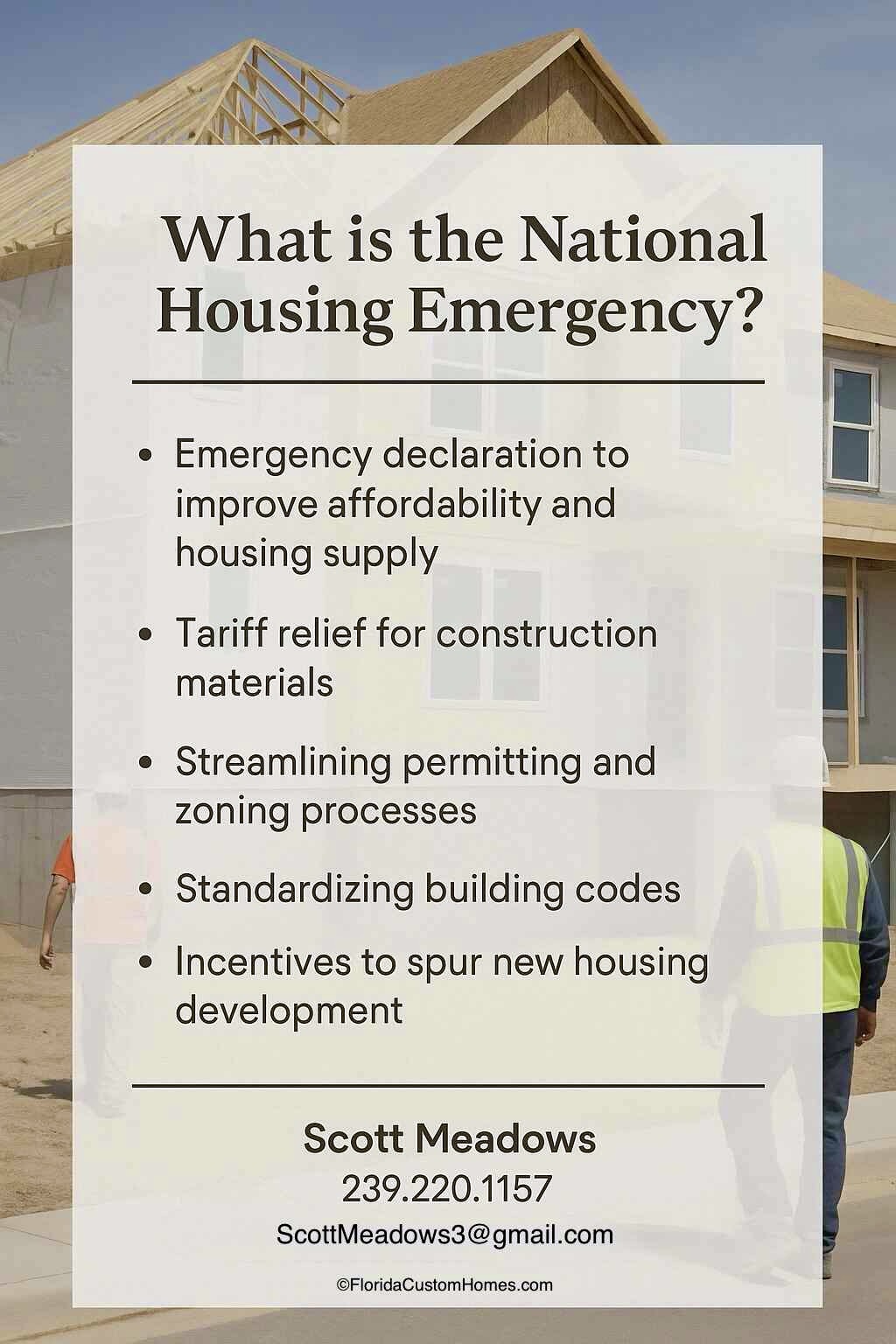
- Emergency declaration to activate executive powers and bypass bureaucratic delays
- Tariff exemptions on critical building materials like steel, copper, and lumber to reduce construction costs
- Streamlining local permitting and zoning to accelerate housing development nationwide
- Standardizing building codes to encourage scalable and efficient development
- Potential incentives to boost private-sector housing supply
Why Is This Happening Now?
As of late 2025, housing affordability has reached a crisis point:
- Home prices remain historically high despite slower sales
- Mortgage rates above 7% have dramatically reduced purchasing power
- Inventory is severely constrained, particularly for entry-level homes
- New home construction is facing material cost inflation and regulatory red tape
The administration sees this as not only an economic issue—but a political one. With midterm elections approaching, the housing crisis is now center stage, and the emergency declaration is expected to serve both practical and strategic purposes.
In-Depth Look: Policy Measures Under Consideration
1. Tariff Relief on Building Materials
To reduce the cost of construction, the administration is considering temporary suspension of tariffs on steel, copper, aluminum, and lumber. This could help builders control costs, speed up projects, and pass savings along to buyers—especially in high-growth regions like Florida, Texas, and the Sunbelt.
2. Zoning and Permitting Reform
One of the most ambitious elements involves federal intervention in local zoning and permitting processes. The goal is to eliminate barriers to high-density, multifamily, and affordable housing in areas that traditionally block such development through NIMBY (“Not In My Back Yard”) restrictions.
This could resemble prior proposals like the “Yes In My Backyard” (YIMBY) Act, but with far greater authority due to the emergency framework.
3. National Building Code Standardization
The plan may include creating a unified set of standards for building codes, safety regulations, and environmental assessments to remove regional disparities that delay projects. While controversial, this could streamline processes for national builders and make compliance easier for local governments.
4. Incentivizing Housing Supply Growth
To spur private-sector development, incentives such as tax breaks, grants, or fast-track approvals could be on the table. These would likely target developers who agree to build within affordability guidelines or contribute to mixed-income housing strategies.
Legal and Political Landscape
Executive Power Under Scrutiny
While the National Emergencies Act grants broad authority, its use in domestic real estate matters could trigger lawsuits. Legal experts note that courts could block elements they deem unconstitutional or in conflict with local jurisdiction rights.
Local Government Pushback
City councils and county planning boards may resist federal intrusion into land-use planning. Efforts to override local zoning laws—especially in high-income or suburban areas—will be met with political and legal resistance.
Congressional Oversight
Although emergency declarations can be issued unilaterally, Congress retains the power to end them via joint resolution. If the administration overreaches, bipartisan resistance could surface quickly—particularly from lawmakers representing states with strong local control traditions.
Implications for Homebuyers
If enacted, the National Housing Emergency could produce meaningful benefits for buyers in the short- and medium-term:
- Lower construction costs → lower home prices, especially for new builds
- Faster permitting → quicker inventory growth in hot markets
- Standardized codes → more consistency and clarity for new home purchases
- Possible increase in affordable housing → expanded access for first-time buyers
That said, the real estate market is complex. Buyers should continue to evaluate properties based on fundamentals: location, build quality, hurricane resilience, flood risk, and long-term property value potential.
Potential Risks and Downsides
- Federal overreach into local zoning may alienate communities
- Legal battles could delay or derail implementation
- Unintended consequences if policies are rushed or poorly coordinated
- Temporary tariff relief may not translate to sustained affordability
Additionally, many advocates fear that HUD program cuts currently being pursued by the same administration could undermine gains made through the emergency housing order. Programs supporting rental assistance and homelessness prevention are reportedly on the chopping block, raising concerns about equity and long-term impact.
Summary Table: National Housing Emergency Measures
| Measure | Description |
|---|---|
| Emergency Declaration | Activate federal emergency powers for housing reform |
| Tariff Exemptions | Reduce material costs for construction via tariff relief |
| Permitting & Zoning Reform | Accelerate building timelines through streamlined processes |
| National Code Standardization | Create unified building and safety codes |
| Supply Incentives | Encourage new builds through tax breaks and regulatory relief |
What Buyers Should Do Right Now
Whether or not the National Housing Emergency is declared, one thing is clear: the real estate landscape is changing fast. Buyers in Florida and other fast-growing regions should:
- Work with a knowledgeable agent who understands local zoning and code compliance
- Stay informed about policy shifts that affect permitting and pricing
- Focus on homes with hurricane-resilient design and low-flood-risk locations
- Secure financing early before potential interest rate hikes or regulatory changes
Final Thoughts
The National Housing Emergency proposal is bold, controversial, and still evolving. While it holds promise to ease affordability and jumpstart development, it comes with legal and political hurdles that will take months—if not years—to fully play out.
For now, smart buyers should pay close attention, prepare for both opportunity and volatility, and rely on expert guidance when navigating this shifting terrain.
About the Author
Scott Meadows is a seasoned Florida REALTOR® with 30+ years of experience helping homebuyers secure high-quality, hurricane-resilient homes in Southwest Florida. His firm, Florida Custom Homes, specializes in new construction, waterfront properties, and code-compliant real estate investments.
Contact Scott Meadows:
Phone: 239.220.1157
Email: ScottMeadows3@gmail.com
Website: www.FloridaCustomHomes.com