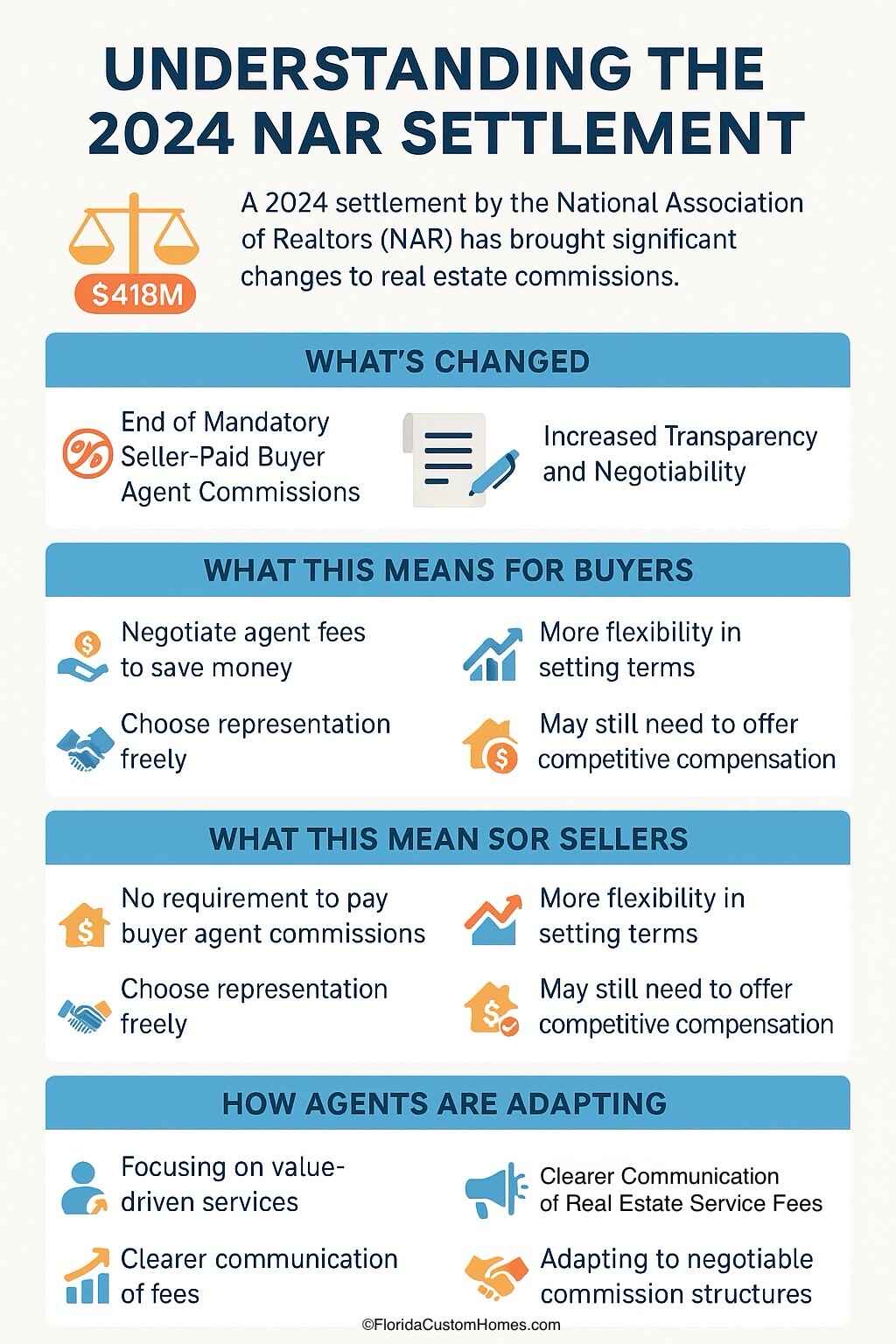
Understanding the 2024 NAR Settlement: What Buyers and Sellers Need to Know
In March 2024, the National Association of Realtors (NAR) reached a landmark $418 million settlement to resolve antitrust lawsuits alleging that its commission structures inflated real estate costs for consumers. This settlement represents one of the most significant shifts in the U.S. real estate industry in decades and directly impacts how commissions are handled, changing the dynamics of buying and selling homes. For anyone planning to buy or sell a home, understanding the settlement is essential to navigate today’s market confidently.
What Changed in Real Estate Commission Structures?
Real estate commissions have historically been one of the most misunderstood and opaque aspects of buying and selling a home. Traditionally, seller-paid commissions covered both the listing agent and the buyer’s agent. In many cases, buyers were unaware that their agent’s fees were being paid by the seller, leading to limited transparency and fewer opportunities for negotiation.
The NAR settlement introduces several major changes:
1. End of Mandatory Seller-Paid Buyer Agent Commissions
Previously, sellers were generally required to offer compensation to buyer agents through Multiple Listing Services (MLS). This meant that a portion of the seller’s proceeds automatically went to the buyer’s agent, whether or not the buyer understood it or negotiated it.
Under the new settlement rules, MLS platforms can no longer list the commission offered to buyer agents. Buyer agents must now negotiate their fees directly with their clients before showing a property. This change ensures that buyers are fully aware of any costs associated with representation and encourages transparency between agents and clients.
Why it matters: Buyers now have the opportunity to negotiate their agent’s fees, potentially saving money. Sellers, meanwhile, are no longer obligated to offer a standard buyer agent commission, giving them more flexibility in pricing and marketing their home.
2. Mandatory Written Agreements Between Buyers and Agents
The settlement requires that buyers sign a written agreement with their agent before viewing properties. This agreement must clearly define the compensation structure, including the amount or method of calculation.
This step ensures that there are no surprises during the homebuying process. Buyers now know exactly how much they will pay their agent and under what circumstances. Agents are also held accountable for explaining their services and fees, creating a more professional and transparent relationship.
Why it matters: Written agreements protect buyers, making the process fairer and more predictable. They also encourage agents to provide valuable services rather than relying on pre-set commissions to earn a living.
3. Increased Transparency and Negotiability
The settlement aims to eliminate practices such as steering, where agents might guide clients toward properties offering higher commissions instead of the best fit for the buyer.
By removing mandatory seller-paid buyer agent commissions and requiring upfront agreements, the system becomes more competitive. Buyers now have the ability to choose agents based on skill, reputation, and value rather than commission incentives. This could lead to a more level playing field in the housing market.
Why it matters: Buyers gain control over both agent selection and costs, while sellers may benefit from more competitive pricing and motivated buyers. Overall, the settlement encourages a fairer and more transparent market.
What This Means for Buyers
- Negotiation Power: Buyers can now discuss agent fees openly, potentially saving hundreds or even thousands of dollars in commissions. Negotiating fees upfront allows buyers to align costs with services received.
- Transparency: The requirement of written agreements ensures buyers know exactly what they are paying for. This clarity helps prevent misunderstandings and provides peace of mind during what can be a complex process.
- Choice of Representation: Without automatic commissions tied to the property, buyers can choose agents who truly represent their interests, encouraging better service and expertise.
- Potential Risks: Some buyer agents may be less inclined to show properties that do not offer compensation. Buyers need to be proactive in discussing fees and expectations with their agents to ensure full market access.
What This Means for Sellers
- No Mandatory Buyer Agent Commission: Sellers are no longer required to pay a buyer’s agent commission. This change could reduce overall selling costs and potentially allow sellers to price their homes more competitively.
- Flexibility in Negotiation: Sellers can negotiate fees directly with listing agents and determine strategies that maximize net proceeds.
- Market Dynamics: Changes in commission structures may attract more buyers or encourage faster transactions. Sellers who are informed and prepared can leverage these shifts to their advantage.
- Considerations: While sellers save on buyer agent commissions, they must ensure their listings remain attractive to agents who bring potential buyers. Offering competitive compensation may still be necessary to motivate agents to show a property.
How Agents Are Adapting
- Value-Driven Services: Agents must now demonstrate their value through expertise, guidance, and service, rather than relying on standardized commissions.
- Transparency: Clear communication of fees and services strengthens trust with clients. Agents who provide exceptional service may gain a competitive edge.
- Negotiable Fees: With commission structures now negotiable, agents need to adapt business models and marketing strategies to remain attractive to clients.
Practical Steps for Buyers and Sellers
- Educate Yourself: Understand the changes in commission rules and how they affect both buying and selling. Knowledge is power in negotiating effectively.
- Ask Questions: Buyers should discuss fees upfront with their agent. Sellers should understand potential costs and options for offering competitive commissions.
- Get Everything in Writing: Written agreements protect both buyers and agents, ensuring clarity on compensation and expectations.
- Work With Experienced Professionals: In an evolving market, experienced agents who understand the new rules and how to navigate them are invaluable.
- Consider Market Strategy: Sellers may adjust listing prices or commission offers to remain competitive. Buyers should evaluate agent services and costs carefully.
Conclusion
The 2024 NAR settlement is more than a legal milestone—it’s a transformative shift in how real estate transactions are conducted. For the first time in decades, buyers and sellers have increased transparency, negotiation power, and control over real estate costs.
Buyers can negotiate fees, choose agents that align with their goals, and gain more insight into the true costs of purchasing a home.
Sellers gain flexibility, reduced obligations, and potential for more competitive pricing.
Agents are encouraged to provide value-driven services and maintain transparency to earn client trust.
By understanding and adapting to these changes, buyers and sellers alike can navigate the real estate market more effectively. Staying informed and working with knowledgeable professionals ensures you maximize your opportunities, protect your interests, and make the homebuying or selling process as smooth and cost-effective as possible.