Nov. 12, 2014

5 Reasons to Hire a Real Estate Professional

5 Reasons to Hire a Real Estate Professional
5 Reasons to Hire a Real Estate Professional | Simplifying The Market 

Whether you are buying or selling a home, it can be quite an adventurous journey. You need an experienced Real Estate Professional to lead you to your ultimate goal. In this world of instant gratification and internet searches, many sellers think that they can For Sale by Owner or FSBO. The 5 Reasons You NEED a Real Estate Professional in your corner haven’t changed, but have rather been strengthened due to the projections of higher mortgage interest rates & home prices as the market continues to recover. 

1. What do you do with all this paperwork?

Each state has different regulations regarding the contracts required for a successful sale, and these regulations are constantly changing. A true Real Estate Professional is an expert in their market and can guide you through the stacks of paperwork necessary to make your dream a reality.

2. Ok, so you found your dream house, now what?

According to the Orlando Regional REALTOR Association, there are over 230 possible actions that need to take place during every successful real estate transaction. Don’t you want someone who has been there before, who knows what these actions are to make sure that you acquire your dream?

3. Are you a good negotiator?

So maybe you’re not convinced that you need an agent to sell your home. However, after looking at the list of parties that you need to be prepared to negotiate with, you’ll realize the value in selecting a Real Estate Professional. From the buyer (who wants the best deal possible), to the home inspection companies, to the appraiser, there are at least 11 different people that you will have to be knowledgeable with and answer to, during the process.

4. What is the home you’re buying/selling really worth?

It is important for your home to be priced correctly from the start to attract the right buyers and shorten the time that it’s on the market. You need someone who is not emotionally connected to your home to give you the truth as to your home’s value. According to the National Association of REALTORS“the typical FSBO home sold for $184,000 compared to $230,000 among agent-assisted home sales.” Get the most out of your transaction by hiring a professional. 

5. Do you know what’s really going on in the market?

There is so much information out there on the news and the internet about home sales, prices, mortgage rates; how do you know what’s going on specifically in your area? Who do you turn to in order to competitively price your home correctly at the beginning of the selling process? How do you know what to offer on your dream home without paying too much, or offending the seller with a low-ball offer? Dave Ramsey, the financial guru advises:

“When getting help with money, whether it’s insurance, real estate or investments, you should always look for someone with the heart of a teacher, not the heart of a salesman.”

Hiring an agent who has their finger on the pulse of the market will make your buying/selling experience an educated one. You need someone who is going to tell you the truth, not just what they think you want to hear.

Bottom Line:

You wouldn’t replace the engine in your car without a trusted mechanic. Why would you make one of your most important financial decisions of your life without hiring a Real Estate Professional?


Nov. 6, 2014

Buying a Home Remains 38% Less Expensive than Renting!

Buying a Home Remains 38% Less Expensive than Renting!
Buying a Home Remains 38% Less Expensive Than Renting! | Simplifying The Market 

In Trulia’s latest Rent vs. Buy Report, they explained that homeownership remains cheaper than renting with a traditional 30-year fixed rate mortgage throughout the 100 largest metro areas in the United States. The updated numbers actually show that the range is from an average of 17% in Honolulu, all the way to 63% in Detroit, and 38% Nationwide! This is up from an average of only 5% cheaper in Honolulu in April. The other interesting findings in the report include:

  • Rents have continued to increase nationally even as home price increases are starting to slow. Current low mortgage rates have kept homeownership from becoming more expensive than renting.
  • Some markets might tip in favor of renting next year if home prices increase at a greater rate than rents and if – as most economists expect – mortgage rates rise, due to the strengthening economy.
Nationally, rates would have to rise to 10.6% for renting to be cheaper than buying – and rates haven’t been that high since 1989.

Bottom Line

Buying a home makes sense. Rental costs have historically increased at a higher rate of inflation. Lock in a mortgage payment now before home prices and mortgage rates rise as experts expect they will.

Posted in Home Buyers
Nov. 5, 2014

Debunking 4 Myths about Buying a Home

Debunking 4 Myths about Buying a Home
Debunking 4 Myths About Buying a Home | Simplifying the Market 

recent study by the Joint Center for Housing Studies at Harvard University revealed when renters were asked why they do no plan to own in the future, financial constraints were a more common response than the perceived lifestyle benefits they may receive from renting. Today, we want to go over those financial challenges and see if we can put some fears to rest and also clear up some misconceptions. Here are the top four financial hurdles that cause renters not to buy:

You Cannot Afford a Home

Well over 50% of renters consider this as a financial barrier to homeownership. However, study after study has shown us that there are major misunderstandings about what is required to purchase a home. The biggest misconception is the amount of a down payment required. A recent survey revealed that 44% of respondents believed that a 20% down payment was required. In actuality, mortgages are available with as little as 5% down (and even 3% in certain situations). The same survey showed that 30% of respondents believe that only individuals with ‘high incomes’ can obtain a mortgage. In actuality, there are several programs intentionally created to help moderate income families buy a home of their own (look at the FHA program for example).

You Do Not Have Good Enough Credit to Get a Mortgage

The survey mentioned above showed that 64% of respondents believe they must have a “very good” credit score to buy a home. Most people don’t realize that the average credit score for closed loans has actually dropped 24 points in the last two years. For more information on credit scores click here.

It’s Not a Good Time to Buy a Home

Determining when is the right time to buy a home from a pure financial calculation can be difficult. There are two elements of the cost of a home: the price of the house and the mortgage interest rate. When considering a purchase, you want to have at least an indication where prices and mortgage rates are headed. According to over 100 experts, house values are expected to increase by almost 20% between now and 2018. And Freddie Mac recently projected that mortgage rates would be as much as one full point higher by this time next year. With both prices and interest rates projected to increase, now is the perfect time to buy a home.

It’s Cheaper to Rent than Buy

This is a myth that doesn’t want to die. However, Trulia recently reported that, in fact, buying is actually dramatically cheaper than renting. Here is what they said:

“Homeownership remains cheaper than renting nationally and in all of the 100 largest metro areas. In fact, buying is 38% cheaper than renting now, compared with 35% cheaper than renting one year ago.”

Bottom Line

If you are even thinking about buying, get the facts from a trained professional. You may be pleasantly surprised by what you find out.

Posted in Home Buyers
Nov. 4, 2014

Either Way, You’re Still Paying a Mortgage

Either Way, You’re Still Paying a Mortgage
Either Way You're Paying a Mortgage | Simplifying The Market 

There are some people that have not purchased a home because they are uncomfortable taking on the obligation of a mortgage. Everyone should realize that, unless you are living with your parents rent free, you are paying a mortgage - either your mortgage or your landlord’s. As a paper from the Joint Center for Housing Studies at Harvard University explains: 

“Households must consume housing whether they own or rent. Not even accounting for more favorable tax treatment of owning, homeowners pay debt service to pay down their own principal while households that rent pay down the principal of a landlord plus a rate of return. That’s yet another reason owning often does—as Americans intuit—end up making more financial sense than renting.”

Also, if you purchase with a 30-year fixed rate mortgage, your ‘housing expense’ is locked in over the thirty years for the most part. If you rent, the one guarantee you will have is that your rent will increase over that same thirty year time period. As an owner, the mortgage payment is a ‘forced savings’ which will allow you to have equity in your home you can tap into later in your life. As a renter, you guarantee the landlord is the person with that equity.

Bottom Line

Whether you are looking for a primary residence for the first time or are considering a vacation home on the shore, owning might make more sense than renting since home values and interest rates are still at bargain prices.

Posted in Home Buyers
Nov. 3, 2014

5 Reasons You Shouldn’t For Sale by Owner

5 Reasons You Shouldn’t For Sale by Owner
5 Reasons You Should Not For Sale By Owner | Keeping Current Matters 

Some homeowners may consider trying to sell their home on without the assistance of a real estate professional, known in the industry as a For Sale by Owner (FSBO). We think there are several reasons this might not be a good idea for the vast majority of sellers.

Here are five of our reasons

1. There Are Too Many People to Negotiate With

Here is a list of some of the people with whom you must be prepared to negotiate if you decide to FSBO.

  • The buyer who wants the best deal possible
  • The buyer’s agent who solely represents the best interest of the buyer
  • The buyer’s attorney (in some parts of the country)
  • The home inspection companies which work for the buyer and will almost always find some problems with the house
  • The appraiser if there is a question of value
  • Your bank in the case of a short sale

2. Exposure to Prospective Purchasers

Recent studies have shown that 92% of buyers search online for a home. That is in comparison to only 28% looking at print newspaper ads. Most real estate agents have an extensive internet strategy to promote the sale of your home. Do you?

3.  Actual Results also come from the Internet

Where do buyers find the home they actually purchased?

  • 43% on the internet
  • 9% from a yard sign
  • 1% from newspapers

The days of selling your house by just putting up a sign and putting it in the paper are long gone. Having a strong internet strategy is crucial.

4. FSBOing has Become More and More Difficult

The paperwork involved in selling and buying a home has increased dramatically as industry disclosures and regulations have become mandatory. This is one of the reasons that the percentage of people FSBOing has dropped from 19% to 9% over the last 20+ years. 

5. You Net More Money when Using an Agent

Many homeowners believe that they will save the real estate commission by selling on their own. Realize that the main reason buyers look at FSBOs is because they also believe they can save the real commission. The seller and buyer can’t both save the same commission. Studies have shown that the typical house sold by the homeowner sells for $184,000 while the typical house sold by an agent sells for $230,000.   This doesn’t mean that an agent can get $46,000 more for your home as studies have shown that people are more likely to FSBO in markets with lower price points. However, it does show that selling on your own might not make sense.

Bottom Line

Before you decide to take on the challenges of selling your house on your own, sit with a real estate professional in your marketplace and see what they have to offer.

Posted in Home Sellers
Oct. 30, 2014

Buying a Home with as Little as 3-5% Down Payment

Buying a Home with as Little as 3-5% Down Payment
Buying a Home for as Little as 3-5% Down | Simplifying The Market 

We have recently reported on the misconception that many buyers have regarding the down payment necessary to purchase a home. Multiple studies reveal that 40-50% of Americans believe you need between 15-20% of a down payment to be eligible to purchase a home. This misconception came about as the government just last year debated new guidelines for residential mortgages because of the housing collapse in 2007. Some were arguing that there should be a minimum of 20% or even 30% down payment on all mortgage loans. However, those standards were never implemented. To counter this misunderstanding, Christina Boyle, Freddie Mac’s VP and Head of Single-Family Sales & Relationship Management, in a recent Executive Perspectives explained that a person “can get a conforming, conventional mortgage with a down payment of as little as 5 percent”.

3% Down Payments Available Soon?

Just last week, Federal Housing Finance Agency Director Mel Watt announced that mortgages requiring only a three percent down payment may soon be available:

“To increase access for creditworthy but lower-wealth borrowers, FHFA is also working with the Enterprises to develop sensible and responsible guidelines for mortgages with loan-to-value ratios between 95 and 97 percent. Through these revised guidelines, we believe that the Enterprises will be able to responsibly serve a targeted segment of creditworthy borrowers with lower-down payment mortgages by taking into account “compensating factors.”

Bottom Line

If you are saving for either your first home or that perfect move-up dream house, make sure you know all your options. You may be pleasantly surprised.

Posted in Home Buyers
Oct. 29, 2014

Gallup Poll: Real Estate Best Long-Term Investment

Gallup Poll: Real Estate Best Long-Term Investment
Gallup Poll: Real Estate Best Long-Term Investment | Simplifying The Market 

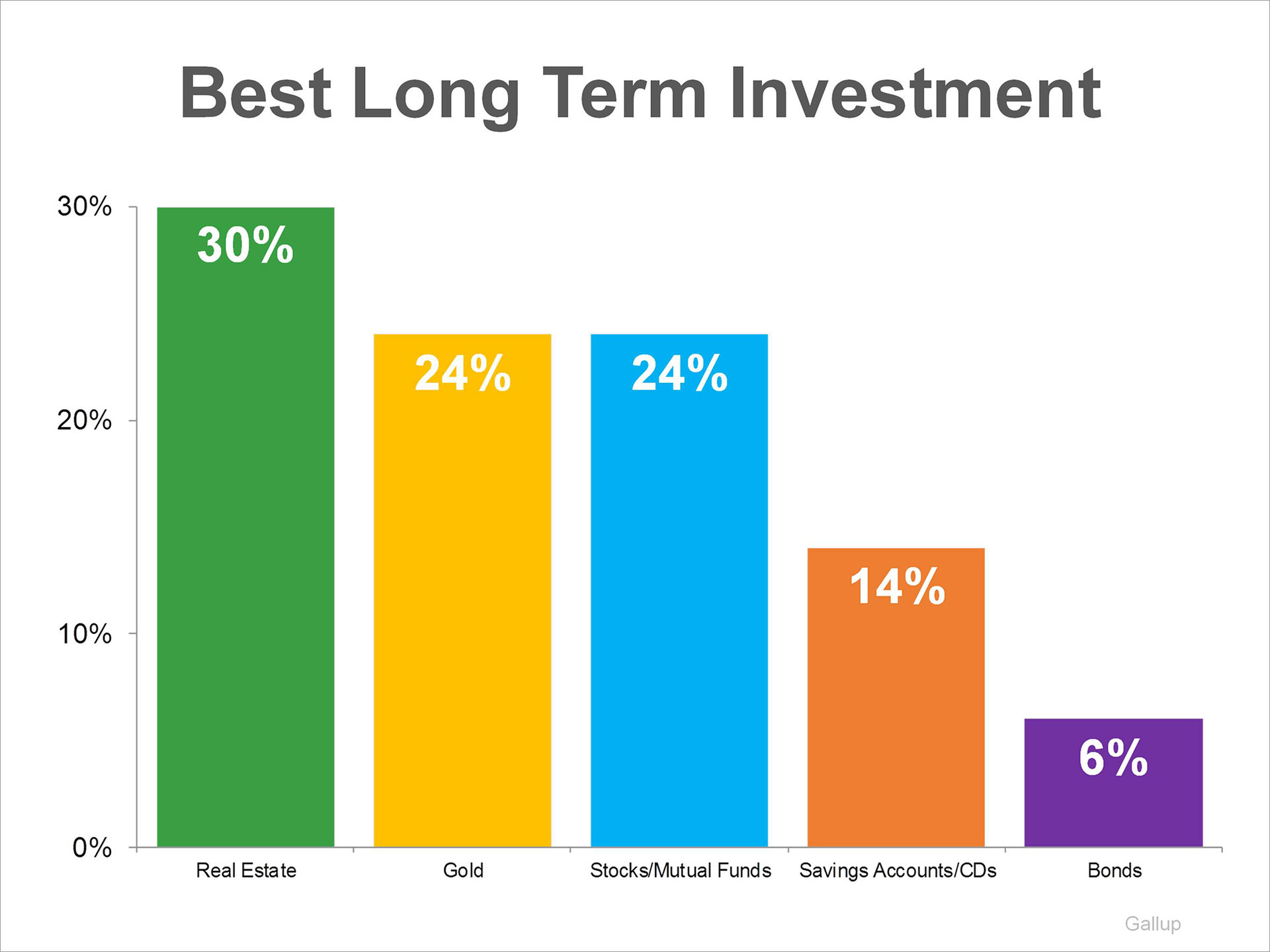
The Gallup organization conducts an annual report entitled the Economy and Personal Finances Poll, which asks Americans to choose the best option for long-term investment. It was no surprise that real estate returned to the top position over other investment categories (gold, stocks/mutual funds, savings accounts/CDs and bonds). Back in 2011, gold was the most popular long-term investment among Americans. However, with the housing market improving across the U.S. and home prices rising, more Americans now consider real estate the best option for long-term investments. Gallup Poll: Real Estate Best Long-Term Investment | Keeping Current Matters 

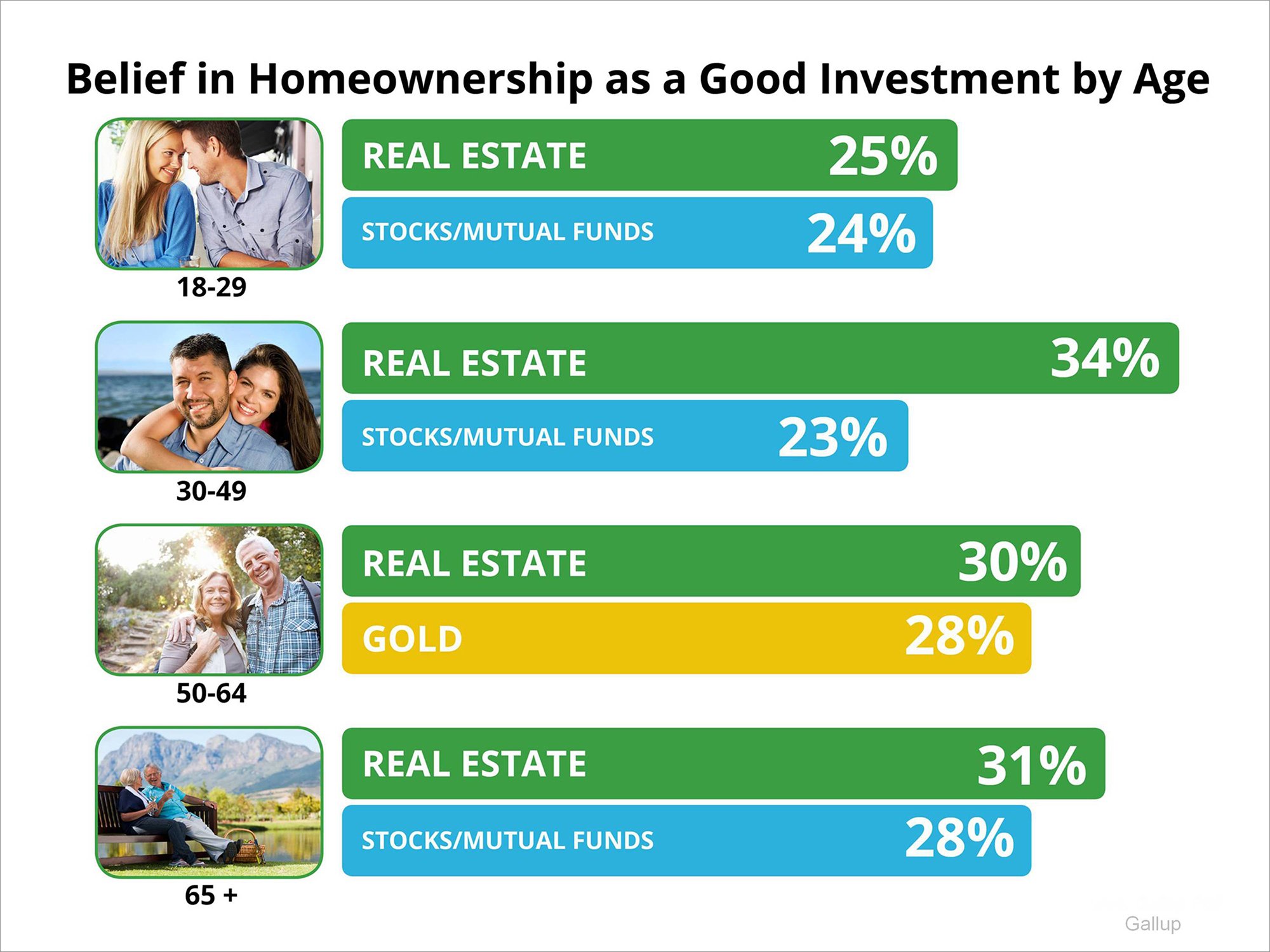
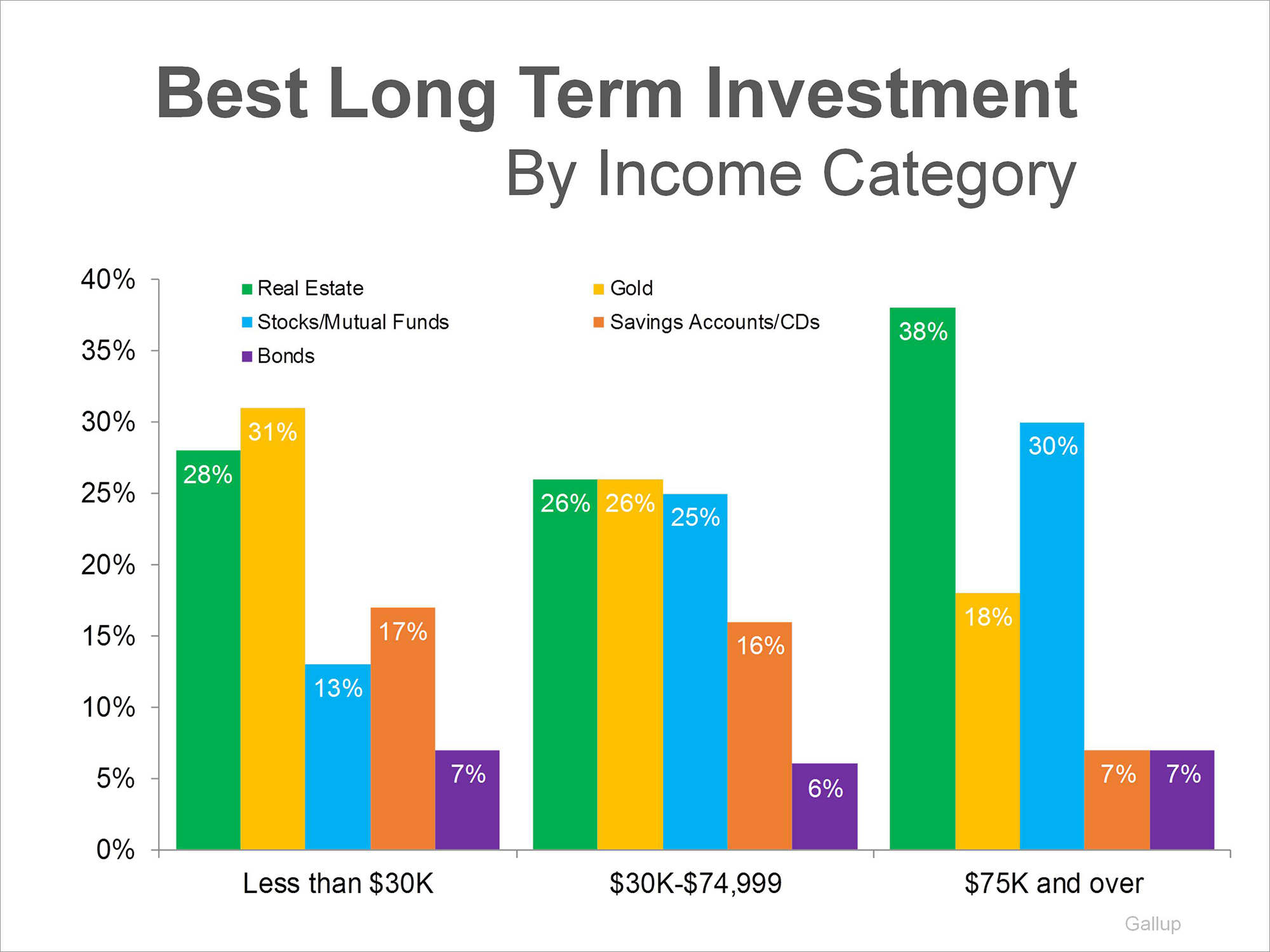
The poll also revealed that real estate was considered to be the best long-term investment by all four subgroups by age and two out of three by income: Gallup Poll: Belief By Age Gallup Poll: Belief By Income Level  

Oct. 27, 2014

3 Questions to Ask Before Buying a Home

3 Questions to Ask Before Buying a Home
3 Questions to Ask Before Buying a Home | Simplifying The Market 

If you are thinking about purchasing a home right now, you are surely getting a lot of advice. Though your friends and family have your best interests at heart, they may not be fully aware of your needs and what is currently happening in real estate. Let’s look at whether or not now is actually a good time for you to buy a home. There are three questions you should ask before purchasing in today’s market: 

1. Why am I buying a home in the first place?

This truly is the most important question to answer. Forget the finances for a minute. Why did you even begin to consider purchasing a home? For most, the reason has nothing to do with finances. A study by the Joint Center for Housing Studies at Harvard University reveals that the four major reasons people buy a home have nothing to do with money:

  • A good place to raise children and for them to get a good education
  • A place where you and your family feel safe
  • More space for you and your family
  • Control of the space

What non-financial benefits will you and your family derive from owning a home? The answer to that question should be the biggest reason you decide to purchase or not.

2. Where are home values headed?

When looking at future housing values, Home Price Expectation Survey provides a fair assessment. Every quarter, Pulsenomics surveys a nationwide panel of over one hundred economists, real estate experts and investment & market strategists about where prices are headed over the next five years. They then average the projections of all 100+ experts into a single number. Here is what the experts projected in the latest survey:

  • Home values will appreciate by 4% in 2015.
  • The cumulative appreciation will be 19.5% by 2018.
  • Even the experts making up the most bearish quartile of the survey still are projecting a cumulative appreciation of over 11.2% by 2018.

3. Where are mortgage interest rates headed?

A buyer must be concerned about more than just prices. The ‘long term cost’ of a home can be dramatically impacted by an increase in mortgage rates. The Mortgage Bankers Association (MBA), the National Association of RealtorsFannie Mae and Freddie Mac have all projected that mortgage interest rates will increase by approximately one full percentage over the next twelve months.

Bottom Line

Only you and your family can know for certain the right time to purchase a home. Answering these questions will help you make that decision.

Posted in Home Buyers
Oct. 23, 2014

Home Sales Hit Highest Level of the Year

Home Sales Hit Highest Level of the Year
Home Sales Hit Highest Level of the Year | Simplifying The Market 

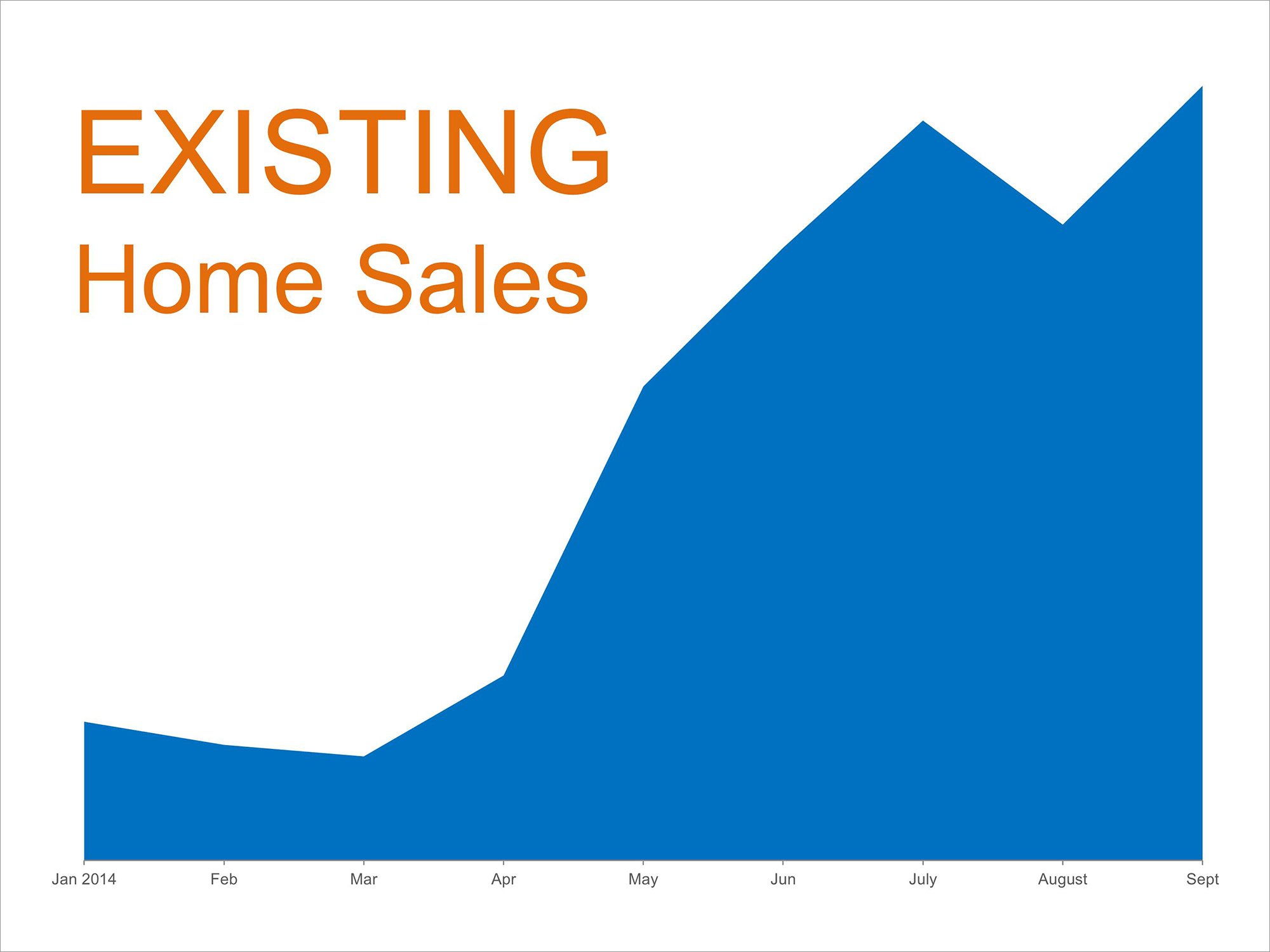
The National Association of Realtors (NAR) released their Existing Home Sales Report earlier this week. The report revealed that “sales bounced back in September to their highest annual pace of the year”. As the chart below shows, after a very slow start at the beginning of the year, residential home sales have been increasing nicely. NAR's Existing Home Sales Report  | Simplifying The Market

Oct. 21, 2014

#1 Reason You Should Sell Now

#1 Reason You Should Sell Now
#1 Reason You Should Sell Now | Simplifying The Market 

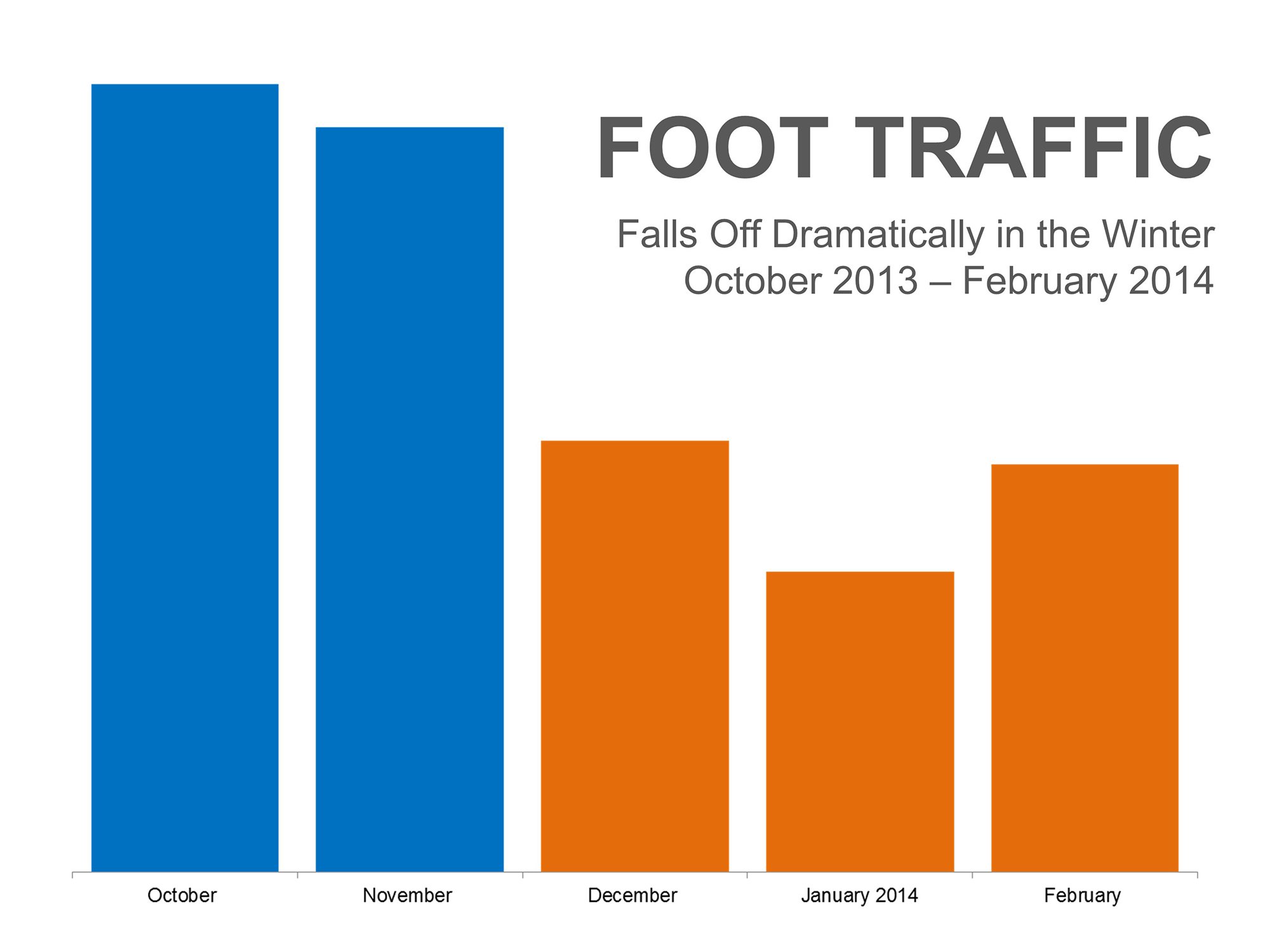
The price of any item (including residential real estate) is determined by ‘supply and demand’.  If the supply of an item is larger than the amount of people looking to purchase that item, the price will decrease. According to the National Association of Realtors (NAR), historically there is a natural decline in buyers looking to purchase a home (also known as foot traffic) as the winter months approach. Shown in the graph below: Foot Traffic To Decline in Winter Months | Simplifying The Market 

NAR goes a step further to say that there is a direct correlation between “foot traffic” and “pending contracts/closed sales one to two months later”.

Bottom Line

The real estate market has done well to recover from the slow start we experienced due in part to the inclement weather at the beginning of 2014.  But with those winter months right around the corner, now may be the best time to get the best price.

Posted in Home Sellers