Dec. 4, 2014

The Real Estate Market Has Turned The Corner

The Real Estate Market Has Turned The Corner
The Real Estate Market Has Turned The Corner | Simplifying The Market 

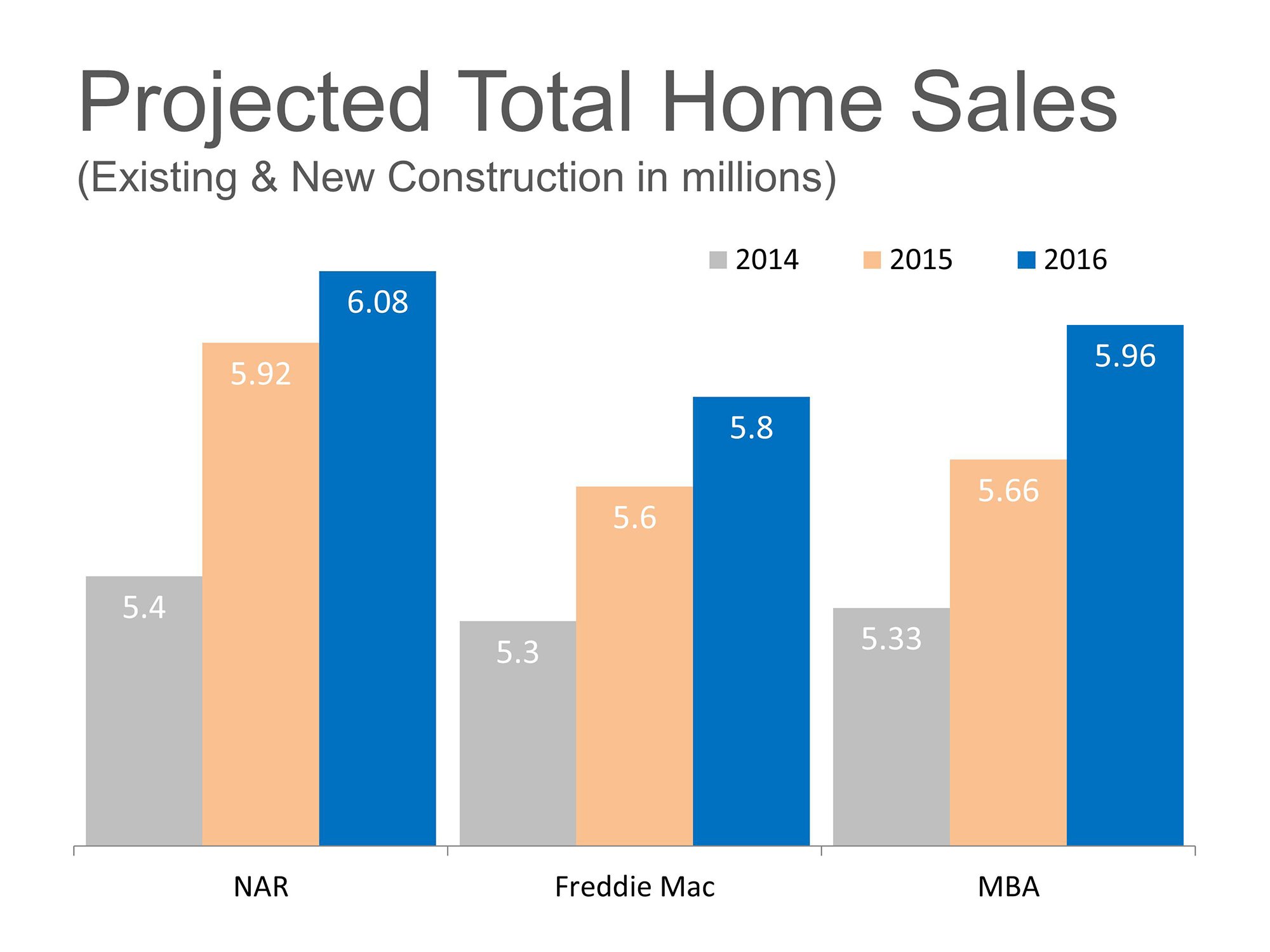
As we finish 2014, it appears the real estate market is once again on solid footing and ready to advance forward over the next few years. The strength of the market can be viewed using two metrics: projected home values and projected house sales. We recently reported that the Home Price Expectation Survey revealed future home values will continue to appreciate nicely. Today we want to look at projections on the number of home sales (existing and new construction) we will see over the next two years. We researched what the National Association of Realtors (NAR), Freddie Mac and the Mortgage Bankers’ Association (MBA) are projecting for the housing industry going forward. Here is what we found: 

The Real Estate Market Has Turned The Corner | Simplifying The Market 

All three entities see the number of home sales increasing in both 2015 and 2016. This is further proof the housing market is back.

Dec. 2, 2014

Sales Up in almost Every Price Range

Sales Up in almost Every Price Range
Sales Up in almost Every Price Range | Simplifying The Market 

The National Association of Realtors’ most recent Existing Home Sales Report 

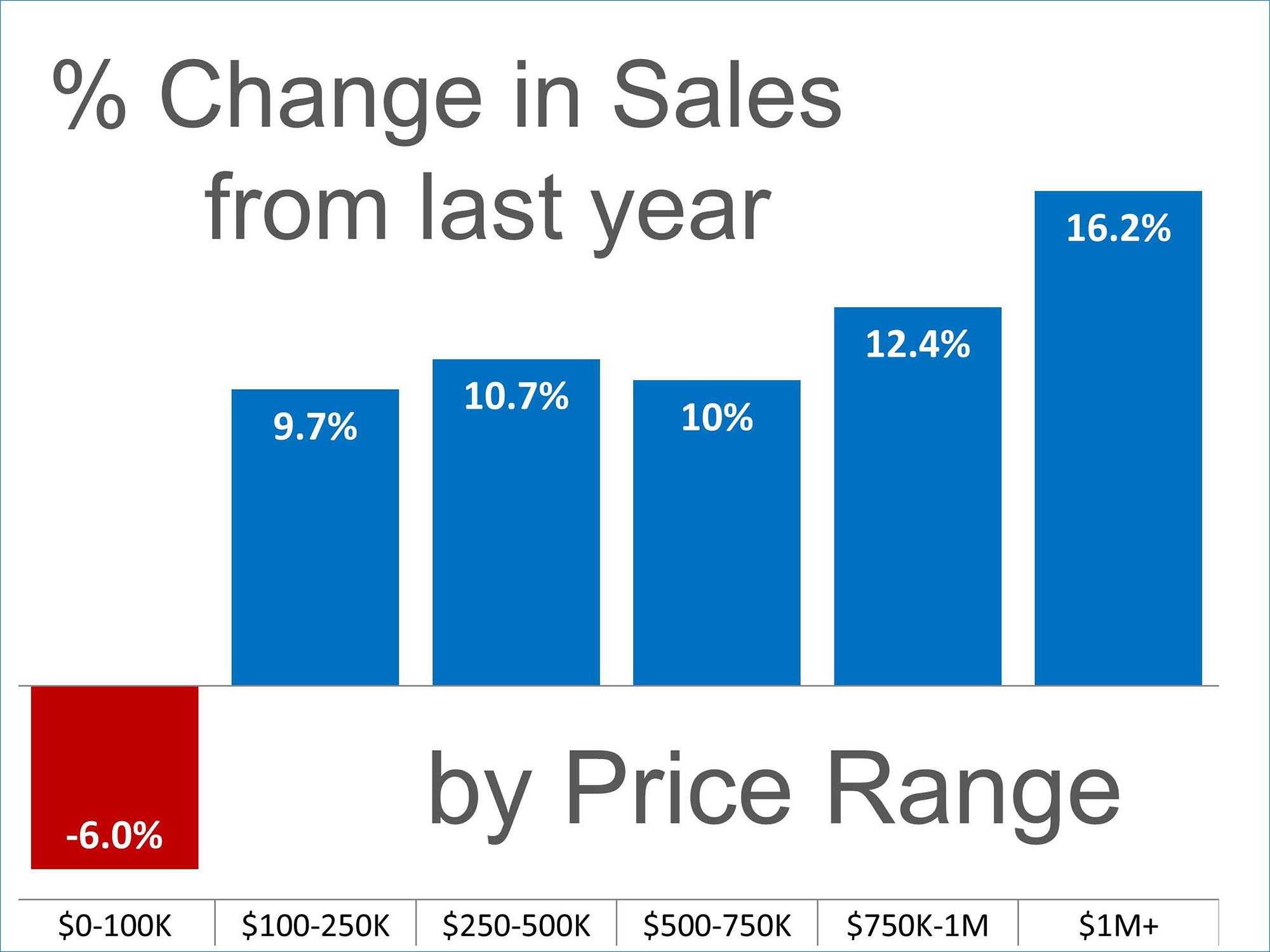
revealed that home sales were up rather dramatically over last year in five of the six price ranges they measure. Only those homes priced under $100,000 showed a decline (-6%). Every other category showed a minimum increase of at least 9.7%.

Here is the breakdown:

Sales Up in almost Every Price Range | Simplifying The Market

What does that mean to you if you are selling?

Houses are definitely selling. If your house has been on the market for any length of time and has not yet sold, perhaps it is time to sit with your agent and see if it is priced appropriately to compete in today’s market.

Dec. 1, 2014

Home Prices Continue to Rise

Home Prices Continue to Rise
Home Prices Continue to Rise | Simplifying The Market

“Broad-based Slowdown for Home Prices”

That is a headline you might have seen over the past weekend. And though it is true, we must understand the story behind the headline. Case Shiller reports on the year-over-year difference in home values. Their latest report revealed that the rate of appreciation has slowed – not that prices are falling!! Here is exactly what they said: “The 20-City Composite gained 4.9% year-over-year, compared to 5.6% in August.” Prices are still up this month over last year’s values (4.9%) just not as much as they were last month (5.6%).

Home Prices are NOT Falling.

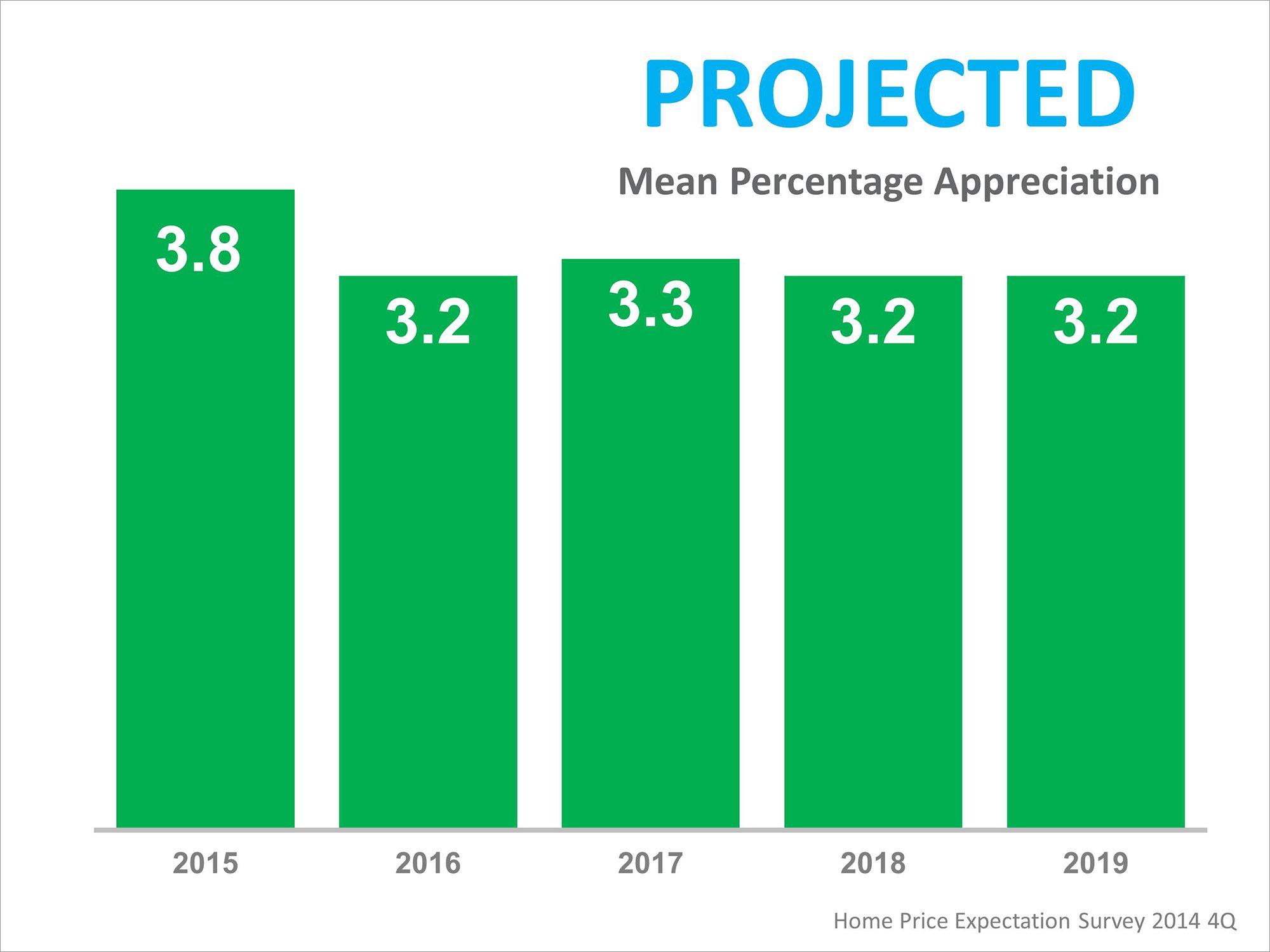
As a matter of fact, the latest Home Price Expectation Survey by Pulsenomics (a survey of a nationwide panel of over one hundred economists, real estate experts and investment & market strategists) showed that home prices will continue to appreciate for the next several years. Home Price Expectation Survey Projected Prices | Simplifying The Market

Bottom Line

Both first time buyers and families thinking of moving-up to their dream home can be assured that their investment in their new home makes sense.

Nov. 27, 2014

Have a Great Holiday!

Have a Great Holiday!
Have a Great Holiday! | Simplifying The Market

Nov. 26, 2014

Freddie Mac: Buy Sooner Rather than Later

Freddie Mac: Buy Sooner Rather than Later
Freddie Mac: Buy Sooner Rather than Later | Simplifying The Market 

In a recent video update on the housing market, Frank Nothaft, Freddie Mac’s chief economist, stated that with both mortgage interest rates and home prices projected to increase in 2015 buying now makes sense.

“If you are planning to buy a home in the next year, it’s better to do it sooner rather than later.”

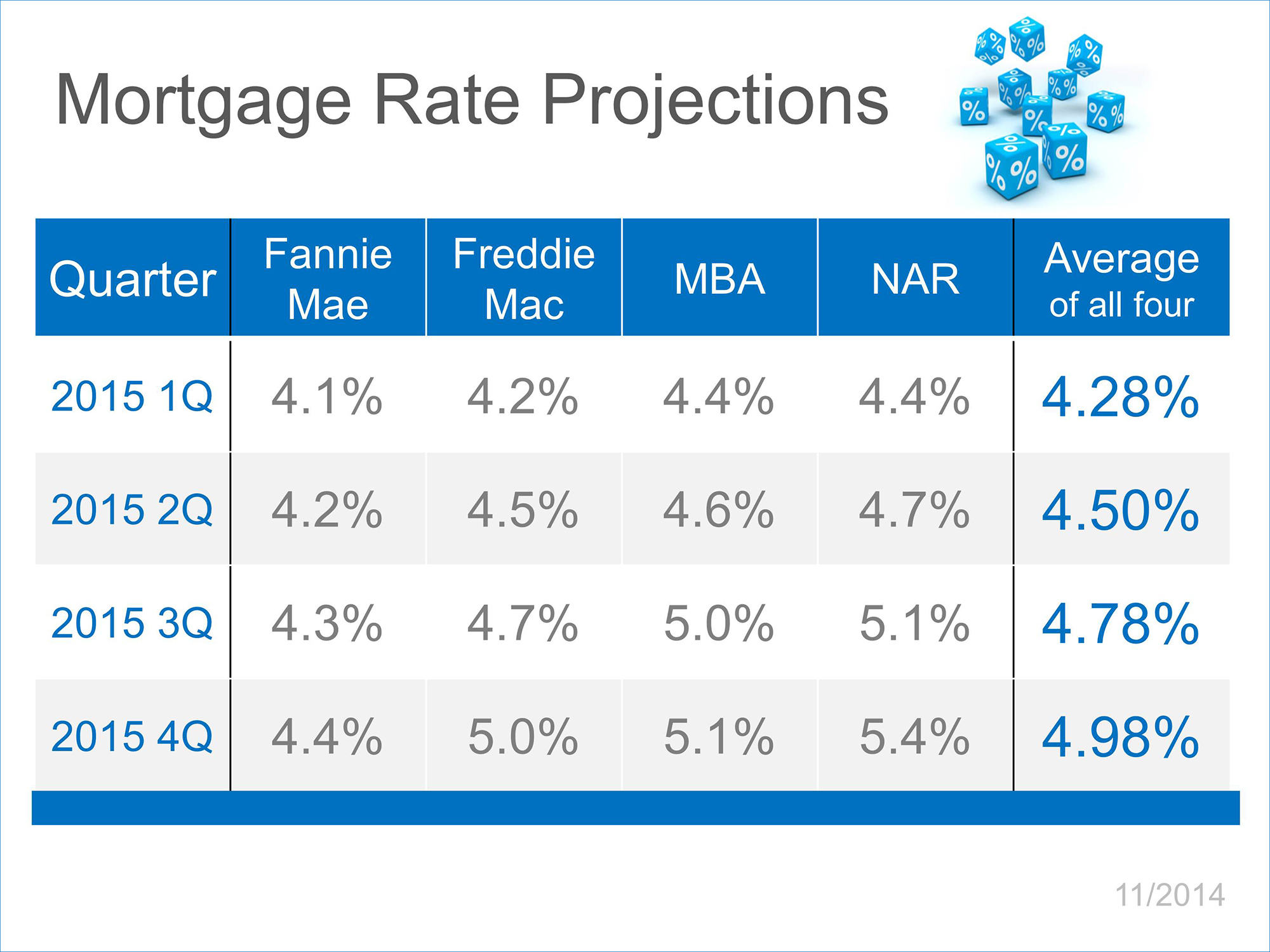
Here are the latest mortgage interest rate projections from four major housing entities: Fannie MaeFreddie Mac, the Mortgage Bankers Association (MBA) and the National Association of Realtors (NAR): 

Mortgage Rate Projections | Simplifying The Market

Thinking of Selling & Moving Up?

This advice isn’t limited to just the first time buyer. If you are considering moving up to the home your family has always wanted, waiting also makes no sense.

Nov. 25, 2014

Top 5 Benefits of Using a Professional to Buy a Home

Top 5 Benefits of Using a Professional to Buy a Home
Top 5 Benefits of Using a Professional to Buy A Home | Simplifying The Market 

Every year the National Association of REALTORS releases their Profile of Home Buyers & Sellers, in which they reveal the results of a yearlong survey of buyers and sellers. The latest profile revealed what actual buyers saw as the benefits of using an agent during the home buying process.

Here are the Top 5:

#1: Helped the Buyer Understand the Process

Whether it is your first time purchasing a home, or you’re an experienced buyer, there are over 230 possible actions that need to happen during every successful real estate transaction. Having someone to guide you through the process who can simply explain what is going on at every step of the way was sited as the top benefit by 63% of all buyers (that number jumped to 83% with first time buyers).

#2: Pointed Out Unnoticed Features/Faults with the Property

When you start the process of buying a home, you may be too excited to see each potential home for what it is, good and bad. An experienced professional can help you realize the potential hidden gems or risks before you make an offer.  Nearly 60% of all buyers listed this as a major benefit of hiring a professional.

#3: Improved the Buyer’s Knowledge of Search Areas

Whether you are looking to relocate to a new state, or just across town, having someone who knows the neighborhoods in which you are looking can be an invaluable asset.

#4: Negotiated Better Sales Contract Terms/Better Price

In today’s market, hiring a talented negotiator could save you thousands, perhaps tens of thousands of dollars. Each step of the way – from the original offer, to the possible renegotiation of that offer after a home inspection, to the possible cancellation of the deal based on a troubled appraisal – you need someone who can keep the deal together until it closes.

#5: Provided a better list of service providers

A great agent has relationships with mortgage professionals, home inspectors, appraisers and other experts that you will need in securing your dream home.

Bottom Line

If you are considering purchasing a home, whether as a first-time or move up buyer, sit down with a local experienced real estate professional in your area and see what they have to offer.

Posted in Home Buyers
Nov. 20, 2014

Proof that NOW is a Good Time to Sell

Proof that NOW is a Good Time to Sell
Proof that NOW is a Good Time to Sell 

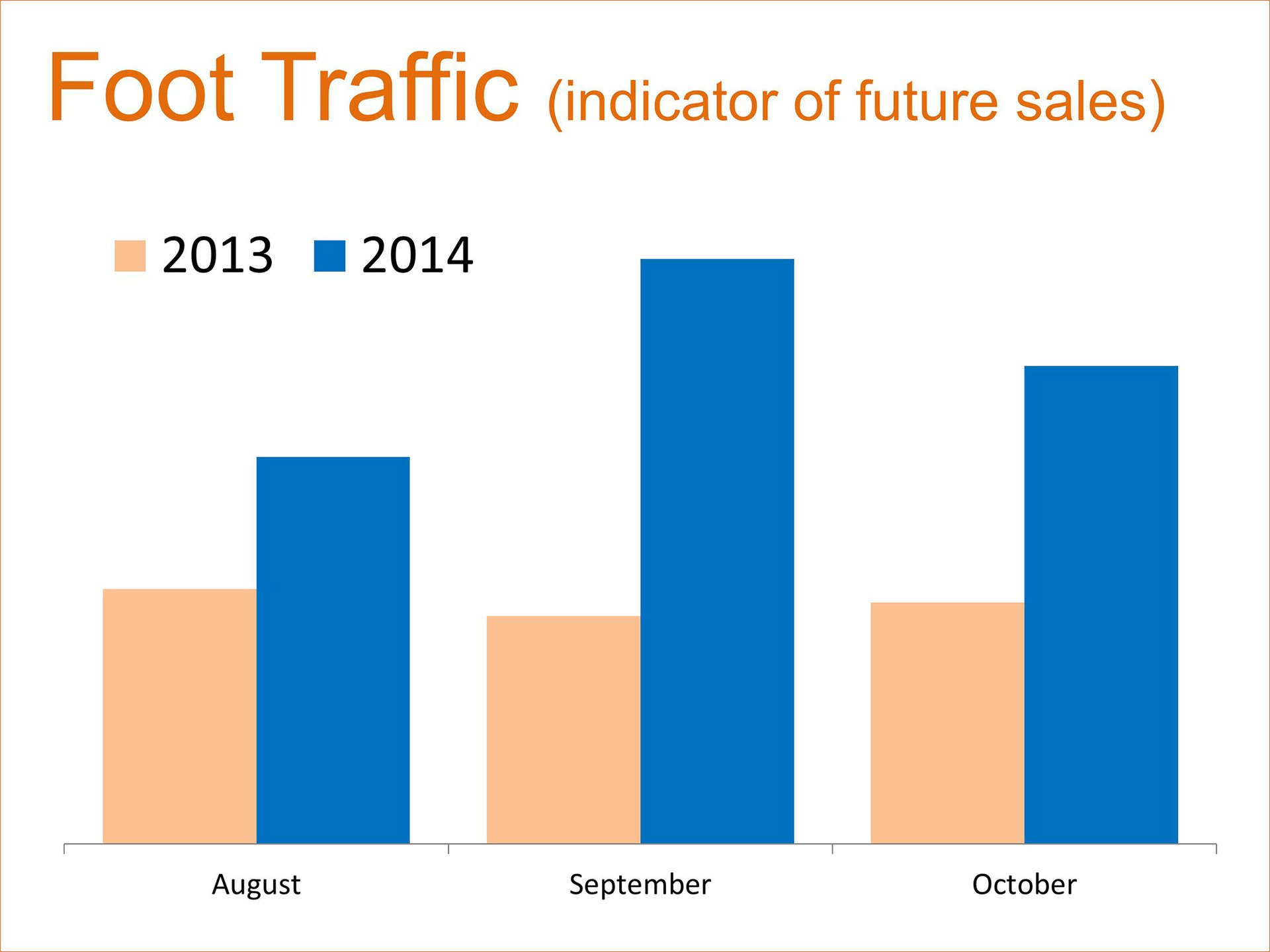
Most homeowners believe that the winter is not a good time to sell. This belief is based on the fact that historically the number of buyers decreases in the winter and then increases dramatically during the spring buying market. Though this is still true, there is an interesting pattern developing over the last few months. The number of prospective purchasers actively looking at a home (foot traffic) has remained strong going into the fall. As a matter of fact, the foot traffic far exceeds the numbers reported for the same months last year (see chart): Foot Traffic Still High 

At the same time, the National Association of Realtors revealed that the months’ supply of housing inventory has decreased from 5.5 months to 5.3. That equates to less competition for homeowners selling today as compared to next spring when many homeowners will decide to put their home on the market.

Bottom Line

Since buying activity is still strong, this might be a great time to put your house on the market.

Posted in Home Sellers
Nov. 19, 2014

The Importance of Using a Professional When Selling Your Home

The Importance of Using a Professional When Selling Your Home
The Importance of Using a Professional When Selling Your Home | Simplifying The Market 

When a homeowner decides to sell their house, they obviously want the best possible price with the least amount of hassles. However, for the vast majority of sellers, the most important result is to actually get the home sold. In order to accomplish all three goals, a seller should realize the importance of using a real estate professional. We realize that technology has changed the purchaser’s behavior during the home buying process. For the past two years, 92% of all buyers have used the internet in their home search according to the National Association of Realtors’ 2014 Profile of Home Buyers & Sellers. However, the report also revealed that for the second year in a row 96% percent of buyers that used the internet when searching for a home purchased their home through either a real estate agent/broker or from a builder or builder’s agent. Only 2% purchased their home directly from a seller whom the buyer didn’t know. Buyers search for a home online but then depend on an agent to find the actual home they will buy (53%) or negotiate the terms of the sale & price (31%) or understand the process (63%). Stephen Phillips, the Chief Operating Officer for HSF Affiliates LLC, put it best:

“Home buyers are more informed than ever with their Internet searches and ongoing research; however, there’s a critical need to transform that information into analysis and advice that helps consumers make the best home-buying and selling decisions.”

The plethora of information now available has resulted in an increase in the percentage of buyers that reach out to real estate professionals to “connect the dots”. This is obvious as the percentage of overall buyers who used an agent to buy their home has steadily increased from 69% in 2001. 

Bottom Line

If you are thinking of selling your home, don’t underestimate the role a real estate professional can play in the process.

Nov. 18, 2014

Where Are Prices Headed Over the Next 5 Years?

Where Are Prices Headed Over the Next 5 Years?
Where Are Prices Headed Over the Next 5 Years? | Simplifying The Market 

Today, many real estate conversations center on housing prices and where they may be headed. That is why we like the Home Price Expectation Survey. Every quarter, Pulsenomics surveys a nationwide panel of over one hundred economists, real estate experts and investment & market strategists about where prices are headed over the next five years. They then average the projections of all 100+ experts into a single number.  

The results of their latest survey

  • Home values will appreciate by 4.8% in 2014.
  • The cumulative appreciation will be 23.5% by 2019.
  • That means the average annual appreciation will be 3.6% over the next 5 years.
  • Even the experts making up the most bearish quartile of the survey still are projecting a cumulative appreciation of 15.1% by 2019.

Individual opinions make headlines. We believe the survey is a fairer depiction of future values.  

Nov. 12, 2014

Fear of Low Down Payments Mostly Unwarranted

Fear of Low Down Payments Mostly Unwarranted
Fear of Low Down Payments Mostly Unwarranted | Simplifying The Market 

After it was announced that Fannie Mae and Freddie Mac would again make available mortgage loans requiring as little as a 3% down payment, many people showed concern. Were we going back to the lower qualifying standards of a decade ago that caused the housing market crash? Won’t lower down payments dramatically increase the default rates? Will we again be faced with an avalanche of short sales and foreclosures? The simple answer is - NO. Let’s look at the data.

While it was happening (2011)

Back in 2011, as we were just recovering from the worst of the Great Recession, many organizations were looking for the cause of the massive default rate on mortgages. The National Association of Realtors (NAR), the Center for Responsible Lending (CRL), the Mortgage Bankers Association (MBA), the National Association of Home Builders (NAHB), the Community Banking Mortgage Project and the Mortgage Insurance Companies of America (MICA) issued a white paper on the subject titled: Proposed QRM Harms Creditworthy Borrowers and Housing Recovery. Let's look what the report says:

“In the midst of a very fragile housing recovery, the government is throwing a devastating, unnecessary and very expensive wrench into the American dream. First time homebuyers will have to choose between higher rates today or a 9-14 year delay while they save up the necessary down payment… High down payment and equity requirements will not have a meaningful impact on default rates. But they will require millions of consumers, who are at low risk of default, to either put off buying a home or pay unnecessarily high rates. The government is penalizing responsible consumers, making homeownership more expensive or simply out of reach for millions. We urge regulators to develop a final rule that encourages good lending and borrowing without punishing credit-worthy consumers.”

The report actually studied the impact a higher down payment would have had on the default rates of loans written from 2002 through 2008. The report states:

“…moving from a 5 percent to a 10 percent down payment on loans that already meet strong underwriting and product standards reduces the default experience by an average of only two- or three-tenths of one percent... Increasing the minimum down payment even further to 20 percent… (creates)  small improvement in default performance of about eight-tenths of one percent on average.”

Today  (2014)

Just last week, the Urban Institute reveled data showing what impact substantially lower down payments would have on default rates in today’s mortgage environment. Their study revealed:

“Of loans that originated in 2011 with a down payment between 3-5 percent, only 0.4 percent of borrowers have defaulted. For loans with slightly larger down payments—between 5-10 percent—the default rate was exactly the same. The story is similar for loans made in 2012, with 0.2 percent in the 3-5 percent down-payment group defaulting, versus 0.1 percent of loans in the 5-10 percent down-payment group.”

Bottom Line

We believe that the Institute concluded their report perfectly:

“Those who have criticized low-down payment lending as excessively risky should know that if the past is a guide, only a narrow group of borrowers will receive these loans, and the overall impact on default rates is likely to be negligible. This low down payment lending was never more than 3.5 percent of the Fannie Mae book of business, and in recent years, had been even less. If executed carefully, this constitutes a small step forward in opening the credit box—one that safely, but only incrementally, expands the pool of who can qualify for a mortgage.”
Posted in Home Buyers