.jpeg)
Cape Coral Waterfront Homes for Sale
The Long-Awaited Rise of the Seven Islands Project in Cape Coral — What’s Happening & What It Means for Real Estate Buyers
In Southwest Florida’s fast-moving market, Cape Coral’s Seven Islands development is one to watch. Below you’ll find a navigable guide with a table of contents, anchored sections, and a practical summary of the vision, status, risks, and timeline.
1. Introduction: A Major Waterfront Vision
Cape Coral has long been synonymous with canals, boating access, and waterfront living. Among its most ambitious plans is the Seven Islands project in the city’s northwest. It’s not a typical subdivision; it’s a mixed-use, marina-anchored concept intended to serve as a destination for residents and visitors, blending residential, hospitality, recreation, dining, and retail into one cohesive waterfront environment.
This article walks you through everything you need to know: what Seven Islands is, where it’s located, how the zoning works, what milestones have occurred, and what prospective buyers should weigh as the project advances. If you’re evaluating opportunities in Cape Coral or nearby, understanding Seven Islands can help you position for the years ahead.
2. Project Overview: What Is Seven Islands?
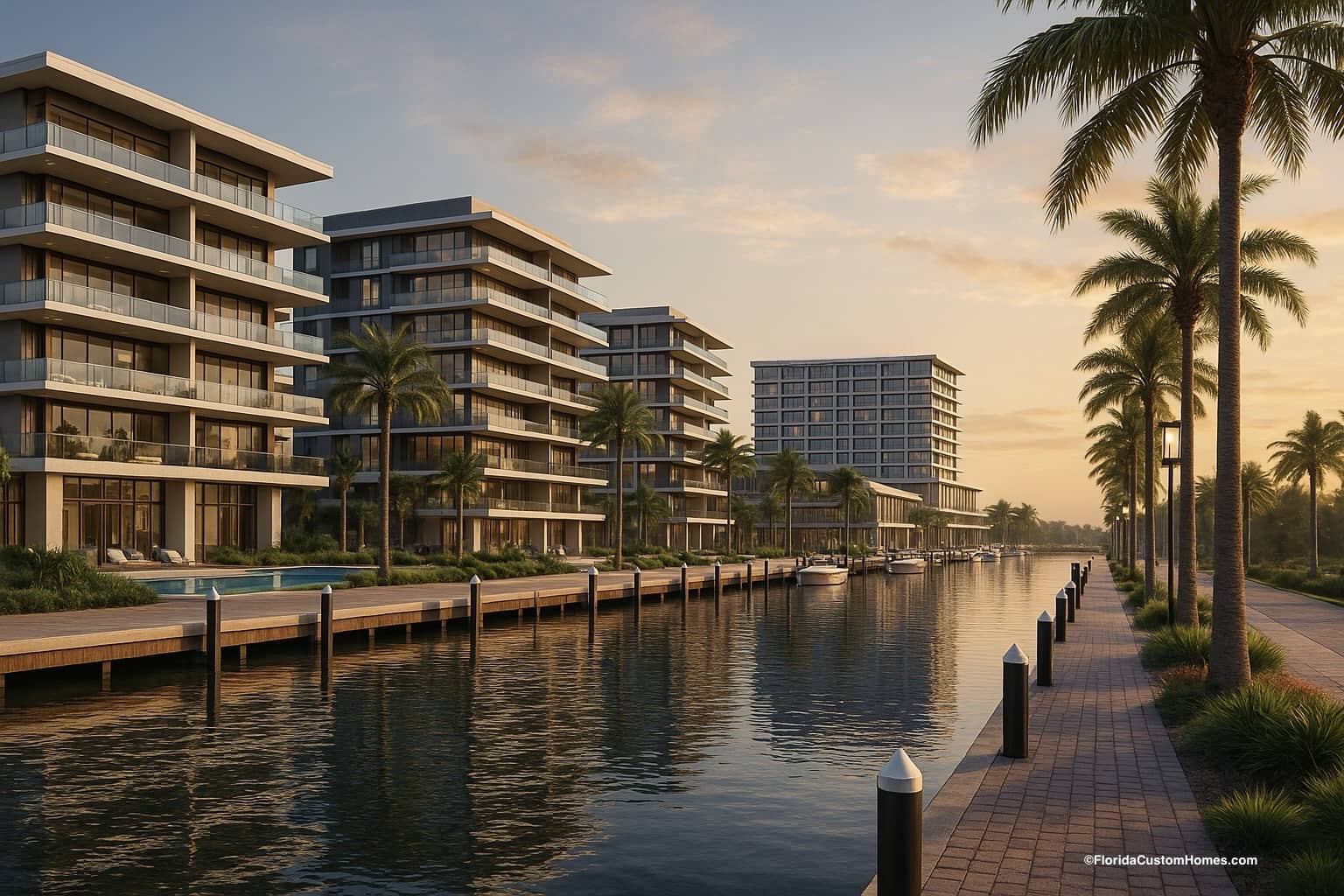
Seven Islands (also referenced as the Seven Islands District or under the working name “Gulf Gateway Resort & Marina Village”) is a planned, long-horizon development on roughly 47–48 acres along the North Spreader Canal in Northwest Cape Coral. The concept integrates waterfront residences, a resort or hotel component, public and private marina facilities, and a walkable, amenity-rich village core featuring restaurants, retail, and recreation.
Unlike purely residential plats, Seven Islands aims to create a destination that attracts boaters, residents, and day-trippers alike. Its scale and location make it a potential catalyst for broader neighborhood transformation, drawing investment, hospitality brands, and complementary commercial uses into an area that remains comparatively under-built.
.jpeg)
3. Location, Site & Zoning
Location
The planned site sits on the west side of Old Burnt Store Road, between Embers Parkway and Tropicana Parkway, fronting the North Spreader Canal (also called the Spreader Canal system). This places it within easy reach of Gulf access by boat while keeping automotive access to Cape Coral’s arterial network straightforward.
Zoning & Site Structure
Seven Islands is governed by a dedicated zoning district adopted after the city’s Northwest Cape & Seven Islands Vision Plan process. The district defines permitted uses, approximate height allowances, and total residential counts across the islands and associated frontage along Old Burnt Store Road. While exact programming can evolve through the entitlement and development agreement process, the zoning provides a structured framework for a mixed-use waterfront community.
Why the Setting Matters
Northwest Cape Coral retains a lower density profile compared with central and southeastern parts of the city. A flagship project of this type can deliver first-mover amenities—marina slips, waterfront dining, public spaces—that elevate the neighborhood’s appeal. For buyers, proximity to high-quality, new waterfront infrastructure often influences both lifestyle value and long-term appreciation potential.
4. Development Vision & Use Mix
The guiding idea is a complete waterfront village that balances living, leisure, and hospitality. While the exact phasing can shift as approvals and financing progress, the following elements typically anchor the vision:
Residential
Multiple islands are slated for multifamily residences—condominiums and apartments—organized to frame waterfront corridors and public spaces. The district caps overall unit counts to maintain scale and compatibility with the site’s coastal character.
Hotel / Resort & Recreation
Plans anticipate a resort-quality hotel component with amenities such as a pool and lagoon-style features, supplemented by community-oriented recreational spaces like an amphitheater, dog park, splash pad, trail connections, and kayak access points.
Commercial, Dining & Marina
Waterfront restaurants, casual eateries, and retail are expected to activate the village core. The marina is a defining piece: docks, slips, seawalls, and supportive boating infrastructure will serve residents and the public, enhancing the site’s role as a boating hub.
Phasing & Infrastructure
As with most coastal projects, early work emphasizes enabling infrastructure: dredging, seawalls, causeways, internal streetscapes, utilities, and shoreline stabilization. These pieces unlock subsequent vertical construction and are central to the project’s long-term success.
5. Current Status & Milestones
Seven Islands has moved beyond concept and visioning into the formal entitlement and permitting arena. The city’s vision plan and zoning for the district are in place, and major environmental and infrastructure permits are in process. A key federal filing addressed dredging, seawalls, docks, and related in-water work—typical prerequisites for a marina-centric site.
At the time of writing, the most visible next steps revolve around finalizing development agreements, securing complete permit approvals, and sequencing early infrastructure mobilization. While renderings and site plans illustrate the end-state, stakeholders should expect phased delivery across a multi-year horizon; large, waterfront, mixed-use districts commonly build out over seven to ten years once ground activity begins in earnest.
.jpeg)
6. Why It Matters to Real Estate Buyers in Southwest Florida
New Inventory with Destination-Level Amenities
By combining residences with marina access, hospitality, and waterfront dining, Seven Islands can alter the desirability curve for the surrounding neighborhoods. Buyers often prioritize walkability to amenities, boater conveniences, and the energy of a mixed-use waterfront district.
Early-Entry Potential
Northwest Cape Coral’s relative under-development leaves room for early adopters who are comfortable with phased delivery. Purchasing nearby—or in the earliest released phases—may offer upside if the project achieves its vision and leasing/absorption remain strong.
Connectivity & Public Realm
Causeways, promenades, waterfront parks, and trail links do more than support the site—they create a sense of place. Public realm improvements are a rising tide that can lift values citywide, particularly along the Old Burnt Store corridor.
Resale Signaling
Association with a branded, amenity-rich waterfront address can influence perception and liquidity over time, especially if the tenant mix (restaurants, retail, hospitality) resonates with both locals and visitors.
7. Risks & Considerations
Timing & Execution
Multi-phase waterfront districts are complex. Environmental reviews, cost inflation, labor availability, and market cycles can stretch timelines. Buyers should calibrate expectations to a long-horizon delivery model.
Environmental & Permitting
Marina infrastructure requires rigorous federal, state, and local approvals. Iterations to scope or sequencing can occur as agencies review technical details. Such steps are common—but they can affect timing.
Market Dynamics
Interest rates, regional job growth, insurance and construction costs, and travel trends all influence absorption and pricing. While Cape Coral demand has been resilient, macro forces still matter.
Infrastructure First
Before the village sparkles with restaurants and balconies over the water, the unglamorous groundwork—dredging, seawalls, utilities—must be completed. Early buyers should be comfortable with an interim period where amenities are still coming online.
Community Fit
Traffic, parking, building heights, and shoreline activation are frequent topics in public meetings. Projects perform best when they embrace context and community input; expect ongoing coordination as phases proceed.
8. Timeline & What to Watch
Below is a high-level progression and a watchlist to help you track meaningful signals:
| Date | Milestone |
|---|---|
| 2015–2016 | Design charrette and formal Northwest Cape & Seven Islands Vision Plan process; policy groundwork for a mixed-use waterfront district. |
| 2019 | Seven Islands zoning district adopted; parameters set for use mix, heights, and overall residential counts. |
| 2022 | Developer presentations refine concept; city deliberation on scope and delivery sequencing. |
| Late 2024 | Key federal permit application submitted addressing dredging, seawalls, docks, and in-water infrastructure—an essential step for marina functionality. |
| 2025 → | Development agreements, sequential permits, and early-stage infrastructure mobilization expected; vertical construction to follow in phases over a multi-year horizon. |
Watchlist Going Forward
- Groundbreaking & Site Work: visible earthwork, shoreline stabilization, dredging, and causeway construction.
- Building Permits: issuance for vertical phases (residential, hotel, commercial pads).
- Marina Delivery: docks, slips, and seawalls coming online—often a key unlock for village activation.
- Tenant Announcements: anchor restaurants and retail commitments signal market confidence.
- Pre-Sales/Leasing: pricing, absorption, and incentives for early residential releases.
- Neighborhood Comps: monitor nearby home and land value trends along Old Burnt Store and adjacent corridors.
.jpeg)
9. Conclusion: Moving Forward
Seven Islands is poised to become one of Cape Coral’s most consequential waterfront districts. The vision is ambitious: a marina-anchored village with residences, hospitality, dining, retail, and public spaces that elevate both lifestyle and long-term value. The project has advanced through visioning, zoning, and permitting, with infrastructure-first steps setting the stage for phased vertical construction.
For buyers, this moment offers both promise and prudence. If you believe in the concept and can embrace a staged delivery arc, early proximity can be strategic. Just be sure your timeline, budget, and expectations align with the realities of multi-year coastal development. Track the watchlist above, and reassess as milestones are met—groundwork, building permits, marina activation, and tenant announcements will all be pivotal signals.
Whether you’re evaluating a primary residence, vacation home, or investment, use the project’s progression to guide your entry point. With careful due diligence and a clear horizon, Seven Islands can be more than a headline—it can be a thoughtfully timed opportunity in one of Southwest Florida’s signature waterfront cities.