How to Start an Airbnb in Cape Coral: 2026 Guide for Beginners
Starting an Airbnb in Cape Coral can be a profitable opportunity, especially with the area’s strong demand for waterfront vacation homes, private pool homes, boating access, and seasonal rentals. However, it is not as simple as buying a property, furnishing it, and listing it online. There are rules, licensing requirements, tax obligations, insurance considerations, and property selection factors that every owner should understand before getting started.
This guide breaks down the basic steps in plain English so you can better understand what may be required to start an Airbnb or short-term vacation rental in Cape Coral, Florida.
Table of Contents
- Why Cape Coral Is Popular for Airbnb
- 1. Make Sure the Property Allows Short-Term Rentals
- 2. Register Your Rental with the City of Cape Coral
- 3. Get a Florida Vacation Rental License
- 4. Understand Short-Term Rental Taxes
- 5. Meet Safety Requirements
- 6. Get the Right Insurance
- 7. Understand Rental Timing Rules
- 8. Set Up the Home for Success
- 9. Decide Who Will Manage the Property
- 10. Buy the Right Airbnb Property
- What Does It Cost to Start an Airbnb in Cape Coral?
- Final Thoughts
- Need Help Finding the Right Airbnb Property?
Why Cape Coral Is Popular for Airbnb
Cape Coral is one of Southwest Florida’s most attractive vacation rental markets because it offers a lifestyle many visitors specifically search for: waterfront homes, boating access, private pools, outdoor living areas, and proximity to beaches, restaurants, fishing, and island destinations.
Cape Coral is especially appealing to short-term rental guests because of:
- Hundreds of miles of canals
- Many Gulf-access waterfront homes
- Strong seasonal demand from winter visitors and snowbirds
- Private pool homes that appeal to families and vacationers
- Easy access to Fort Myers, Sanibel, Captiva, Matlacha, and Pine Island
However, success depends heavily on buying the right property and understanding the rules before you invest.
1. Make Sure the Property Allows Short-Term Rentals
Before purchasing or listing a property as an Airbnb, the first step is confirming that short-term rentals are allowed.
You should review:
- City rental rules
- HOA restrictions
- Condo association rules
- Deed restrictions
- Minimum rental periods
This is extremely important because some communities may restrict rentals to 30 days, 60 days, 90 days, or longer. Some condo associations may prohibit short-term rentals entirely.
Key takeaway: Single-family homes often offer more flexibility than condos or homes located inside highly regulated associations.
2. Register Your Rental with the City of Cape Coral
Cape Coral requires residential rental properties to be registered with the city. If you plan to operate a short-term rental, you should confirm the current registration requirements directly with the City of Cape Coral before advertising the property.
You can review the city’s rental registration information here:
City of Cape Coral Official Website
Typical items may include:
- Annual rental registration
- Owner information
- Property address
- Rental classification
- Annual renewal
- Registration fee
Failing to register properly can result in penalties, fines, or enforcement issues.
3. Get a Florida Vacation Rental License
In many cases, short-term vacation rentals in Florida must be licensed through the Florida Department of Business and Professional Regulation, commonly known as DBPR.
You can learn more through the state agency here:
Florida Department of Business and Professional Regulation
The DBPR license is separate from any city registration requirement. Think of it as your state-level approval to operate a vacation rental.
You may need to provide:
- Owner information
- Property information
- Rental type
- Occupancy information
- Safety compliance details
- License fee payment
Because licensing rules can change, it is always smart to confirm the current requirements directly with DBPR or a qualified professional before operating.
4. Understand Short-Term Rental Taxes
Airbnb and vacation rentals are generally taxed similarly to hotel stays. In Cape Coral, owners should understand state, county, and local tax obligations.
Taxes may include:
- Florida sales tax
- Local discretionary sales surtax
- Lee County tourist development tax
You can review Lee County tourist tax information here:
Lee County Tourist Development Tax Information
Many booking platforms, including Airbnb and VRBO, may collect and remit certain taxes on your behalf. However, if you take direct bookings through your own website, social media, or repeat guests, you may be responsible for collecting and remitting the proper taxes yourself.
Important: Always confirm tax responsibilities with your accountant, the Florida Department of Revenue, and Lee County before accepting bookings.
5. Meet Safety Requirements
Guest safety is one of the most important parts of operating a short-term rental. A Cape Coral Airbnb should be equipped and maintained like a professional hospitality property.
Common safety items include:
- Smoke detectors
- Carbon monoxide detectors, when applicable
- Fire extinguishers
- Pool safety features
- Exterior lighting
- Secure locks
- Emergency contact instructions
- Posted house rules
In Southwest Florida, safety also includes storm preparation. Owners should consider hurricane shutters, impact windows, flood preparation, emergency instructions, and a plan for securing outdoor furniture before a storm.
6. Get the Right Insurance
A standard homeowner’s insurance policy may not properly cover short-term rental activity. Before hosting guests, speak with an insurance professional who understands vacation rental properties in Florida.
You may need:
- Vacation rental insurance
- Commercial liability coverage
- Flood insurance
- Windstorm or hurricane coverage
- Loss-of-income coverage
- Umbrella liability coverage
This is especially important in Cape Coral because many properties include pools, docks, boat lifts, canals, waterfront exposure, and storm-related risks.
7. Understand Rental Timing Rules
Cape Coral’s vacation rental market is often driven by weekly stays, seasonal stays, and winter visitors. This means the business model is different from a nightly urban Airbnb in a downtown area.
Before buying, you should understand:
- Minimum rental periods
- HOA or condo rental limits
- Seasonal demand patterns
- Peak-season pricing
- Off-season vacancy risk
Many Cape Coral vacation rental guests are looking for a full-week vacation, especially if the home has a pool, waterfront setting, or boating access.
8. Set Up the Home for Success
The most successful Airbnb properties in Cape Coral are not just clean and furnished. They are designed around the vacation experience.
Features that can help a Cape Coral Airbnb stand out include:
- Heated pool and spa
- Outdoor kitchen or grill area
- Screened lanai
- Waterfront views
- Dock or boat access, when permitted
- Modern coastal interior design
- Fast Wi-Fi
- Smart TVs
- Comfortable beds
- Workspace for remote workers
- Beach gear, bikes, kayaks, or games
Guests are choosing your home over a hotel, so the property needs to offer comfort, convenience, and a memorable Florida lifestyle.
9. Decide Who Will Manage the Property
Managing an Airbnb is not passive income. Even a great property requires constant attention.
You or your property manager will need to handle:
- Guest communication
- Booking calendars
- Cleaning coordination
- Maintenance issues
- Pool service
- Lawn care
- Pricing strategy
- Reviews
- Emergency calls
- Storm preparation
Some owners self-manage to increase profit. Others hire a local vacation rental management company to reduce the workload. The right answer depends on your experience, availability, and comfort level.
10. Buy the Right Airbnb Property
The purchase is where many Airbnb investors either create an advantage or make a costly mistake.
In Cape Coral, stronger Airbnb candidates often include:
- Waterfront homes
- Direct Gulf-access homes
- Homes with pools
- Southern or western rear exposure
- Updated kitchens and bathrooms
- Newer roofs, windows, and mechanical systems
- Attractive outdoor living areas
- Locations close to boating, dining, shopping, and entertainment
Properties that may struggle include homes with dated interiors, poor outdoor space, weak photos, limited amenities, restrictive HOA rules, or locations that do not appeal to vacation renters.
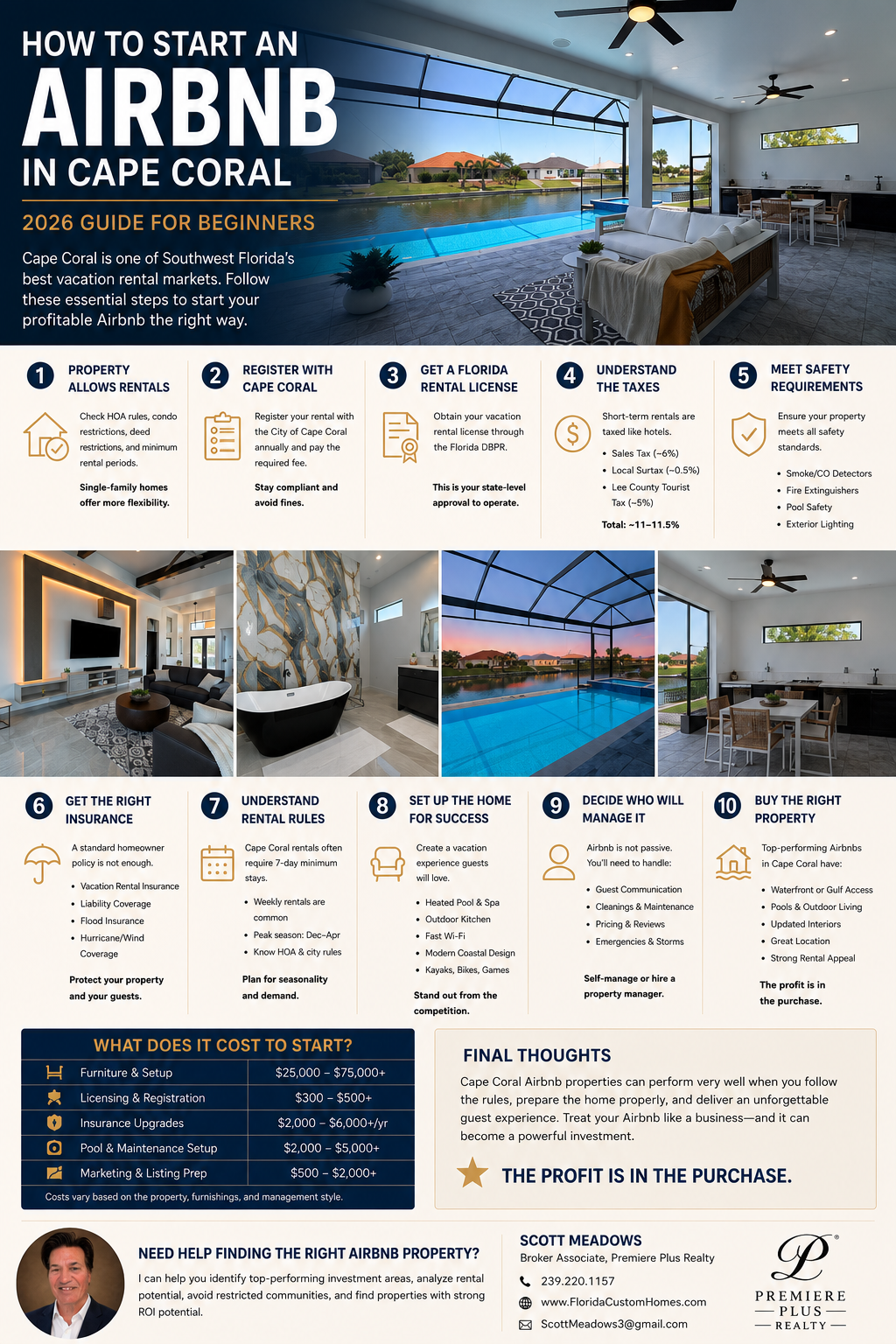
What Does It Cost to Start an Airbnb in Cape Coral?
Startup costs vary depending on the property, condition, furnishings, and management style. However, buyers should budget realistically before purchasing.
| Expense | Estimated Cost |
|---|---|
| Furniture and setup | $25,000 – $75,000+ |
| Licensing and registration | $300 – $500+ |
| Insurance upgrades | $2,000 – $6,000+ per year |
| Pool and maintenance setup | $2,000 – $5,000+ |
| Marketing and listing preparation | $500 – $2,000+ |
These are general estimates. Actual costs can vary significantly based on the home, furnishings, insurance market, flood zone, property condition, and guest expectations.
Final Thoughts
Starting an Airbnb in Cape Coral can be a strong investment opportunity, but it needs to be approached like a real business. The most successful owners understand the rules, buy the right property, set up the home correctly, and manage the guest experience professionally.
Cape Coral vacation rentals can perform especially well when they offer:
- Waterfront views
- Private pool areas
- Outdoor living space
- Boating access
- Updated interiors
- A strong vacation lifestyle experience
At the same time, owners must plan for insurance, taxes, licensing, storm risk, maintenance, seasonality, and competition.
The profit is in the purchase. Choosing the right property from the beginning can make all the difference.
Need Help Finding the Right Airbnb Property in Cape Coral?
The biggest mistake many investors make is buying the wrong home for short-term rental use. A property may look attractive online but still have problems with location, rental restrictions, insurance costs, flood risk, guest appeal, or resale value.
If you are considering starting an Airbnb or vacation rental in Cape Coral, I can help you evaluate properties based on:
- Rental potential
- Location strength
- Waterfront and Gulf-access value
- HOA and rental restrictions
- Flood zone and insurance considerations
- Long-term resale potential
Scott Meadows
Broker Associate, Premiere Plus Realty
Phone: 239.220.1157
Website: www.FloridaCustomHomes.com
Email: ScottMeadows3@gmail.com