Learn more about Real Estate Investing @FloridaCustomHomes.com/blog/category/investments
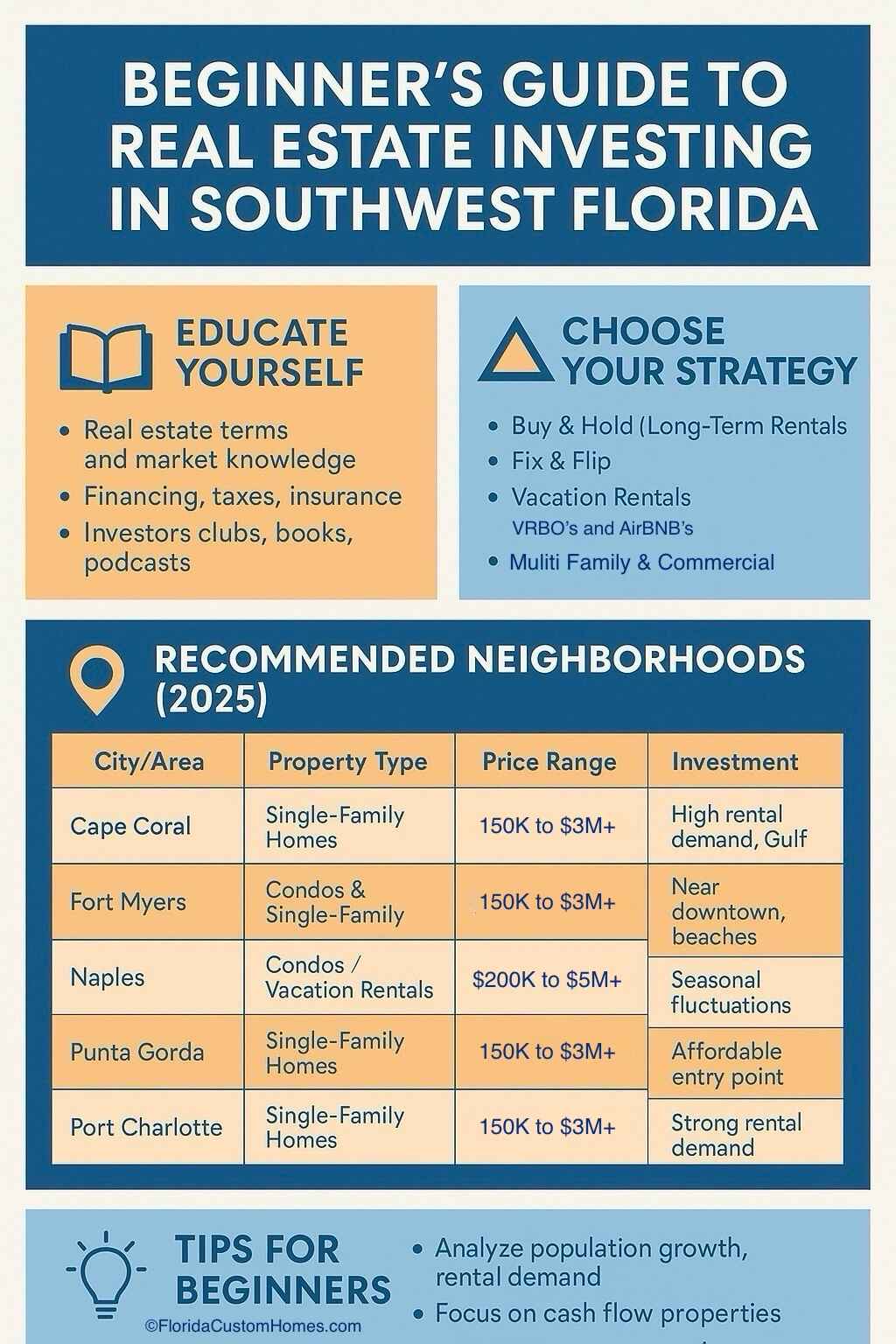
Beginner's Guide to Real Estate Investing in Southwest Florida
Southwest Florida is a dynamic region with incredible real estate opportunities for both new and seasoned investors. From Cape Coral to Naples, Fort Myers, Punta Gorda, and Port Charlotte, this region offers a mix of waterfront properties, vacation rentals, and affordable single-family homes. Whether your goal is steady cash flow, long-term appreciation, or flipping homes for profit, understanding the local market is critical. This guide is designed for beginners looking to confidently start investing in 2025 and beyond.
Table of Contents
- 1. Educate Yourself
- 2. Choose Your Investment Strategy
- 3. Analyze the Southwest Florida Market
- 4. Financing & Budgeting
- 5. Build Your Local Team
- 6. Focus on Cash Flow Properties
- 7. Use Local Resources
- 8. Start Small and Scale
- 9. Be Patient and Strategic
- 10. Recommended Neighborhoods & Price Ranges
- 11. Hurricane & Flood Insurance Considerations
- 12. Tax Benefits for Real Estate Investors
1. Educate Yourself
Education is the foundation of successful real estate investing. Take the time to understand key concepts, local regulations, and market trends:
- Real Estate Terms: Learn about cap rate, cash-on-cash return, ROI, ARV (After Repair Value), occupancy rates, and depreciation.
- Market Knowledge: Southwest Florida is highly localized. Cape Coral’s canal-front homes differ from Naples’ high-end condos or Port Charlotte’s affordable single-family homes.
- Financing & Loans: Understand the difference between conventional loans, FHA loans, portfolio loans, and lines of credit.
- Insurance: Florida’s hurricane and flood risk requires familiarity with insurance options, Risk Rating 2.0, and flood zone classifications.
- Local REI Groups: Attend real estate investor meetups, webinars, and workshops to network and learn from experienced investors.
- Online Resources: Utilize tools like Zillow, Realtor.com, Redfin, and local MLS data to monitor sales trends, rental rates, and property values.
Starting with a strong foundation will help you avoid costly mistakes and confidently evaluate opportunities.
2. Choose Your Investment Strategy
Your investment strategy should align with your goals, timeline, and risk tolerance. Popular strategies in Southwest Florida include:
Buy & Hold (Long-Term Rentals)
Buying rental properties can generate steady monthly income while the property appreciates over time. Single-family homes, condos, and townhomes in areas with strong rental demand are ideal. Cape Coral and Fort Myers are particularly attractive due to population growth and year-round rental demand.
Fix & Flip
This strategy involves purchasing undervalued properties, renovating them, and selling for profit. Look for neighborhoods with strong appreciation potential and affordable repair costs. Timing, contractor reliability, and budget management are key to success.
Vacation Rentals / Short-Term Rentals
Southwest Florida’s coastal cities, including Naples, Fort Myers Beach, and Sanibel Island, offer high potential for short-term rentals. While income can be substantial, seasonality, occupancy rates, and local regulations must be considered.
Multi-Family & Commercial Investments
Duplexes, triplexes, and small apartment buildings provide multiple income streams from one property. Although they require higher upfront investment and more complex management, they can offer better returns and risk diversification.
3. Analyze the Southwest Florida Market
Market research is critical. Focus on these areas:
- Population & Job Growth: Cities like Cape Coral, Punta Gorda, and Port Charlotte are experiencing strong population increases and new businesses opening.
- Rental Demand: High demand in areas near beaches, downtown districts, and employment centers ensures consistent cash flow.
- Seasonality: Southwest Florida has a peak tourist season, which impacts vacation rentals and short-term occupancy rates.
- Property Appreciation: Study trends in home prices, median sales prices, and market cycles to make informed buying decisions.
- Resiliency: Modern construction and hurricane-resistant homes help maintain property value and reduce insurance premiums.
4. Financing & Budgeting
Proper financing is essential for maximizing returns and managing risk:
- Begin with smaller properties to gain experience before scaling up.
- Conventional investment loans generally require 20–25% down. FHA loans may be available for multi-unit properties if you occupy one unit.
- Maintain a cash reserve for unexpected repairs, property management costs, and vacancy periods.
- Consider partnerships or syndication to pool capital for higher-value properties.
5. Build Your Local Team
A reliable team is crucial to success:
- Real Estate Agent: Preferably one experienced in investment properties and local market trends.
- Property Manager: Essential if managing multiple rental properties or vacation rentals.
- Contractors & Inspectors: Critical for fix & flip or renovations, ensuring quality and cost-effective work.
- CPA / Accountant: Helps with tax planning, depreciation, 1031 exchanges, and structuring investments efficiently.
- Insurance Agent: Specializing in flood and hurricane coverage to mitigate risk and control costs.
6. Focus on Cash Flow Properties
Positive cash flow is the backbone of investment success. Before buying, calculate:
- Gross rental income
- Mortgage payments
- Property taxes and insurance (including hurricane/flood)
- Maintenance and management costs
Properties relying solely on appreciation can be risky, especially during market corrections.
7. Use Local Resources
- MLS, Realtor.com, Zillow, and Redfin for sales comps and rental estimates.
- Local REI clubs and meetups to gain mentorship and network with investors.
- County and city websites for building permits, flood maps, and upcoming development plans.
8. Start Small and Scale
Investing in 1–2 properties allows beginners to learn without overextending. As experience grows, reinvest profits into additional properties, diversify locations, and consider multiple strategies such as short-term rentals or fix & flip projects.
9. Be Patient and Strategic
Real estate in Southwest Florida rewards patient investors. Avoid overleveraging, focus on quality locations, and prioritize hurricane-resilient homes. Track metrics like cash flow, appreciation, and occupancy rates to make informed decisions.
10. Recommended Neighborhoods & Price Ranges (2025)
| City / Area | Property Type | Typical Entry Price Range | Investment Notes |
|---|---|---|---|
| Cape Coral | Single-Family Homes | $350,000 – $500,000 | High rental demand; direct or nearby Gulf access preferred; newer homes offer hurricane resilience |
| Fort Myers | Condos & Single-Family | $300,000 – $450,000 | Strong rental market; proximity to beaches and downtown increases demand |
| Naples | Condos / Vacation Rentals | $400,000 – $650,000 | High-end vacation market; seasonal rental demand; ideal for Airbnb-style rentals |
| Punta Gorda | Single-Family Homes | $325,000 – $500,000 | Affordable entry; canals and waterfront homes; growing community attracting new residents |
| Port Charlotte | Single-Family Homes | $300,000 – $450,000 | Fast-growing area; strong long-term rental potential; good buy & hold market |
11. Hurricane & Flood Insurance Considerations
Insurance is a critical factor in Southwest Florida. Homes built post-Hurricane Andrew codes, with impact-resistant windows and elevated foundations, often have lower premiums. Check FEMA flood maps, Risk Rating 2.0 insurance guidelines, and prioritize Zone X or other low-risk areas. Proper insurance protects both your investment and cash flow.
12. Tax Benefits for Real Estate Investors
Real estate investors in Florida can take advantage of several tax strategies:
- Depreciation: Deduct the cost of buildings (not land) over time to reduce taxable income.
- 1031 Exchange: Defer capital gains by reinvesting proceeds into a like-kind property.
- Mortgage Interest Deduction: Deduct interest paid on investment property loans.
- Property Expenses: Insurance, maintenance, property management fees, and HOA dues are deductible.
Consult a knowledgeable CPA familiar with Florida real estate to optimize these benefits.
By following these steps—educating yourself, selecting the right strategy, analyzing the market, and building a reliable team—you can confidently start investing in Southwest Florida in 2025. The combination of population growth, strong rental demand, and resilient construction makes this region ideal for both new and experienced investors.
Ready to start investing in Southwest Florida real estate? Contact Scott Meadows at Florida Custom Homes for expert guidance and personalized property recommendations: ScottMeadows3@gmail.com | Phone: 239-220-1157