Florida Custom Homes
Aug. 1, 2024
Multi-Generational Living Helps You Buy a Home
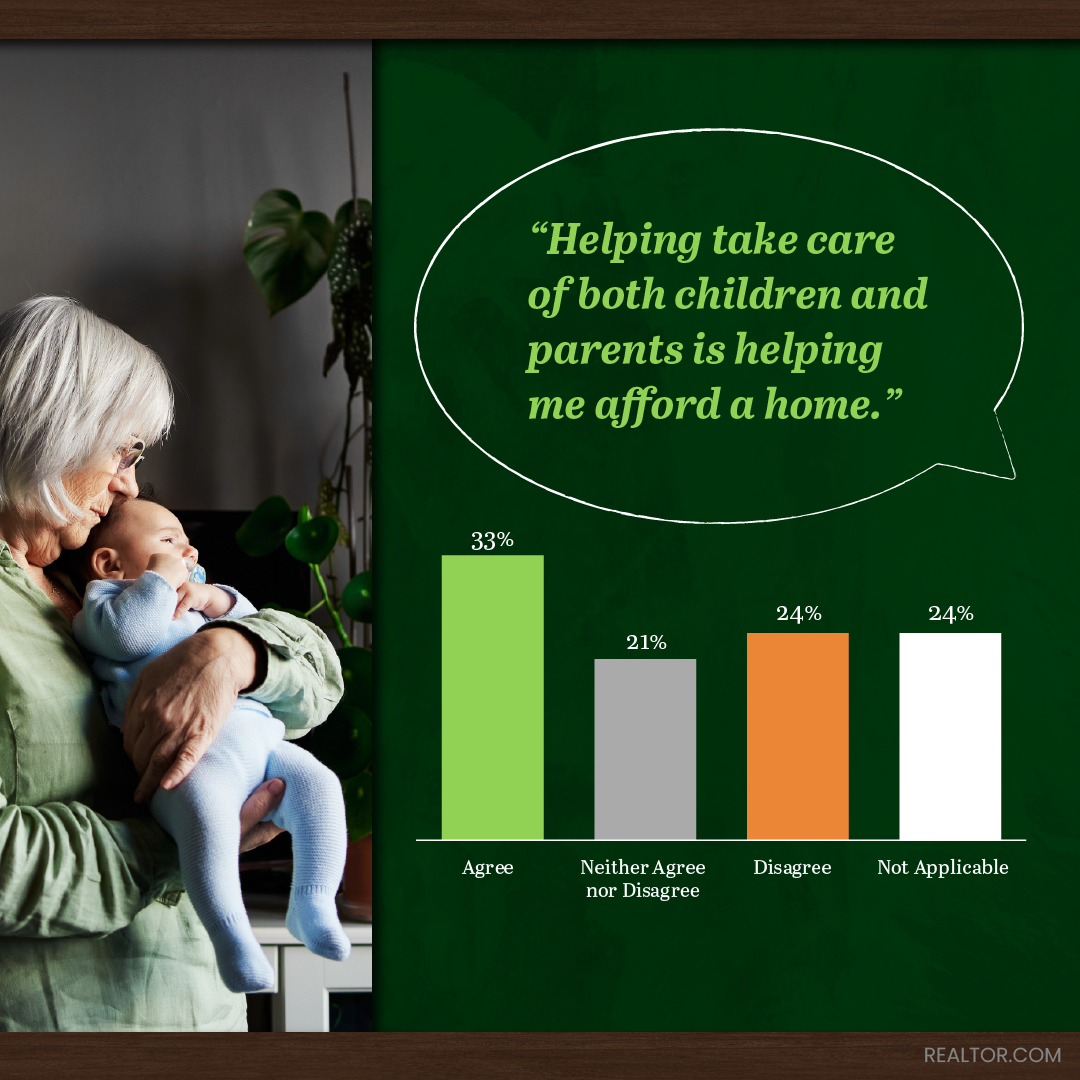
Caught between caring for your kids and aging parents? Here’s some good news. In a recent survey, 1 in 3 people in this same situation find it actually makes it easier to afford a home. That’s because a multi-generational home has big financial perks like sharing expenses and built-in childcare. If you want to talk about whether this type of home is right for you,
July 30, 2024
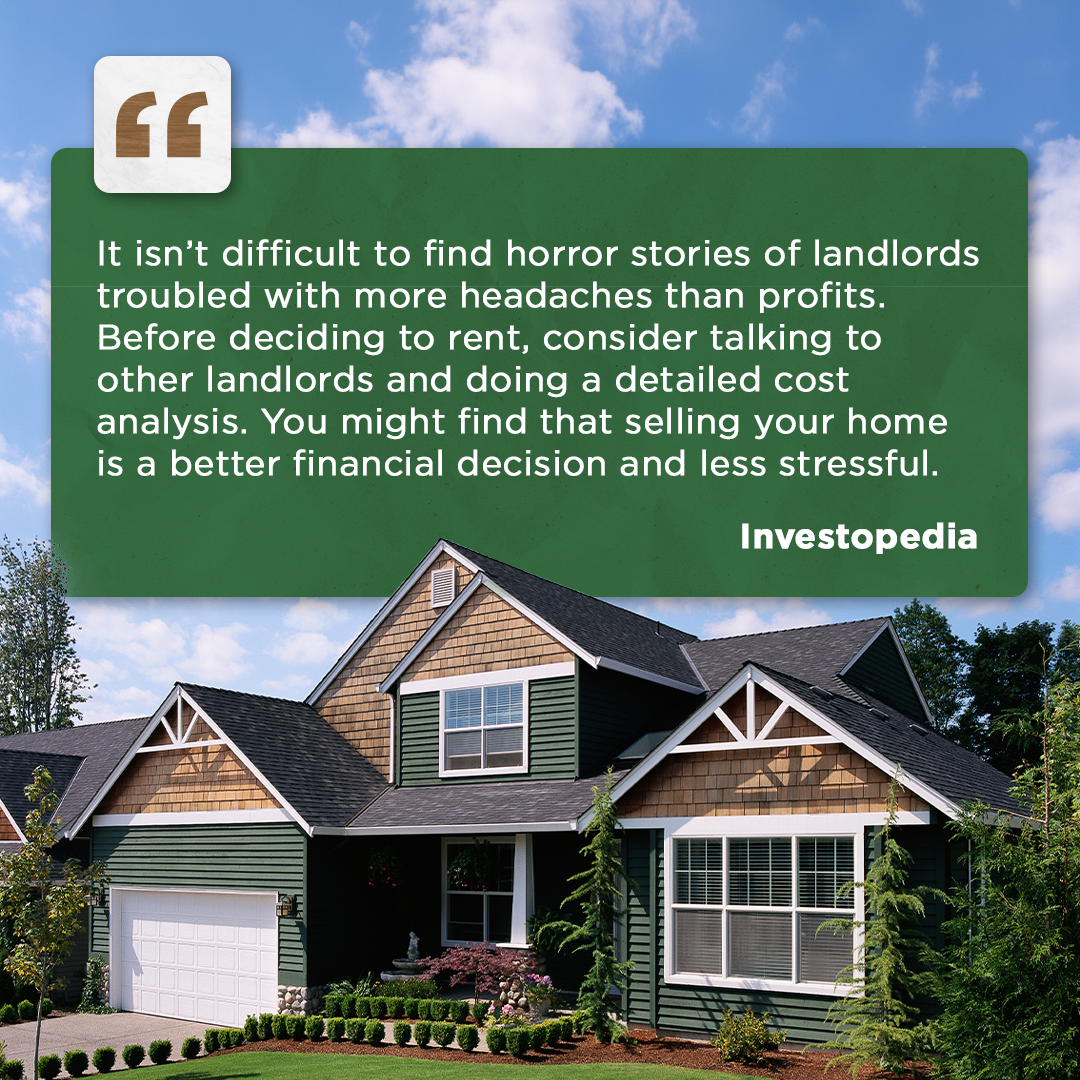
The Biggest Mistakes Sellers Are Making Right Now

The housing market is going through a transition. Higher mortgage rates are causing more moderate buyer activity at the same time the supply of homes for sale is growing.
And if you aren’t working with an agent, you may not realize that. Here’s the downside. If you’re not informed, you can’t adjust your strategy or expectations to today’s market. And that can lead to a number of costly mistakes.
Here’s a look at some of the most common ones – and how an agent will help you avoid them when you sell.
1. Overpricing Your House
Many sellers set their asking price too high and that’s why there’s an uptick in homes with price reductions today. An unrealistic price will deter potential buyers, cause an appraisal issue, or lead to your house sitting on the market longer. An article from the National Association of Realtors (NAR) explains:
“Some sellers are pricing their homes higher than ever just because they can, but this may drive away serious buyers and result in unapproved appraisals . . .”
To avoid falling into this trap, partner with a pro. An agent uses recent sales of similar homes, the condition of your house, local market trends, and so much more to find the price that’ll attract more buyers and open the door for multiple offers and a faster sale.
2. Skipping the Small Stuff
You may try to skip important repairs, thinking you can pass the task on to your buyer. But visible issues (even if they’re small) can turn off potential buyers and result in lower offers or demands for concessions. As Money Talks News says:
“Home shoppers like to turn on lights, flush toilets and run the water. If these basic things don’t work, they may assume you’ve skipped other maintenance. Homes that appear neglected aren’t likely to fetch top price.”
If you want to get your house ready to sell, the best place to turn to for advice is your agent. They’ll be able to do a walk-through with you and point out anything you’ll need to tackle before the photographer comes in.
3. Not Looking at Things Objectively
Buyers today are feeling the pinch of high home prices and mortgage rates. With affordability that tight, they may come in with an offer that’s lower than you’d want to see – especially if you didn’t stage, price, or market the house well.
It’s important you don’t take this personally. Getting overly emotional can put the sale at risk. As an article from Ramsey Solutions says:
“Remember, a buyer’s offer is not a reflection of their opinion of your home or your housekeeping abilities. . . The sale of your home is strictly a business transaction. If they start out with a low offer, don’t take it personally and get emotional. Instead, channel that energy toward negotiating. Work with your agent and make a counteroffer.”
4. Being Unwilling To Negotiate
The supply of homes for sale has grown. That means buyers have more options, and with that comes more negotiation power. As a seller, you may see more buyers getting an inspection, requesting repairs, or asking for help with closing costs today. You need to be prepared to have those conversations. As U.S. News Real Estate explains:
“If you've received an offer for your house that isn't quite what you'd hoped it would be, expect to negotiate . . . the only way to come to a successful deal is to make sure the buyer also feels like he or she benefits . . . consider offering to cover some of the buyer's closing costs or agree to a credit for a minor repair the inspector found.”
An agent will walk you through what levers you may want to pull based on your own goals, budget, and timeframe.
5. Not Using a Real Estate Agent
Notice anything? For each of these mistakes, partnering with an agent helps prevent them from happening in the first place. That makes trying to sell your house without an agent’s help the biggest mistake of all.
Real estate agents have experience and expertise in pricing, marketing, negotiating, and more. That knowledge streamlines the selling process and usually results in drumming up more interest and ultimately can get you a higher final price.
Bottom Line
If you want to avoid making mistakes like these, let’s connect to make sure you’re set up for success.
Posted in
Home Sellers,
Market Updates
July 29, 2024
Biggest Seller Mistakes
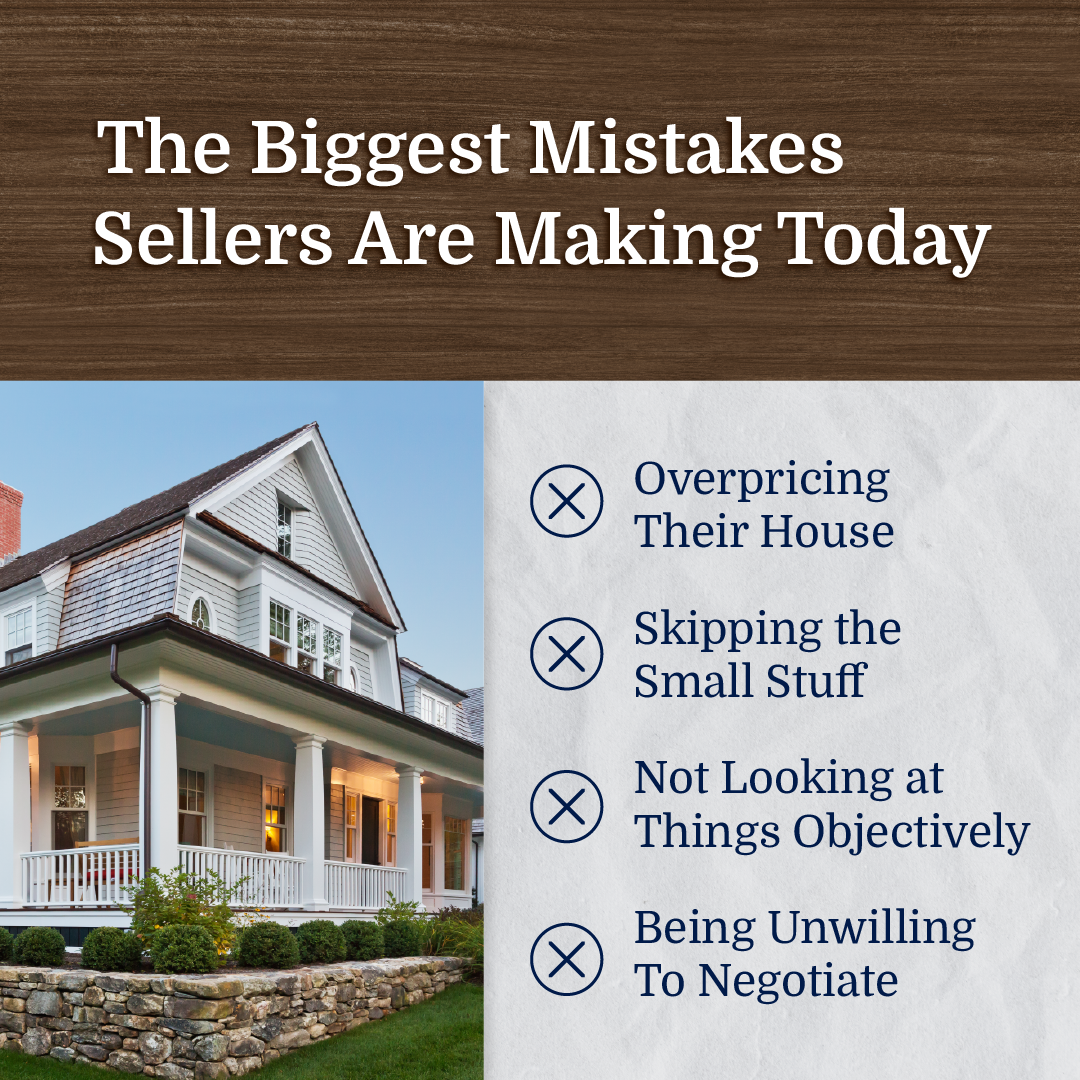
Selling your home? Don’t fall for these common mistakes. The housing market is in a transition right now. And homeowners who don’t work with an agent are going to be more likely to miss the mark on things like pricing, selective repairs, and negotiation tactics. With the right agent, you won’t get tripped up with avoidable challenges along the way.
Posted in
Home Sellers
July 28, 2024
2024 Home Prices Moderating
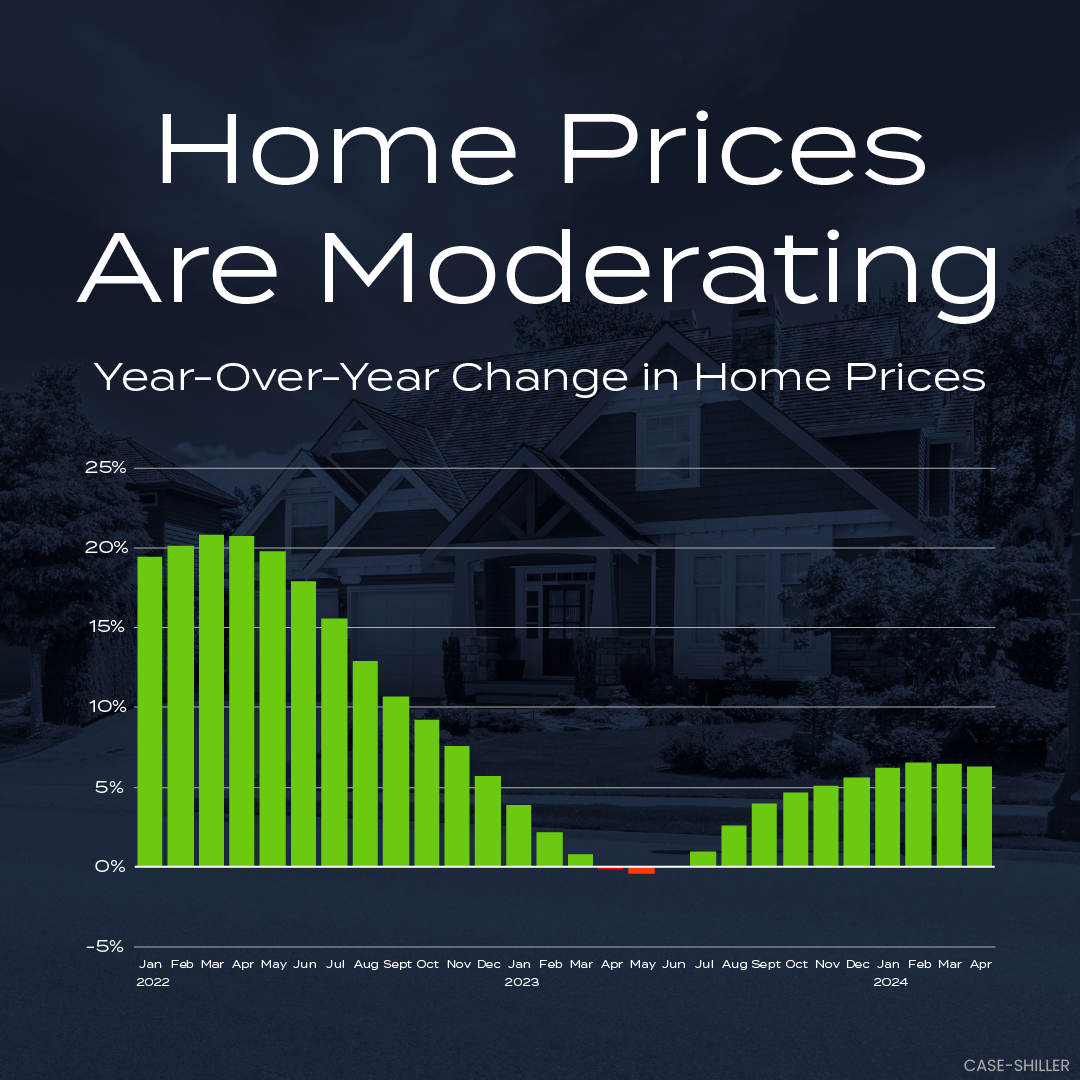
2024 Home Prices Moderating - During the pandemic, home prices soared due to high demand coupled with low inventory and mortgage rates. But that rapid appreciation couldn’t last forever. Now, data confirms prices are still rising, just more moderately. This healthier pace is actually a good thing. It means home price growth is normalizing. DM me if you want more details on prices in our area.
July 25, 2024
How the Economy Impacts Mortgage Rates

As someone who’s thinking about buying or selling a home, you’re probably paying close attention to mortgage rates – and wondering what's ahead.
One thing that can affect mortgage rates is the Federal Funds Rate, which influences how much it costs banks to borrow money from each other. While the Federal Reserve (the Fed) doesn’t directly control mortgage rates, they do control the Federal Funds Rate.
The relationship between the two is why people have been watching closely to see when the Fed might lower the Federal Funds Rate. Whenever they do, that’ll put downward pressure on mortgage rates. The Fed meets next week, and three of the most important metrics they’ll look at as they make their decision are:
- The Rate of Inflation
- How Many Jobs the Economy Is Adding
- The Unemployment Rate
Here’s the latest data on all three.
1. The Rate of Inflation
You’ve probably heard a lot about inflation over the past year or two – and you’ve likely felt it whenever you’ve gone to buy just about anything. That’s because high inflation means prices have been going up quickly.
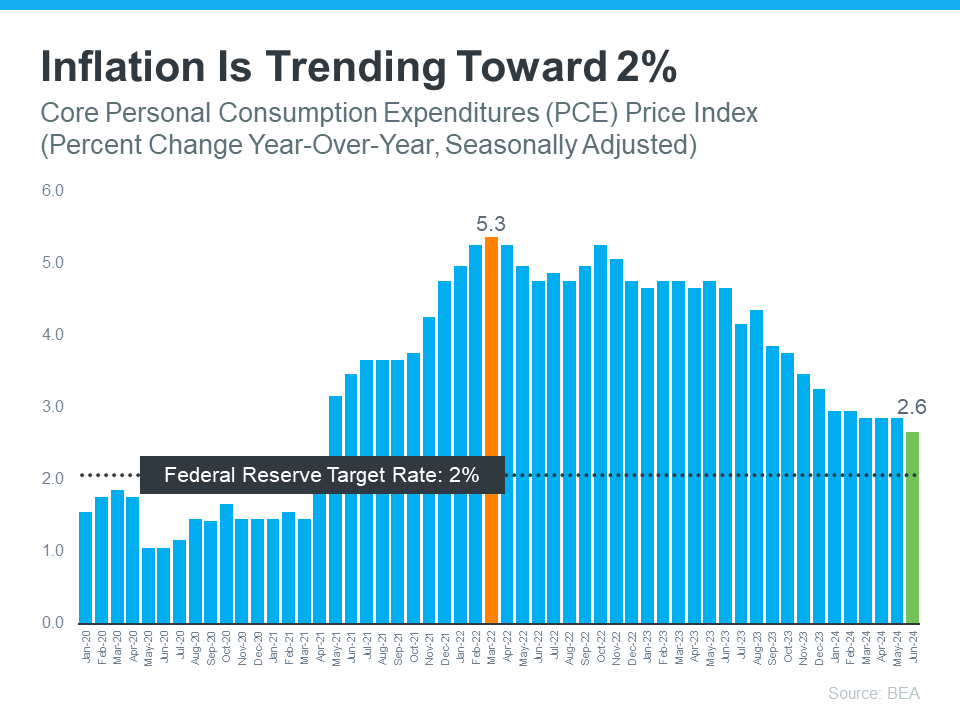
The Fed has stated its goal is to get the rate of inflation back down to 2%. Right now, it’s still higher than that, but moving in the right direction (see graph below):
 2. How Many Jobs the Economy Is Adding
The Fed is also watching how many new jobs are created each month. They want to see job growth slow down consistently before taking any action on the Federal Funds Rate. If fewer jobs are created, it means the economy is still strong but cooling a bit – which is their goal. That appears to be exactly what’s happening now. Inman says:
“. . . the Bureau of Labor Statistics reported that employers added fewer jobs in April and May than previously thought and that hiring by private companies was sluggish in June.”
So, while employers are still adding jobs, they’re not adding as many as before. That’s an indicator the economy is slowing down after being overheated for quite some time. This is an encouraging trend for the Fed to see.
3. The Unemployment Rate
The unemployment rate is the percentage of people who want to work but can’t find jobs. So, a low rate means a lot of Americans are employed. That’s a good thing for many people.
But it can also lead to higher inflation because more people working means more spending – which drives up prices. Right now, the unemployment rate is low, but it’s been rising slowly over the past few months (see graph below):
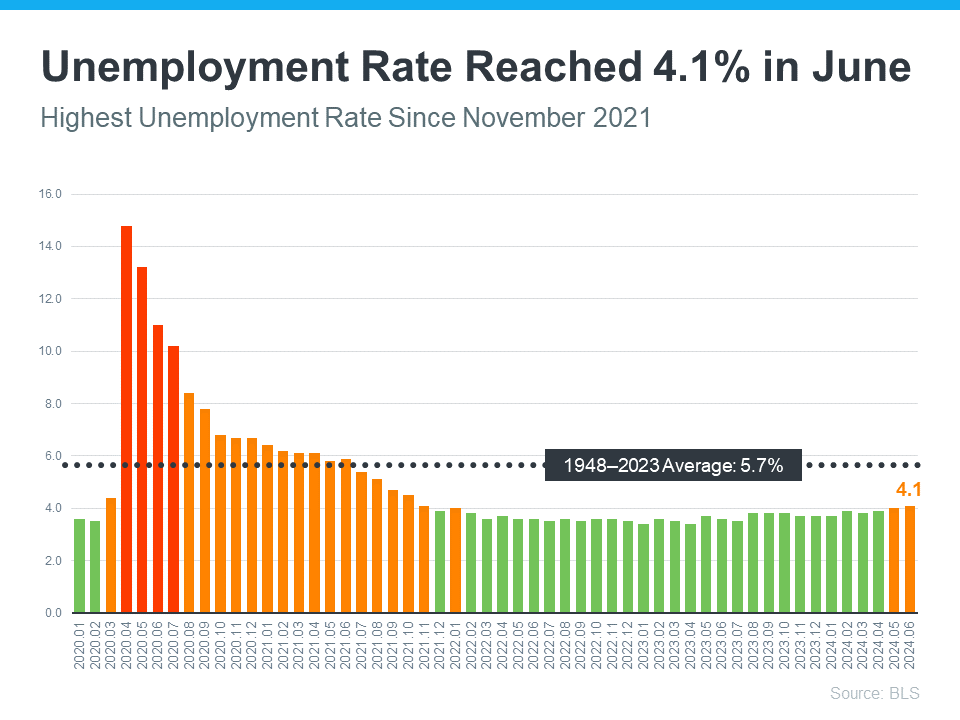 It may seem harsh, but a consistently rising unemployment rate is something the Fed needs to see before deciding to cut the Federal Funds Rate. That’s because a higher unemployment rate would mean reduced spending, and that would help get inflation back under control.
What Does This Mean Moving Forward?
While mortgage rates are going to continue to be volatile in the days and months ahead, these are signs the economy is headed in the direction the Fed wants to see. But even with that, it’s unlikely they'll cut the Federal Funds Rate when they meet next week. Jerome Powell, Chair of the Federal Reserve, recently said:
“We want to be more confident that inflation is moving sustainably down toward 2% before we start the process of reducing or loosening policy.”
Basically, we’re seeing the first signs now, but they need more data and more time to feel confident that this is a consistent trend. Assuming that direction continues, according to the CME FedWatch Tool, experts say there’s a projected 96.1% chance the Fed will lower the Federal Funds Rate at their September meeting.
Remember, the Fed doesn’t directly set mortgage rates. It’s just that whenever they decide to cut the Federal Funds Rate, mortgage rates should respond.
Of course, the timing of when the Fed takes action could change because of new economic reports, world events, and other factors. That’s why it's usually not a good idea to try to time the market.
Bottom Line
Recent economic data may signal that hope is on the horizon for mortgage rates. Let’s connect so you have an expert to keep you up to date on the latest trends and what they mean for you.
July 25, 2024
Inflation Trending Down
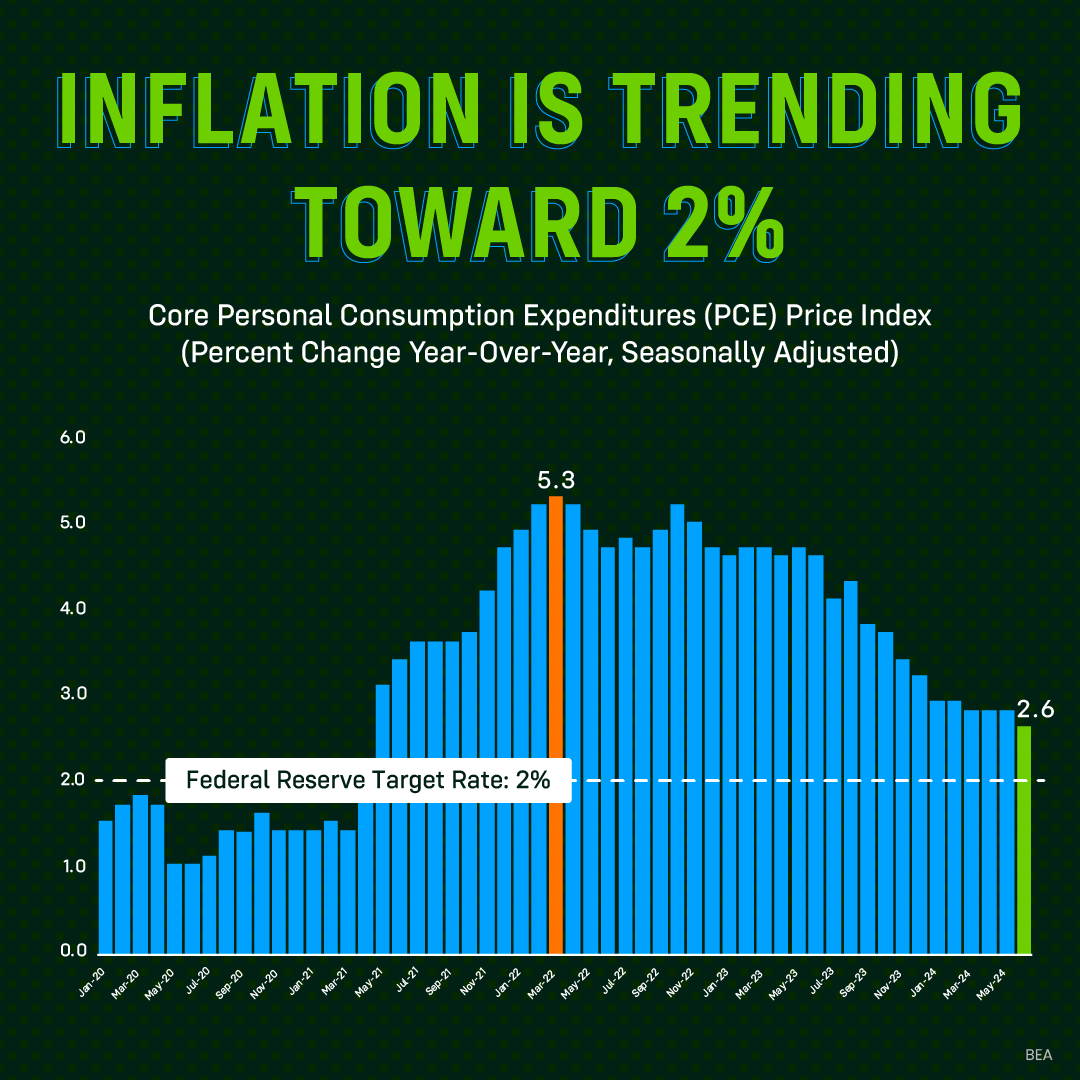
Inflation is cooling – and that’s a good sign for mortgage rates. As the rate of inflation gets closer to the Fed's target of 2%, they may lower the Federal Funds Rate. When they do, mortgage rates are likely to respond. But this isn't the only factor at play. For the latest updates on what’s happening, follow me. Scott Meadows - FloridaCustomHomes.com - 239.220.1157
July 24, 2024
A Newly Built Home May Actually Be More Budget-Friendly

If you’re in the market to buy a home, there’s some exciting news for you. Many people assume that newly built homes are more expensive than existing ones (houses that have already been lived in), but that’s not always the case. In fact, exploring newly built homes can sometimes lead to more cost-effective options, especially today. Hard to believe, right? But the data doesn’t lie.
Here are two key reasons working with your agent to look into new home construction could help you find a more budget-friendly option.
Reason 1: Lower Median Prices for Newly Built Homes
The median sales price for newly built homes is lower than the median sales price for existing homes today. This might seem surprising, but it’s true according to the latest data from the Census and the National Association of Realtors (NAR):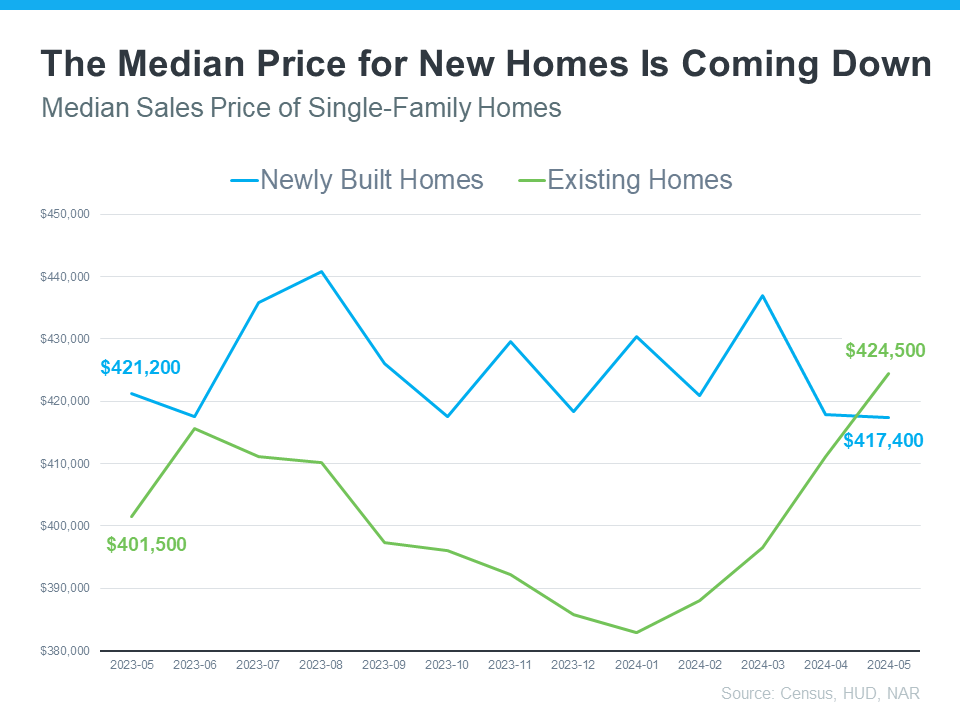
Why is that? Builders are focused on building what they can sell. And right now, there’s a very real need for smaller and more affordable homes – so that’s what they’ve been bringing to the market. At the same time, there are also more newly built homes already on the market than there have been over the past few years, so builders are motivated to make sure they’re selling what they’ve got available before adding more.
Reason 2: Attractive Incentives from Home Builders
Another big reason to consider a newly built home is the range of incentives that many home builders are offering. Again, since builders are aiming to sell their current inventory, some are providing special deals to sweeten the pot for homebuyers. HousingWire explains today’s trend:
“Overall, the usage of sales incentives was up to 61% in June, compared to 59% in May.”
One of the most appealing incentives right now is how builders are able to offer competitive mortgage rates. They may also provide other incentives, such as covering closing costs, or offering free upgrades.
Why This Matters to You
Considering a newly built home could open up opportunities you hadn’t thought of before. With competitive pricing and attractive incentives, you might just find that a brand-new home is the most appealing option for you.
Bottom Line
Buying a home is a big decision, and it’s essential to consider all your options. By looking into newly built homes, you might find a perfect fit for your needs and your budget.
Let’s explore the possibilities together. If you have any questions or want to see what’s available, feel free to reach out.
July 23, 2024
Foreclosure Delinquency Rates Are on the Decline
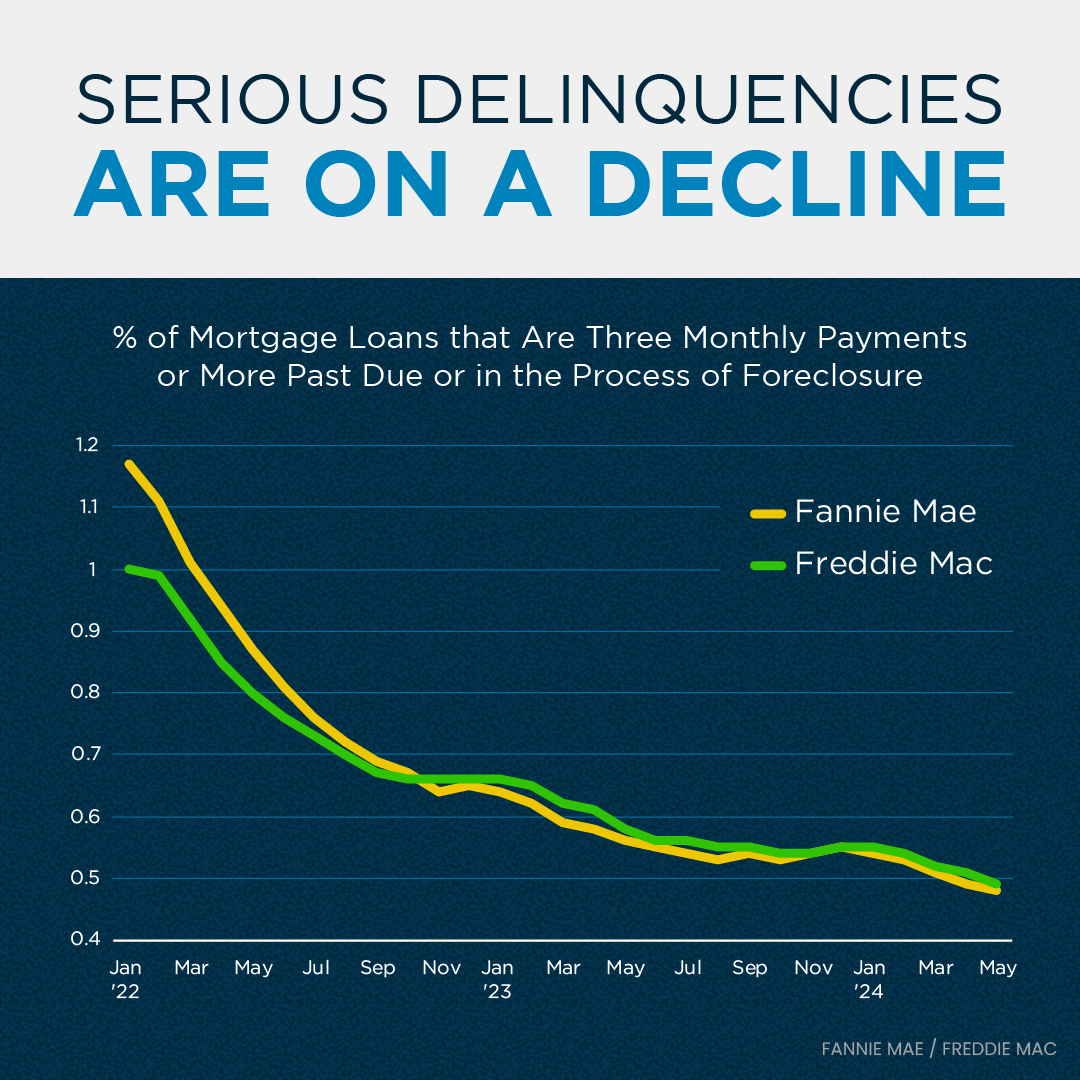
Do high prices at the gas pump and grocery store have you worried more people are going to fall behind on their mortgage payments? If you’re thinking that’ll lead to a surge of foreclosures, let this reassure you. Serious delinquencies (loans that are 3 or more monthly payments past due) are on the decline – so there’s no wave of foreclosures on the horizon. Scott Meadows - FloridaCustomHomes.com - 239.220.1157